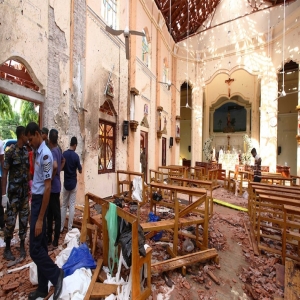


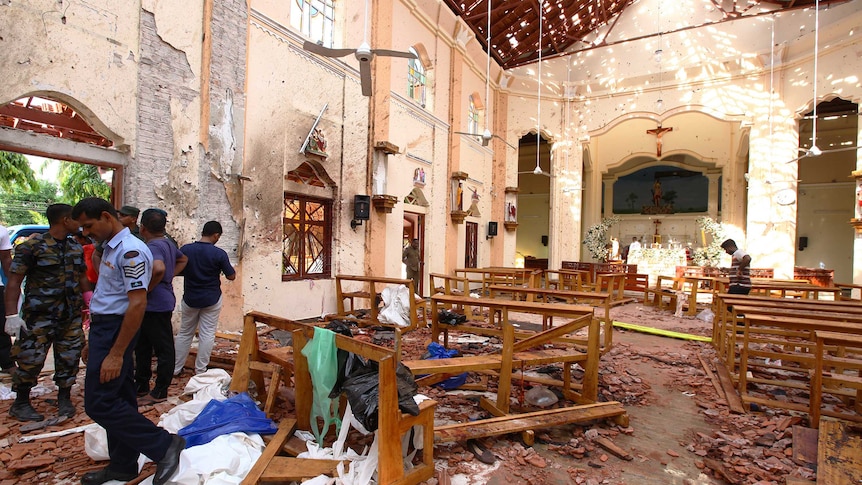
May 31, 2026, a mob of local residents and right-wing elements stormed a Sunday worship service in Sadrapal village, Sukma district, Chhattisgarh. More than 70 tribal Christians had gathered under pastor Hunga Mandavi when the attackers forced their way in. Between 25 and 30 worshippers were injured, five critically. The pastor and his pregnant wife were among those assaulted. Christian groups alleged that the attack followed threats directed at local tribal Christians, including demands that they abandon Christianity and return to Hinduism.
Sadrapal is a remote tribal village in central India. Yet the forces that erupted there on that Sunday morning are neither local nor exceptional. Variations of the same story are unfolding across continents. The actors differ. The ideologies differ. The pattern does not.
Despite being the world's largest religious community, Christians today are among its most persecuted—and the subject of one of the most under-reported human rights crises of our time. Across continents, nearly 390 million Christians face discrimination, intimidation, imprisonment, forced displacement and even death because of their faith.
The question is not whether the world knows. It does. The question is: why has it failed to stop it?
According to the 2026 World Watch List, more than 315 million Christians live in fifty countries where persecution is classified as very high or extreme. In the twelve months to September 2025, Open Doors recorded 4,849 faith-related killings, more than 3,600 attacks on churches and Christian institutions, and over 224,000 believers displaced or driven from their homes. One in seven Christians globally experiences significant hostility because of faith. In Africa, the figure rises to one in five; in Asia, two in five.
As Open Doors noted in releasing its latest World Watch List, persecution is increasing in both scale and intensity across multiple regions. Yet despite affecting hundreds of millions of people, the issue rarely commands sustained international attention and remains largely confined to annual reports, advocacy campaigns and periodic ex
North Korea remains the clearest example of state-directed persecution. The regime regards any authority outside the state as a threat. Christianity, with its allegiance to a power beyond political control, is therefore viewed as inherently subversive. Defectors have described Christians imprisoned in labour camps, subjected to torture and punished alongside family members under the principle of collective guilt. Possessing a Bible can be enough to trigger imprisonment. Faith itself has effectively become a political offence.
If North Korea represents the extreme end of totalitarian repression, Nigeria demonstrates the devastating consequences of religious extremism combined with state incapacity. Boko Haram, the Islamic State West Africa Province and affiliated armed groups have devastated Christian communities over the past decade. Entire villages have been razed, churches destroyed, clergy kidnapped and believers murdered, often with little prospect of justice. The cumulative effect has been the steady displacement of Christian communities from areas they have inhabited for generations.
Similar patterns are spreading across the Sahel, where extremist movements have expanded their reach and Christian communities increasingly find themselves on the front lines of a conflict, receiving only a fraction of the diplomatic attention devoted to less deadly crises elsewhere.
Pakistan presents a different but equally troubling reality. Here, persecution often operates through legal and social mechanisms rather than armed insurgency. The country's blasphemy laws, intended to protect religious sentiments, have frequently been used to target minorities and settle personal disputes. Allegations alone can trigger mob violence, imprisonment and social ostracism.
The case of Asia Bibi, the Christian woman who spent years on death row before eventually being acquitted, became internationally known largely because it attracted global attention. Thousands of similar cases, but less publicised, continue to unfold without comparable scrutiny.
China offers another model of repression. Here, the objective is not elimination but subordination. Churches are permitted within state-approved structures. Independent congregations face increasing restrictions. Surveillance technologies monitor religious activity. Religious education for minors is tightly regulated. Faith may exist, but only within boundaries defined and policed by the state. No institution may command loyalty capable of competing with the Communist Party.
The Middle East—where Christianity was born—presents perhaps the most tragic dimension of the crisis. Long before it became the dominant faith of Europe, vibrant Christian communities flourished in Syria, Iraq, Egypt and the Levant. The rise of the Islamic State (IS) marked a watershed. Ancient populations that had endured wars, empires and centuries of upheaval were expelled from entire regions. Iraq's Christian population, estimated at around 1.4 million in 2003, has fallen to less than 300,000 today. When communities with nearly two thousand years of continuous presence disappear within a generation, the loss is civilisational as much as religious.
In India, where Christianity has been present for nearly two millennia, data compiled by the United Christian Forum (UCF) show reported attacks on Christians rising from 127 incidents in 2014 to more than 900 in 2025, with 531 incidents recorded in the first five months of 2026 alone. Anti-conversion laws enacted in several states are routinely used to harass Christian communities, disrupt religious activities, vandalise churches or burn prayer halls, and enable mob violence with limited legal consequences for perpetrators. In many cases, it is the victims who face arrest. In its 2026 report, the United States Commission on International Religious Freedom (USCIRF) once again recommended that India be designated a Country of Particular Concern.
Former British Foreign Secretary Jeremy Hunt drew international attention when he warned that the persecution of Christians in parts of the world was approaching "near genocide levels." The statement generated controversy, but it reflected a growing concern among religious-freedom advocates that the scale of violence against Christians, particularly in parts of Africa, has failed to generate a commensurate international response.
What makes the global persecution of Christians particularly significant is that it occurs under virtually every form of governance—democracies, religious nationalisms, authoritarian states and communist regimes. The perpetrators and justifications vary, but the outcomes remain remarkably similar: shrinking freedoms, growing insecurity, violence and the gradual erosion of communities that have existed for centuries.
Ironically, nearly eight decades after the Universal Declaration of Human Rights enshrined freedom of conscience and religion as a fundamental right, persecution on this scale ought to dominate international discourse. Instead, it generates annual reports, advocacy campaigns and periodic ex
Yet a deeper paradox remains. Christianity is the world's largest religion, with approximately 2.4 billion adherents represented in virtually every country and every major international institution. Yet that vast global presence has not translated into security. Christians find themselves vulnerable to threats from authoritarian states, religious extremists, nationalist movements and political convenience. The real scandal is not that Christians are being persecuted. The real scandal is that an international human-rights architecture specifically designed to prevent such persecution continues largely to document it instead.
The standard explanation offered for this failure is complexity. Persecution today emerges from multiple sources at once—communist regimes, Islamist movements, authoritarian governments and nationalist projects. There is no single adversary and therefore no single solution. This explanation is accurate as far as it goes, but not far enough. Complexity is rarely an obstacle to international action when the interests of powerful states are directly involved. Wars are fought, sanctions imposed, and international coalitions assembled despite immense complexity. Complexity becomes a decisive obstacle only when the victims lack strategic value.
This is where the structural failure of the international human-rights system becomes most visible. The United Nations possesses an impressive formal architecture for defending religious freedom—Special Rapporteurs, Human Rights Council mechanisms, investigative bodies and reporting systems. But documentation is not enforcement. The UN can investigate, report, condemn and recommend. It cannot compel governments to change behaviour. Governments routinely absorb criticism, dismiss reports as biased, ignore resolutions and weather diplomatic pressure with the support of strategic allies. The result is a familiar cycle: violations are documented and condemnations issued, yet little changes on the ground.
USCIRF bears the same limitation. Its reports are detailed, evidence-based and frequently identify deteriorating conditions before they become headlines. It has consistently highlighted North Korea, China, Pakistan, Eritrea, Nigeria and India. Yet it lacks any independent authority to impose consequences.
The deeper failure is one of timing. Persecution rarely begins with mass violence. It starts with discriminatory legislation, accusations of disloyalty, administrative harassment and campaigns portraying minorities as enemies of the national project. These developments attract little international attention, yet they create the conditions in which serious abuses become predictable.
The rise of the Islamic State vividly illustrates this failure. Long before Christian communities were expelled from Iraq and Syria, warning signs were extensively documented. Sectarian polarisation was intensifying, extremist ideologies were spreading, and state institutions were collapsing. The international community remained reactive when it should have been preventive and has yet to correct that pattern.
Geopolitics further distorts the response. Human rights concerns compete with energy security, trade relationships, and military alliances. Several countries in the Middle East, along with China, India and Egypt, are simultaneously important strategic partners and significant sources of concern regarding religious freedom. For Christians facing violence, imprisonment or discrimination, this distinction is meaningless. For governments, it is often decisive.
Religious freedom cannot be defended selectively. Governments that condemn persecution by adversaries while remaining silent about comparable abuses by partners are not defending a principle; they are conducting foreign policy in the language of human rights. Targeted sanctions, economic restrictions, visa restrictions and asset freezes should be applied consistently to perpetrators irrespective of political alignment. The legal mechanisms already exist. What is needed is the willingness to use them.
Equally urgent is the need for early-warning mechanisms that trigger action rather than documentation. When legislation criminalising minority religious practice is introduced, when state actors provide cover for non-state violence, or when systematic harassment is documented, the international response must begin at that stage—not after churches have been burned, congregations killed, and communities displaced.
The defence of Christians must also be understood as inseparable from the broader defence of religious freedom itself. The argument is not that Christians deserve special treatment. It is that no human being should face discrimination, imprisonment, violence or death because of faith. The same principles protecting Muslims, Hindus, Jews, Sikhs, Buddhists, Bahá?ís and those professing no religion must protect Christians with equal force and equal urgency.
The defining failure of the international response is not ignorance; it is indifference structured as procedure. The institutions exist. The treaties exist. The evidence is overwhelming and updated annually. What remains absent is the decision to treat awareness as the beginning of responsibility rather than its discharge.
That is the real scandal. Until it changes, the persecution of Christians will remain one of the most consequential and most deliberately overlooked human-rights crises of our time—a standing test of whether universal human rights are universal in fact or merely in name.
.jpg)
.png) Cedric Prakash
Cedric Prakash
 ICPA
ICPA
 ICPA
ICPA
 ICPA
ICPA
 ICPA
ICPA
 ICPA
ICPA
 ICPA
ICPA
.jpg)
 A. J. Philip
.jpg)
.png) Jacob Peenikaparambil
Jacob Peenikaparambil
.jpg)
.png) John Dayal
John Dayal