

.png) Jaswant Kaur
Jaswant Kaur
.jpg)
There are very few institutions in India that command respect even from those who never had the privilege of studying there. The Indian Institutes of Technology (IITs) are amongst such institutes.
In fact, there is a large section of Indians who dreamed of entering an IIT but never did. Yet the urge to study at and be associated with any such institute remains. The same is true for this writer.
Back then, I imagined myself working in state-of-the-art laboratories, spending sleepless nights inventing something that really made a difference in society. Those dreams and imaginations faded as soon as I realised the truth.
Despite my earnest efforts, I could not clear the entrance exam, nor did I have the courage to wait for another year and give it another try. Yet, the respect and reverence for these institutes remained intact.
Even today, when someone tells me that they have graduated from an IIT, I instinctively associate those three letters with intellectual rigour, discipline and a commitment to solving difficult problems. Institutions earn that kind of trust over decades, and history shows they can lose it much faster than they build it.
That is why the two news reports I read last week left me a little baffled. The first reported that the All IITs Placement Committee had drawn a firm line against companies withdrawing campus job offers, warning them to either honour their commitments or compensate affected students with three months' salary, failing which they could be barred from future placement drives.
The move followed reports of recruiters rescinding offers after students had already exited the placement process, leaving many graduates in professional limbo.
The second report concerned an IIT-backed programme that proposed studying claims of reincarnation using EEG recordings, astrological charts and so-called past-life memories, with academic participation linked to institutional initiatives. The project, called the 'Indian Knowledge System' (IKS), seeks to integrate traditional Indian wisdom into modern educational curricula. A leading daily reported that the centres established for conducting this so-called research asked students to "hunt ghosts as fieldwork."
Shockingly, the University Grants Commission has issued guidelines encouraging the incorporation of IKS credit courses into higher education curricula, with IKS courses expected to constitute at least 5 per cent of the required credits in relevant programmes.
Now, many would wonder how these stories are interlinked. One concerns employment and the other concerns research. However, they point to the deeper decay that seems to have affected these institutions.
Before going further, let us revisit the vision and the mission with which these institutions were set up. They were not created as ordinary engineering colleges but were conceived as pathways to nation-building at a time when India had little money but enormous ambition.
Barely a few years after Independence, when the country was struggling with food shortages, low industrial capacity, and scarce foreign exchange, the Government still chose to invest in these institutions, knowing full well that the money invested would not yield immediate returns. Yet, it was given prime importance.
Acting on the recommendations of the Nalini Ranjan Sarkar Committee, the first Indian Institute of Technology was established at Kharagpur in 1951, on the site of the former Hijli Detention Camp, a place where freedom fighters had once been imprisoned. There could not have been a more symbolic transformation; a prison of colonial rule was turned into a laboratory of scientific freedom.
It is small wonder that Jawaharlal Nehru described these institutions as the "temples of modern India" in 1956, expressing the hope that they would nurture scientific temper and technological capability for a young republic.
Establishing even one IIT required extraordinary political will, international partnerships and financial commitment. Yet we persisted and established IITs in Bombay, Madras, Kanpur and so on. Of course, the journey continues.
However, the journey was not easy. Imagine the kind of effort it might have taken at that time, when we were hardly known for anything, to convince other nations to support these institutes. Each institution reflected not only global collaboration but also a remarkable confidence that India could build universities capable of standing alongside the world's best.
Over the past several decades, the IITs have become one of India's most respected global brands. Their alumni did not merely occupy prestigious positions; they helped shape the modern technology economy. Leaders such as Sundar Pichai, Arvind Krishna, Nandan Nilekani, Vinod Khosla and countless others demonstrated that Indian engineering talent could compete with the best in the world.
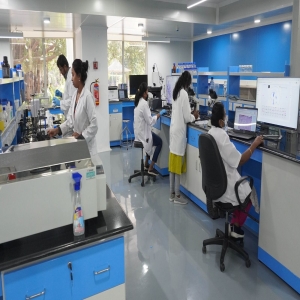
Equally significant, though less celebrated, has been the contribution of IIT faculty and researchers to India's strategic and developmental priorities. IIT laboratories have played important roles in aerospace engineering, advanced materials, artificial intelligence, clean energy, water technologies, biomedical devices, transportation systems and semiconductor research.
Their work has strengthened institutions such as ISRO, DRDO, BARC and numerous public-sector enterprises, while their graduates have founded thousands of technology start-ups that generate employment, attract investment and solve complex societal problems.
Research output from the older IITs has grown exponentially over the past two decades, driven by increased international collaborations and contributions across areas ranging from sustainable cities and clean energy to health technologies.
Ironically, it is this remarkable legacy that makes the present debate so important. Institutions that have earned such credibility carry a responsibility that goes beyond producing employable graduates.
The recent decision by the All IITs Placement Committee to demand that companies either honour offers or compensate students with three months' salary reflects the realities of a difficult job market, especially after reports of recruiters withdrawing offers following global restructuring.
The IITs were justified in standing with their students. Yet I found myself asking why placement disputes have become the defining public conversation around institutions that were created to lead scientific discovery.
The answer lies in how we have come to associate success with placements, salary packages, and so on. I am not saying that they are not important. However, in an attempt to paint these as "the only achievements," we forget the larger goal of research papers, patents, technologies, and innovation, which should have become characteristic of these institutes.
And in the name of exploring indigenous or traditional Indian knowledge systems, what exactly are we promoting? It is another debate whether reincarnation exists. People are certainly free to hold any metaphysical belief. However, should a scientific institution lower its standards in an attempt to validate beliefs that are, by definition, beyond empirical verification? And what economic and scientific contributions can such experiments make to the nation or the world at large?
Does this initiative deserve the national importance that public money should be spent and students forced to take such courses in the name of credits?
These developments certainly point to a rather invisible and silent mission drift. The original purpose was neither limited to securing jobs for graduates nor to lending scientific legitimacy to ideas that are yet to satisfy the standards of scientific inquiry. It was to create knowledge, solve national problems and expand the frontiers of engineering and science.
Perhaps the time has come for the IITs to ask themselves a simple but uncomfortable question: What do we want the world to remember us for? Institutions are not judged merely by the students they admit or the salaries their alumni command. They are judged by the questions they choose to ask, the problems they choose to solve and the ideas they contribute to humanity.
We did not build the IITs to tell the world about what we believe or have faith in. They were built to discover what we do not know. Every rupee we spend, every research grant awarded, and every academic credit given must move these institutions closer to that mission. If they begin to drift from it, even subtly, the loss will not merely be that of the IITs. It will be a national loss.
As someone who once dreamt of becoming an IITian, I still want these institutions to remain the dream they once were. But dreams survive only when institutions dare to remain faithful to the ideals on which they were built.
.jpg)
.png) Cedric Prakash
Cedric Prakash
 ICPA
ICPA
 ICPA
ICPA
 ICPA
ICPA
 ICPA
ICPA
 ICPA
ICPA
 ICPA
ICPA
.jpg)
 A. J. Philip
.jpg)
.png) Jacob Peenikaparambil
Jacob Peenikaparambil
.jpg)
.png) John Dayal
John Dayal