

.png) Jacob Peenikaparambil
Jacob Peenikaparambil
.jpg)
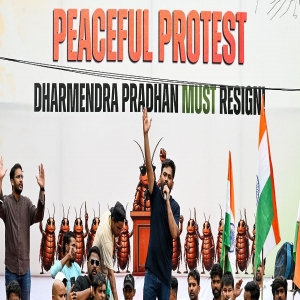
Despite nationwide protests and demands from young people across the country and opposition political parties for the resignation of Union Education Minister Dharmendra Pradhan over alleged paper leaks and examination irregularities (including the NEET, CUET, and CBSE evaluations), he has stubbornly refused to step down.
The protests organised by the Cockroach Jnata Party (CJP) under the leadership of Abhijit Dipke in different cities across India, and the second protest held at Jantar Mantar, Delhi, from June 20 onwards, do not appear to have made any impact on the ruling regime.
While Pradhan has publicly acknowledged discrepancies in certain examination processes, such as the Central Board of Secondary Education's on-screen marking, and stated that the government accepts administrative responsibility, he has stopped short of resigning.
At least 14 NEET-UG candidates reportedly committed suicide during the 37 days between the cancellation of the examination on May 12, 2026, and the scheduled re-examination on June 21, 2026. Neither the Education Minister nor the Prime Minister has publicly expressed sympathy for these young people and their bereaved families. This reflects a denial of accountability, which is a core principle of democratic governance.
This is not the first time that ministers in the Modi cabinet have violated the principle of accountability. Railway Minister Ashwini Vaishnaw retained his portfolio despite widespread outrage and demands for accountability following multiple major train accidents.
Home Minister Amit Shah directly rejected opposition demands that he resign or personally accept responsibility for the militant attacks in Pahalgam in April 2025. Instead, in Parliament, he deflected the blame onto the opposition and accused local tourism operators and hotel owners of failing to follow security protocols.
In contrast, several prominent ministers in the Manmohan Singh government resigned over allegations of corruption and governance failures. These included A. Raja, the Communications and IT Minister; Dayanidhi Maran, the Textile Minister; Pawan Kumar Bansal, the Railway Minister; and Ashwani Kumar, the Law Minister. Incidentally, former Telecom Minister A. Raja was acquitted by a special CBI court in December 2017.
Critics have pointed to numerous accountability failures by the Narendra Modi government over the last 12 years. Key concerns include the suppression of official socio-economic data, lack of transparency in political funding, and the avoidance of direct legislative accountability through parliamentary evasions.
The Modi government championed and defended the opaque Electoral Bonds system. It was eventually declared unconstitutional by the Supreme Court, which observed that the scheme's anonymity violated citizens' right to information and facilitated potential quid pro quo arrangements. It was later revealed that the BJP benefited substantially from this opaque mechanism, receiving the largest share—estimated between 47.5% and 55%—of the total funds raised by all political parties.
The Modi government also refused to bring the Prime Minister's Citizen Assistance and Relief in Emergency Situations (PM-CARES) Fund under the purview of the Right to Information (RTI) Act or the Comptroller and Auditor General (CAG), citing its status as a public charitable trust rather than a public authority.
The government passed amendments to the RTI Act that altered the tenure and salaries of Information Commissioners, raising widespread concerns among transparency advocates that the changes compromised the independence of the transparency watchdog and weakened public oversight.
The government has also been criticised for withholding, delaying, or discontinuing the publication of key statistical data. Examples include the shelving of National Sample Survey Office (NSSO) employment surveys, delays in conducting the decennial population census, and the discontinuation of certain National Crime Records Bureau (NCRB) datasets covering mob lynching, hate crimes, and cow vigilantism, as well as specific demographic data regarding Muslim representation in police forces.
In a democracy, the media plays a crucial role in holding the government accountable by informing citizens about governmental failures, misuse of power, and policy shortcomings, while subjecting them to critical scrutiny. Hence, the media is often described as the fourth pillar of democracy. The Narendra Modi government has been widely accused of controlling the media to such an extent that it has become "godi media"—a propaganda machine of the government.
The BJP government has not only subordinated mainstream media but has also allegedly targeted independent journalists and fact-checkers who are critical of the government. They are frequently subjected to police raids and criminal cases. For example, the Enforcement Directorate (ED) and police raided the offices and residences of journalists associated with the digital news portal NewClick, sealed its headquarters, and filed a money-laundering case against it and its founder, Prabir Purkayastha. The Delhi High Court recently quashed the case, describing it as a "gross abuse of the process of law."
Accountability is equally applicable to religious institutions that receive crores of rupees in donations from devotees. In a recent article, Theft in Ram Temple: An Unpardonable Sin, Sanjay K. Jha stated that it is shocking that no FIR has been registered in connection with the alleged theft of ?200-1,400 crores from donations made to the Ram Temple in Ayodhya, despite three police complaints having been filed.
Instead, the Uttar Pradesh government constituted a Special Investigation Team (SIT). "For the last two years, audit reports related to the Trust have not been made public. Since the Trust was constituted by the Centre, why has there been no accountant or auditor from the central government?" asked Sharad Shukla, one of the three complainants. According to Santosh Dubey, a former kar sevak and complainant, "Ayodhya may remain in the hands of thieves." Where is accountability?
Accountability to the people applies to all elected representatives in a democracy. If an MLA or MP elected on a particular party's ticket wishes to change allegiance, accountability demands that he or she first resign from the elected position and then contest an election as a member of the new party.
Everyone has the freedom and the right to choose a political party or ideology. However, switching sides, individually or as a group, under pressure or inducement, without resigning from the elected office, violates accountability. Such politicians lack moral credibility and are effectively selling their souls.
Recent political developments in India have witnessed a chain of desertions by MPs and MLAs who quit their original parties to join the National Democratic Alliance (NDA). First, seven Rajya Sabha MPs from the Aam Aadmi Party (AAP) left the party and merged with the Bharatiya Janata Party (BJP)-led NDA on April 24, 2026.
Following the defeat of the Trinamool Congress (TMC) in the West Bengal Assembly elections, 58 out of its 80 MLAs deserted the party. They formed a separate bloc known as the "real TMC" and formally appointed the expelled party leader Ritabrata Banerjee as their new Leader of the Opposition.
This was closely followed by another wave of desertions. Twenty of the twenty-eight TMC MPs left the party. They formed a separate group and subsequently announced their merger with a little-known regional outfit, the Nationalist Citizens Party of India (NCPI).
The wave of defections did not stop with the TMC. Six out of nine MPs belonging to Shiv Sena (Uddhav Balasaheb Thackeray) announced their decision to join the Shiv Sena led by Eknath Shinde. Reports are also circulating that the Nationalist Congress Party (NCP), led by Sharad Pawar, and the Samajwadi Party (SP), led by Akhilesh Yadav, may face similar implosions in the coming days.
It is widely alleged that these splits and mergers have been engineered by the BJP in retaliation for the defeat of the Delimitation Bill, presented as the Women's Reservation Bill, which was opposed by a united opposition in Parliament three months ago.
The BJP failed to secure an absolute majority in the 2024 Lok Sabha elections. Nevertheless, it formed the government with the support of its allies, particularly the Janata Dal (United) and the Telugu Desam Party. It is now allegedly attempting to secure a two-thirds majority in Parliament by engineering divisions within opposition parties.
It is further alleged that, as in previous instances of political defections, the fear of investigations by government agencies and the lure of money and power may have played a significant role in the recent breakup of opposition parties.
This constitutes a direct assault on democracy. The fear of India gradually becoming an electoral autocracy is further reinforced by these recent political developments. As democratic institutions increasingly appear under the control of the BJP, the survival of opposition parties is highly uncertain. In such a situation, what is the way forward to save democracy?
The answer is non-violent resistance by the people of India. The youth of India have already begun this process. In this context, what Rahul Gandhi, the Leader of the Opposition in the Lok Sabha, said at a meeting of the INDI Alliance appears particularly relevant:
"The BJP controls the institutions of the state. The BJP controls the legal system. The BJP controls the bureaucracy. The BJP controls the intelligence agencies. The BJP even controls the Election Commission ... If political parties can't function, what functions? Resistance functions. Resistance works."
.jpg)
.png) Cedric Prakash
Cedric Prakash
 ICPA
ICPA
 ICPA
ICPA
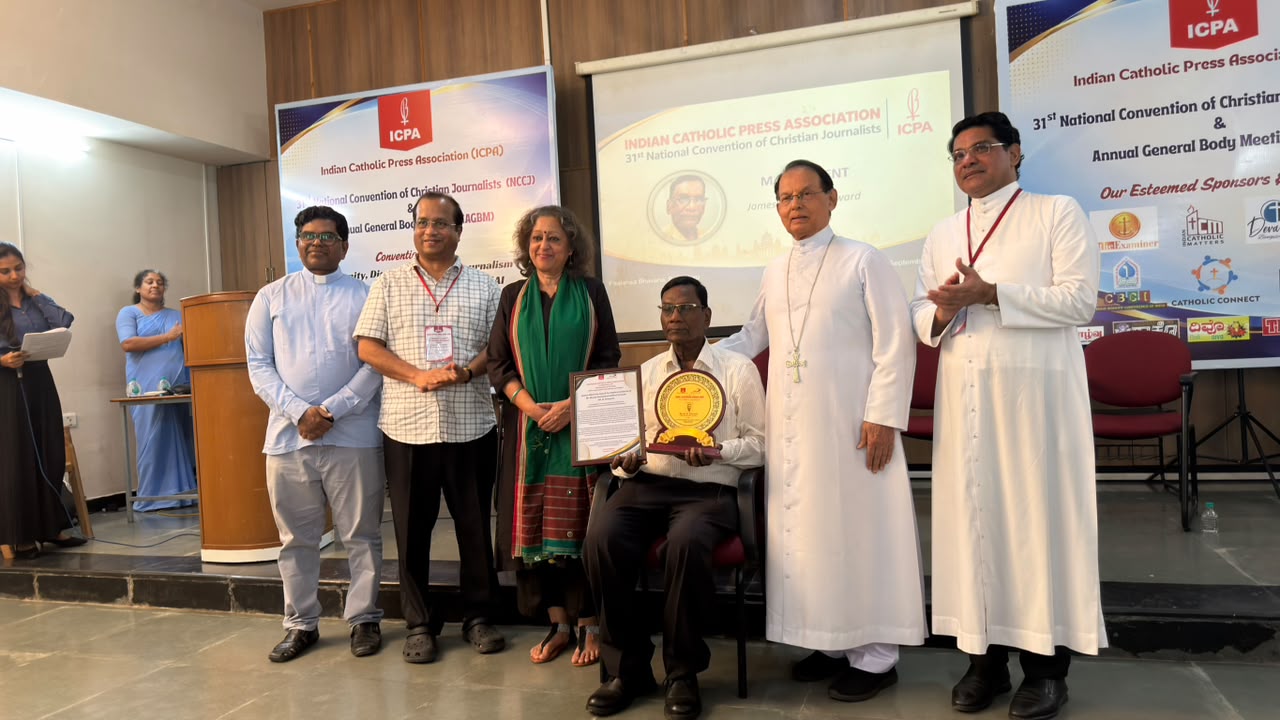 ICPA
ICPA
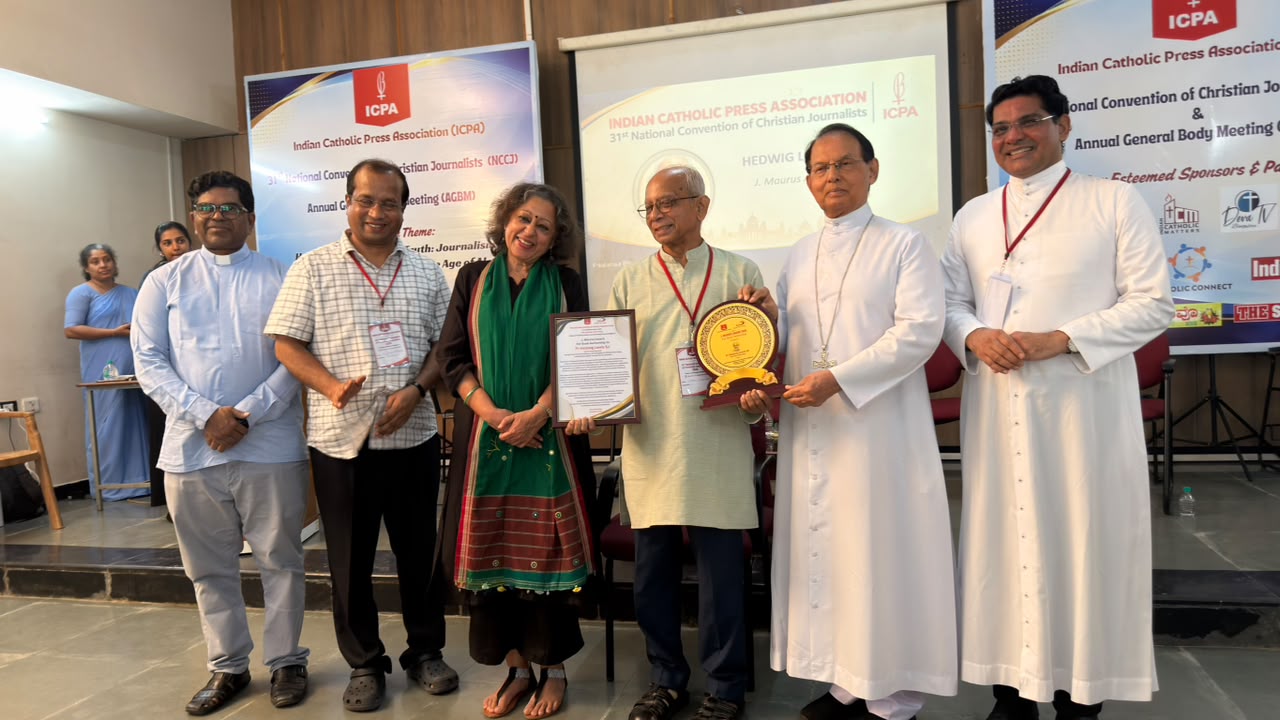 ICPA
ICPA
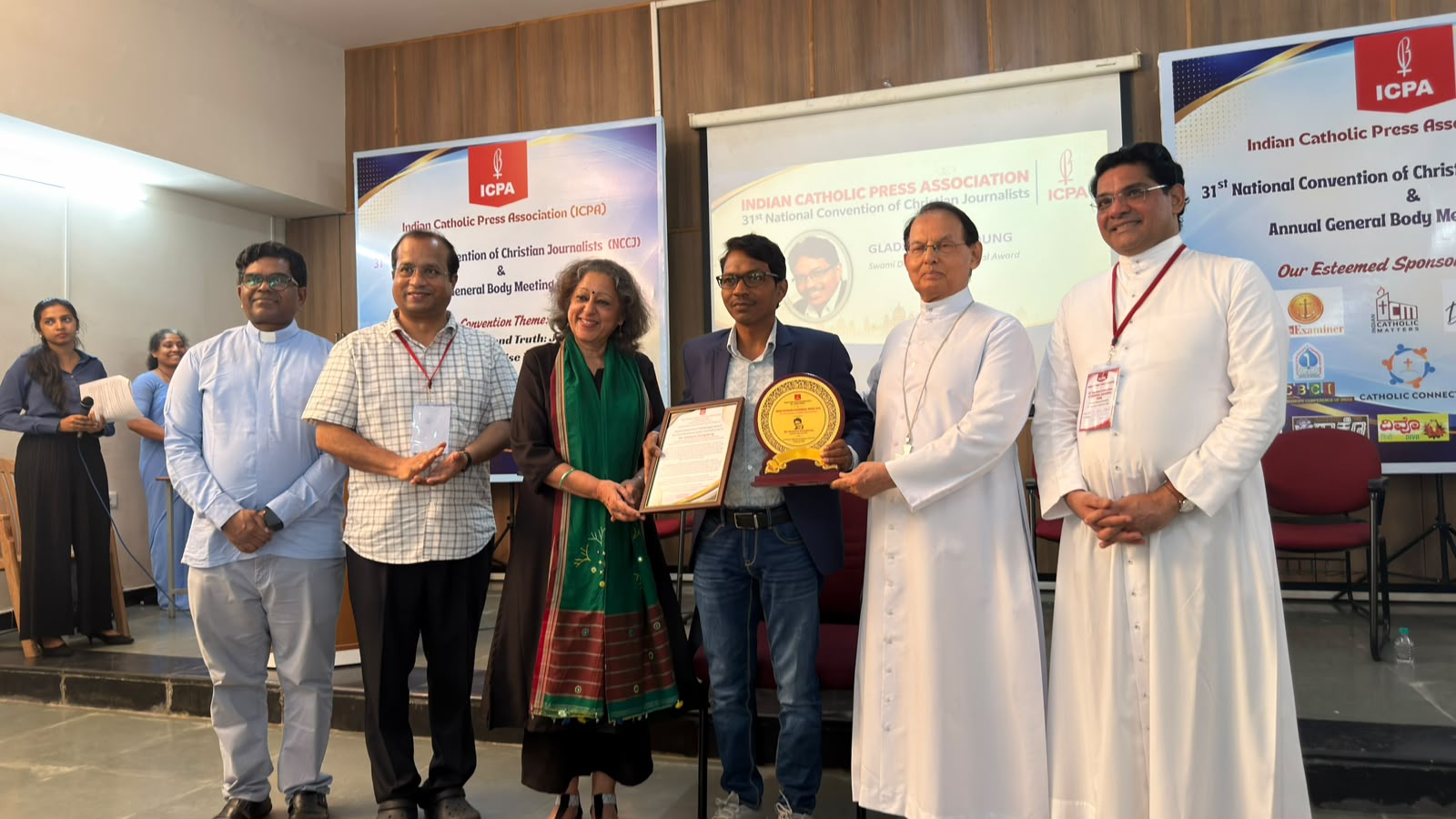 ICPA
ICPA
 ICPA
ICPA
.jpg)
 A. J. Philip
.jpg) Jacob Peenikaparambil
Jacob Peenikaparambil
.jpg)
.png) John Dayal
John Dayal