

.png) John Dayal
John Dayal
.jpg)
The conspiracy is to reduce the Church to buildings of schools, hospitals, and cathedrals, without the salvific, empowering, and communicating power of Christ in the Eucharist and the Pentecost by silencing its voice and reach, not by violence but by law.
New FCRA Rules have come into force this week to complete the legal architecture of minority subjugation, without the need for Parliament to pass a controversial bill to end the existing Foreign Contribution Regulation Act — a clever way of forcing the government's Bill out of reach of the public outcry, not only by Christian groups but by civil society and the political Opposition.
The rules amend the Foreign Contribution (Regulation) Rules of 2011. They do not amend the parent Act itself — that is, the separate Foreign Contribution (Regulation) Amendment Bill, 2026, introduced in the Lok Sabha on March 25, which remains pending before Parliament.
But the rules, as delegated subsidiary legislation, carry immediate binding force. What Parliament has not yet been asked to formally approve is being effected through the back door of executive rule-making.
The poor will pay the heaviest price as recipients of the outreach of the Church and civil society, where governments cannot, or do not, want to reach or where the corruption-ridden system of health and basic education fails altogether.
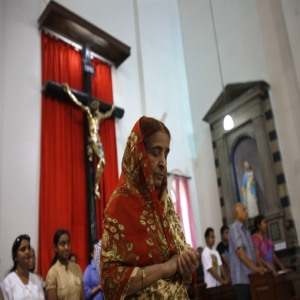
The Church is up in arms. The Catholic Bishops Conference of India, the National Council of Churches of India, and the Evangelical Fellowship of India have held press conferences, calling earlier proposed amendments to the Act "dangerous and alarming." They warned of executive overreach, potential license cancellations, and government control over Church-run schools.
Cardinal Poola of Hyderabad, the ranking ecclesiastical leader in the country, has called for a National Day of Prayer, and there's talk of Christian institutions closing down for a day in protest across the country, for the threat of large-scale loot of Christian properties by the government looms large.
Never in the history of the community in India, not even at the time of the most vicious physical attacks, as in Kandhamal in 2007 and 2008, has this happened.
For civil society and activists, however, the main crisis is emasculation of the liberty and empowerment of the poor by harsh curbs on freedom of speech of the Church — the most corrosive provision, and the least discussed in the mainstream commentary, is the comprehensive ban on using foreign funds for any media-related activity whatsoever.
Monitoring of media and social media and a total ban on FCRA licences for media connected with the Church will be in force, whereas, ironically, there will be no curb on RSS-controlled hate media and even on general corporate-run media.
These build on prior amendments, including 2025 changes that already targeted publications. Nonprofits involved in publishing must now give undertakings they won't violate Section 3(1)(g) of the FCRA Act, which bans foreign funds for audio-visual news or electronic mass communication.
If their publication is registered as a newspaper, they need a "Not a Newspaper" certificate. The intent is to limit foreign-funded groups to reporting their own charitable work, not broader journalism or advocacy.
The outright ban on publishing or broadcasting "news or current affairs" by NGOs is especially worrying, severely limiting their ability to inform the public and hold authorities accountable.
Some of the oldest church papers in the country, launched in the 19th century, will be under close scrutiny.
The Catholic Church in India runs some of the oldest and most widely circulated community newspapers in the country — publications that predate Independence and that have served as the primary voice of minority communities through Partition, Emergency, and pogrom.
The Examiner, published from Mumbai, has been in print since 1850. Indian Currents has spoken truth to power from Delhi for decades. The Herald, the Voice, New Leader — these are not propaganda sheets. They are journals of record for their communities. Under the new rules, organisations will be required to declare social media accounts, websites, and publications such as books, magazines, or articles.
The new FCRA Rules, notified on June 22, 2026, tighten oversight on foreign-funded NGOs. The Ministry of Home Affairs published the Foreign Contribution (Regulation) (Amendment) Rules, 2026, in the official gazette, making changes effective immediately.
NGOs must now select specific purposes from a predefined government list of about 105 activities, declare the states or union territories where they operate, and disclose all social media accounts, websites, and any publications or articles by the organisation or its key functionaries.
They face strict bans on political activities or content, with "educational" purposes explicitly requiring a non-political nature.
Foreign nationals, except Persons of Indian Origin, are generally barred from key roles. There's a minimum spending requirement to avoid cancellation, and enhanced reporting on ultimate donors and fund usage.
A schedule details permissible religious activities, such as maintaining places of worship, but excludes proselytisation or conversion-focused work.
NGOs applying for FCRA registration must now clearly specify their objectives and the states or Union Territories in which they plan to operate. These details will be recorded on their registration certificates. Applications must choose from a predefined schedule of activities covering religious, cultural, economic, educational, and social purposes.
The schedule lists approximately 105 categories. If your organisation's work does not fit into one of those boxes, you cannot register. If it spans several boxes, as virtually every serious development or faith-based organisation does, you must pick one. Or pay ?300 per additional state and per additional activity category, a provision designed less to generate revenue than to deter ambition.
Every association registered before the commencement of the Foreign Contribution (Regulation) Amendment Rules, 2026, shall, within one year, submit to the Central Government an intimation in Form FC-6F specifying the purpose or purposes and the States or Union Territories for which it seeks to retain its registration.
Every existing FCRA holder, in other words, must reapply. In a country where the government has cancelled more than 20,000 FCRA licences since 2014, where the renewal process has been weaponised as an instrument of institutional harassment, where even Mother Teresa's Missionaries of Charity had their renewal suspended in 2021, the mandatory resubmission is not a formality, but an opportunity for the Home Ministry to cull what it does not approve.
A key highlight of the amendment is the expanded definition of "key functionary," which now includes directors of companies, partners in firms, trustees, "karta" of Hindu undivided families, and office bearers or individuals responsible for management and decision-making in organisations.
For churches that have long maintained fraternal or missionary relationships with international counterparts, this provision strikes at the heart of how ecumenical institutions function. A foreign trustee who has served a hospital or school for decades suddenly becomes a legal liability.
Every tweet, every Facebook post by a key functionary of an FCRA-registered organisation becomes subject to governmental scrutiny. The social media disclosure requirement is not about transparency but about surveillance.
There is more to the June 22 Rules change than just this. It is part of a broader legislative framework that the government is systematically putting in place. The Foreign Contribution (Regulation) Amendment Bill, 2026, was presented to the Lok Sabha by the government in March of that year. That Bill, which is separately pending, proposes something that no earlier version of the FCRA contained: a Designated Authority empowered to seize and manage the assets of any organisation whose FCRA registration lapses, is cancelled, or is surrendered.
The Bill proposes that if an organisation's FCRA registration is cancelled, surrendered or deemed to have ceased, its foreign contribution and assets created from foreign contribution can be seized by a Designated Authority notified by the Centre. This can happen if the organisation does not apply for renewal, if renewal is refused, or if registration is not renewed before expiry.
The trigger, critically, is not a proven violation. It is not a court finding of wrongdoing. It is simply the administrative fact of an expired licence — a licence whose renewal the government controls. Once that happens, the Designated Authority can take possession of foreign contributions and assets derived from them, supervise and preserve them, and, if considered necessary in the public interest, manage the organisation's activities for a prescribed period.
Asir Ebenezer, general secretary of the NCCI, termed the bill "intrinsically unconstitutional." It strips institutions of assets without any judicial process, without a court order, without the due process we extend even to those accused of tax violations.
The All India Catholic Union went further. The AICU demanded the complete withdrawal of the FCRA Amendment Bill, strongly objecting to provisions that allow authorities to seize and manage the assets of registered organisations. Not an amendment. Not referral to a Parliamentary standing committee.
Since the Hindutva nationalist government of Mr Narendra Modi assumed power in 2014, it has cancelled or refused to renew more than 20,000 FCRA licences, blocking organisations from receiving overseas funding.
More than 10,000 Christian groups — including the Evangelical Fellowship of India, Church's Auxiliary for Social Action, World Vision India, and Compassion International — have lost their FCRA licences since 2011. In 2017, Compassion International was driven out of India entirely, ending support for 1,47,000 children across 589 churches. In 2024, World Vision India and the Church's Auxiliary for Social Action joined the list.
The BJP's own ideological parent, which coordinates political mobilisation across 36 states and Union Territories, runs shakhas, schools, cultural programmes, and a vast media operation, and faces no FCRA scrutiny. The political beneficiary of its work faces no scrutiny either, even as the constitutional principle of equal treatment under law is invoked endlessly to justify tighter oversight of Church and mosque.
There was a parliamentary debate on the Foreign Contribution (Regulation) Bill, which had originally been introduced in 1973 and was finally passed in 1976 during the Emergency.
The most important point is that the government did not publicly present the Bill primarily as a measure against churches or NGOs. Rather, it was justified as a national security and sovereignty measure to prevent foreign influence over India's political process, public institutions, legislators, political parties, and opinion-makers.
Congress leader Khurshed Alam Khan and other members referred to the need for vigilance against agencies such as the CIA, now ironically working closely with India's RAW and IB in an exchange of information. The concern was not merely charitable funding but geopolitical influence during the Cold War.
CPI leader Bhupesh Gupta's speech on the Foreign Contribution (Regulation) Bill, 1976, is significant because he called for stronger action against multinational corporations. His principal criticism was that Parliament was concentrating on voluntary organisations and political actors while paying insufficient attention to multinational corporations and foreign economic power.
.jpg)
.png) Cedric Prakash
Cedric Prakash
 ICPA
ICPA
 ICPA
ICPA
 ICPA
ICPA
 ICPA
ICPA
 ICPA
ICPA
 ICPA
ICPA
.jpg)
 A. J. Philip
.jpg)
.png) Jacob Peenikaparambil
Jacob Peenikaparambil
.jpg) John Dayal
John Dayal