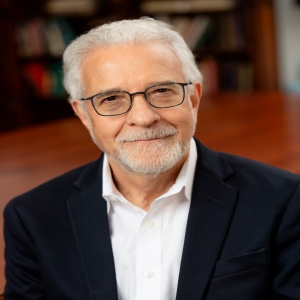


.jpg) Thomas Menamparampil
Thomas Menamparampil
.jpg)
Prevent Genocides, Not Merely Another Holocaust
The most blood-curdling event of the last century was undoubtedly the Holocaust, the elimination of six million Jews by the Nazi regime in the German-occupied countries of Europe. Antisemitism that had existed for a long time in Europe reached a climax in the Holocaust, as the "final solution" to the Jewish question.
As the details of the tragedy came to be widely known, the international community was truly horror-stricken. How could humans have done this to other humans? The cry that echoed around the world was, "Never Again!" Germany recognised its own responsibility for the disaster and asked its successive generations to do the same.
Zionism, a movement to create an independent state for the Jews in their ancient homeland that gathered strength between the two World Wars, found its fulfilment in 1948 with the Declaration of Independence by Israel.
Omer Bartov, son of a Zionist himself, in his book Israel (Fern Press, Penguin, London, 2026), while rejoicing at the fulfilment of this dream of a large section of international Jewry, laments the hardships it imposed on native Palestinians who were displaced on a large scale. The genocidal activities of Israeli forces against the Gazans have continued ever since.
Omer argues that the "Never Again" cry against the Holocaust inflicted on the Jews by the Nazis should not be considered a slogan for the prevention of genocide against Jews alone, but a call for a halt to mass violence against any community in the world. We remember what happened between the Hutus and Tutsis in Rwanda, the communities in Bosnia, the Rohingyas in Myanmar, and what is happening to the Uyghurs in Xinjiang and to the people of Tibet, and the growing threat to minorities in India. Genocide repeats itself "again and again" in the world.
Bartov's reflections may help the international community observe emerging trends that could create a climate conducive to the recurrence of similar disasters anywhere in the world and take remedial measures in time. They can urge Indians living in an increasingly polarised society to take preventive steps to avoid conflicts, remove prejudices, and cultivate happy relationships.
In this intense struggle, the truth will have to be told. What is not right has to be exposed. Nazis sought to silence Dietrich Bonhoeffer's criticism, but he remained vocal even during the height of Nazi power. He offered his life for the truth.
The Sufferings that the Jews Went Through
Omer Bartov begins by pointing to Christian prejudices against Jews in Europe, which made them move into ghettos. During the Black Death and the Crusades, they were specifically targeted (Bartov 65). Because they were not allowed to own land, they turned to money-lending, trade, manufacturing, and craftsmanship.
The poor felt taken advantage of. In the Polish-Lithuanian Commonwealth, the Christian nobility used Jews to administer their vast estates or appointed them as their financiers. Christian serfs felt exploited (Bartov 67). The Jews remained loyal to their religious identity.
With the secularisation of society and the spread of concepts like democracy and equal rights, the Jews looked forward to better days. But with the simultaneous spread of ideas about "ethnic nationalism" among the Germans, Poles, Magyars, and others, the earlier bias against the Jews only hardened. It took the form of modern "Antisemitism" (Bartov 68).
The new enthusiasm for "ethnic nationalism" gave rise to racist theories and stirred an eagerness for "pure" racial identities. "Other" communities were classified as inferior and insidious races. After all, the Aryans in India called the indigenous people Asuras, Rakshasas, Vanaras, and made them their "dasas".
In Europe, the Jews were considered a threat, especially when they wanted to be assimilated into European society. Historian Heinrich von Treitschke exclaimed, "The Jews are our misfortune" (Bartov 69-70). Such attitudes led to the rise of Nazism and the "final solution to the Jewish Question" in the Holocaust. Zionism sprang up as a Jewish response: a movement to create a nation for ethnic Jews (Bartov 72).
A New Genocide to Atone for the Holocaust
Bartov's criticism of Netanyahu's Gaza policies should be considered a self-criticism of the Jewish community. The Jews, who had been victimised in the Holocaust in Germany, began inflicting the same pain on indigenous Palestinians through the occupation of their land.
To begin with, he asks how the violent mass displacement of Palestinians in 1948 differs from the Holocaust. The Jews were looking for a "living space" as the Nazis were doing for the Germans (Bartov 14). As international society stood by during the Holocaust, Israel did not want any interference from outside in the way it treated the Palestinians (Bartov 17) ... just as India does not want any external interference regarding Indian policies in Kashmir or the Northeast.
The Nazis had considered Russian Slavs "subhuman" to be decimated, to make place for Germans. And in what way does Israel's Defence Minister's order differ? "Break the arms and legs of Palestinian youth" who were protesting (Bartov 9). Minister of Defence Yoav Gallant called them "human animals." Cesaire rightly says colonisation dehumanises civilised men. Considering others as animals, they become "animals" themselves (Bartov 20).
Omer feels that Israelis today have become guilty of "war crimes" in their dealings with the Palestinians: extensive destruction, appropriation of vast properties, disproportionate harm to the civilian population, e.g. bombing schools.
The International Criminal Court, established in 2002, defines "crimes against humanity" in this way: widespread killing of civilian populations, murder, torture, extermination, and deportation. Genocide includes killing many, causing serious harm, and imposing measures to prevent births (Bartov 29-30). Don't Indian leaders seek the demographic control of minorities?
Hamas' Attack of October 7, 2023, Aggravated Matters
Hamas' attack of October 7, 2023, on Israel caught the Israeli leadership quite unprepared. It killed 800 civilians and took 250 hostages. The Israeli response to it was more than tenfold harsher: 68,000 Palestinians killed, 80% of whom were civilians; 10,000 missing; thousands of babies made chronically ill (Bartov 4-5).
Netanyahu referred to the "extinction" of Amalek. Yoav Gallant, Defence Minister, roared, "Human animals must be treated as such... You wanted hell, you will get hell" (Bartov 31). Isaac Herzog, the President, called Gazans "human monsters" to be wiped out (Bartov 127).
Consequently, the face of Gaza has been changed: 180 Palestinian communities have been expelled, and 120 Jewish communities have been added to the earlier 180 (Bartov 34). Palestinian radicals are accused of using civilians and hostages as "human shields" (Bartov 36). Therefore, Speaker Nissim Vaturi suggests, "We must go in and kill, kill, kill. We must kill them before they kill us."
Media posts go further: "Kill the Arabs, kill their mothers, flatten Gaza" (Bartov 41). A 53-year-old religious judge who volunteered to serve in the Israeli Defence Force boasted of having destroyed fifty two-floor houses every week; many schools and hospitals were destroyed (Bartov 191-92). Netanyahu wants a "greater Israel"; BJP-RSS wants Akhand Bharat!
A New Thinking is Possible
Omer Bartov's aim is not to accuse anyone of crime, but to explore ways of preventing similar tragedies in the days to come. "Never again" Holocaust should mean "Never again wanton, callous murder" in any society. Unfortunately, Israel's present-day Gaza policies have given fresh rise to antisemitism worldwide (Bartov 88).
Competition for victimhood over the Holocaust alone will not help. After all, the Holocaust lasted a few years; injustice to the Palestinians has lasted for decades (Bartov 101).
The Holocaust is being made a fig leaf for self-victimisation and self-righteousness, hubris, and further violence. But violence only invites violence. The present Gaza policy will revive once again genocidal urges against Jews. "The ranks of Hamas are filled with new and vengeful soldiers..." No solution will be found in the present policy (Bartov 195-96).
Meanwhile, German society has been changing too. New immigrants will refuse to accept responsibility for the Holocaust even if they become citizens. The same would be true of the younger generation of Germans. Antisemitism is growing strong among the German Right (Bartov 101). In fact, Extreme Right parties all over are becoming anti-Semitic (Bartov 102).
There is no purpose in inviting another Holocaust. Bartov believes Israeli domination in the present-day territory is bound to "implode" in due time, as Apartheid did in South Africa. No nation can survive by creating unfriendly neighbours around itself, counting on the support of a distant and "unreliable" America. Can seven million Jews learn to collaborate with seven million Palestinians?
A Light to the Nations
Finally, Omer Bartov draws our attention to Israel's Declaration of Independence in 1948. It professed loud and clear belief in "freedom, justice and peace" as envisaged by the Prophets of Israel. It promised to "ensure complete equality of social and political rights to all its citizens irrespective of religion, race or sex."
If many things have gone wrong in the successive years, they can be repaired. As poet Eldan sings, "There is a time when darkness roars, but there is dawn and radiance." Zionists strongly believed that Israel should be "a light to the nations" (Bartov 55-58).
Germany, having had the experience of post-Nazi national reconstruction, can play an inspiring role in helping to look ahead, plan, and rebuild a new Israel (Bartov 217). America certainly has an irreplaceable role. World opinion too should be given weight. Equality for all should be given the highest priority (Bartov 220). While Bartov thinks of a Confederation, wider world opinion seems to favour a two-nation formula. This cannot be ignored. What we seek is peace for Israel, Gaza, Iran, the Middle East, and the whole of Asia ... the world!
It is good that Israel remembers that the central message of its Prophets was to be "a light to the nations." Similar, of course, is the conviction of every community, nation, civilisation, religious group, cultural family, and ideological alliance. All they need to do is be true to the positive dimensions of their message.
The Need for Unity in India
Mohan Bhagwat keeps echoing his conviction that India is to be "a light to the nations"—Vishwaguru. While he feels convinced that India ought to give moral guidance to the rest of the world, the RSS, of which he is the head, is repeatedly accused of promoting polarisation, especially among different religious communities.
It is for him to lead his followers toward peaceful goals, narrowing gaps, strengthening relationships, and advancing collaborative initiatives within Indian society. He himself may need to change some of his partisan perspectives. Other leaders, too, may need to do the same. But is that what is happening?
This message is relevant for CJI Surya Kant, who called critics of national policies "cockroaches and parasites." He was confronted in a UK university over this embarrassing issue, just as Narendra Modi was in Norway about freedom of the press in India. Many questions remain unanswered.
For Amit Shah, Muslims are termites to be wiped out; for Yogi Adityanath, second-class citizens to be taught a lesson. Do you notice mild preparations for some form of genocide among cow-protection squads, Vande Mataram fanatics, Jai Ram or Hindi imposers?
Can Vishwaguru leadership issue an order like this, "Goli maro salon ko?" Amit Shah is accused of having done so while dealing with the Muslims of Northeast Delhi. Human rights organisations have been blaming India for expelling hundreds of Bengali Muslims without due process. Bangladesh has become alert at the borders. If young people who question such actions are called "terrorists," what is the nature of our democracy? What is our future together as a nation?
Let us hearken to the call that all of us have received to be a "light to the nations." HG Wells once remarked, "Our true nationality is mankind." Tagore and Gandhi thought so too. This, then, is our vocation: to hold every community in the country and every nation in the world together. Let us be true to our shared vocation!
.jpg)
.png) Cedric Prakash
Cedric Prakash
 ICPA
ICPA
 ICPA
ICPA
 ICPA
ICPA
 ICPA
ICPA
 ICPA
ICPA
 ICPA
ICPA
.jpg)
 A. J. Philip
.jpg)
.png) Jacob Peenikaparambil
Jacob Peenikaparambil
.jpg)
.png) John Dayal
John Dayal