

.jpg) Adv. Jijo Thomas Placheril
Adv. Jijo Thomas Placheril
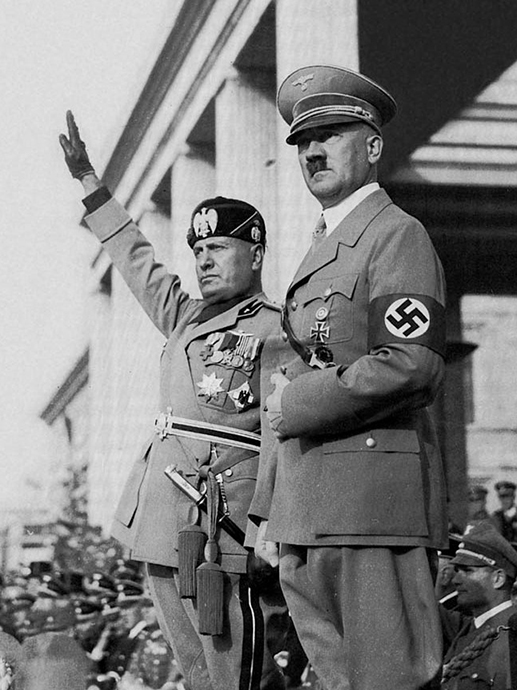
The world has witnessed the rapid rise and fall of fascist rulers such as Benito Mussolini of Italy and Adolf Hitler of Germany. Fascism is a political ideology characterised by dictatorial power that suppresses opposition, rejects democratic institutions, and undermines the federal nature of states. They promote aggressive ultra-nationalism.
Fascist regimes captured rival political leaders and parties and suppressed the opposition using state institutions and agencies. They seized control of the press and media, manipulating them to disseminate government-approved narratives. The activists were arbitrarily arrested, imprisoned without any trial, and made voiceless. Protesters faced torture without any provocation or public intimidation. Communities, associations and youth groups were brainwashed to fight on behalf of the ruler. They united specific groups of people by fabricating or exaggerating threats from internal or external enemies.
Fascists sought to dominate every facet of public and private life, including education, the arts, the press, the judiciary, and the economy. The fascist regime fostered unwavering loyalty to a singular charismatic leader, who was depicted as infallible and capable of rescuing both individuals and the nation.
The fascist government relies on a fragile illusion that the public is a community of fools. Once that illusion is cracked through projecting their failure or mass mobilisation, the entire structure of fascism collapses with startling speed.
The initiative spearheaded by the CJP (Cockroach Janta Party) and the brave Gen Z of our nation shattered the illusion of the BJP government, resulting in Dharmendra Pradhan resigning as higher education minister, as he accepted responsibility for the NEET examination question paper leak. This marks a true triumph of democracy over fascism.
The divided and trembling opposition party has been unable to stand against the dominance of Modism while it remains in power. The power-hungry and corrupt leaders of the opposition have aligned themselves with the BJP to secure their political future and to whitewash their corruption. The voice of the opposition has been silenced and marginalised by the authoritarian government of India. The incompetence of the organised opposition party allowed the government to transition from a democratic system to a fascist regime. The fascist leaders believe they hold supreme authority, assuming that the citizens of India are foolish enough to accept their statements without any question.
However, this illusion held by the BJP was shattered by dissenting voices, reminding the government that India is a democratic nation where ultimate power resides with the people. In a democracy, leaders are elected not to govern the people but to serve the public. Each elected representative is accountable to the citizens.
What is the accountability of the Modi government to the public? Individuals who raise questions are branded as anti-nationals and terrorists. If your hands are clean, why do you fear public scrutiny? As the Prime Minister of India, do you have the guts to hold an open press conference to discuss the NEET examination, the students' protests, and the government's response?
I urge you to refrain from historical deflection regarding Nehru and the previous Congress governments when the policies and administrative failures of the government are highlighted in Parliament. When you are lacking factual responses, you resort to fictional narratives from the past or ridicule the opposition. Attempting to shift focus from present issues serves as a defensive tactic for those who are afraid of questions.
As Indians, we experience a sense of shame when we consider a Prime Minister who chooses to appear on Instagram at night to share a reel instead of addressing pressing public concerns.
The fascists never held an open and independent press conference or unscripted journalistic questions. They primarily employed the media as a means for total propaganda.
Since 2014, the Modi government has tried to shift the nationalism of India to Hindu nationalism, purposefully ignoring the constitutional values of sovereignty, fraternity, secularism and the democratic nature of our country.
From the outset, the Modi government has adopted a divide-and-rule strategy, and divided the people based on religion. They have advanced a Hindutva agenda in their political discourse, suggesting that minorities are relegated to second-class citizenship while Hindus are regarded as first-class citizens. Consequently, this has fostered a perception among individuals that their neighbours are adversaries.
Similar to the actions of fascist dictators, the freedom of the press has been undermined or seized. Legal measures are being implemented against activists and journalists. Posts from independent investigators and content creators are being deleted, and accounts are being blocked or restricted in response to government criticism.
In Anuradha Bhasin v. Union of India (2020), the Supreme Court of India determined that the right to freedom of speech and ex
Similar to the fascists, the government has seized control of democratic institutions and state agencies. Consequently, the people have lost faith in elections, the judiciary, and Parliament. Public sectors have been privatised and are now operated by corporate entities, which serve as financial backers for the government.
Critics are silenced, opposition is ridiculed, Gen Z are confronted with unemployment, farmers are dissatisfied, women are unsafe, and students are neglected. The government manipulates the future of the students and youth, deriding the aspirations of the poor and middle-class segments of the Indian population for the vested interests of the political leaders.
The CJP protest represents the second independence movement, spearheaded by Gen Z and the public of India without the support of any political party. The organised opposition party failed to weaken Modism, while the Gen Z movement has the potential to dismantle the foundation of fascism.
The students came together for a common purpose, transcending cultural, ethnic, linguistic, and religious differences. When the youth of India rallied to defend democracy and secure their rights, the fascist government and its authoritarian tendencies were compelled to retreat. If we stand united as one nation, no fascist regime can withstand our collective strength.
In times when governments adopt fascist ideologies or leaders turn into dictators, it is imperative that we unite and strive to reclaim our rights and safeguard the democracy of our nation.
Let the movement of the cockroach be inscribed in golden letters in the annals of Indian history.
.jpg)
.jpg)
.png) Jacob Peenikaparambil
Jacob Peenikaparambil

.png) John Dayal
John Dayal
.jpeg)
.png) Joseph Maliakan
Joseph Maliakan

.png) Dr Arnald Mahesh SDB
Dr Arnald Mahesh SDB

.jpg) Jose Vattakuzhy
Jose Vattakuzhy
.png)

.jpg) Isaac Gomes
Isaac Gomes
.png)
.png) Robert Clements
Robert Clements