

.jpg) Joe Eruppakkatt
Joe Eruppakkatt
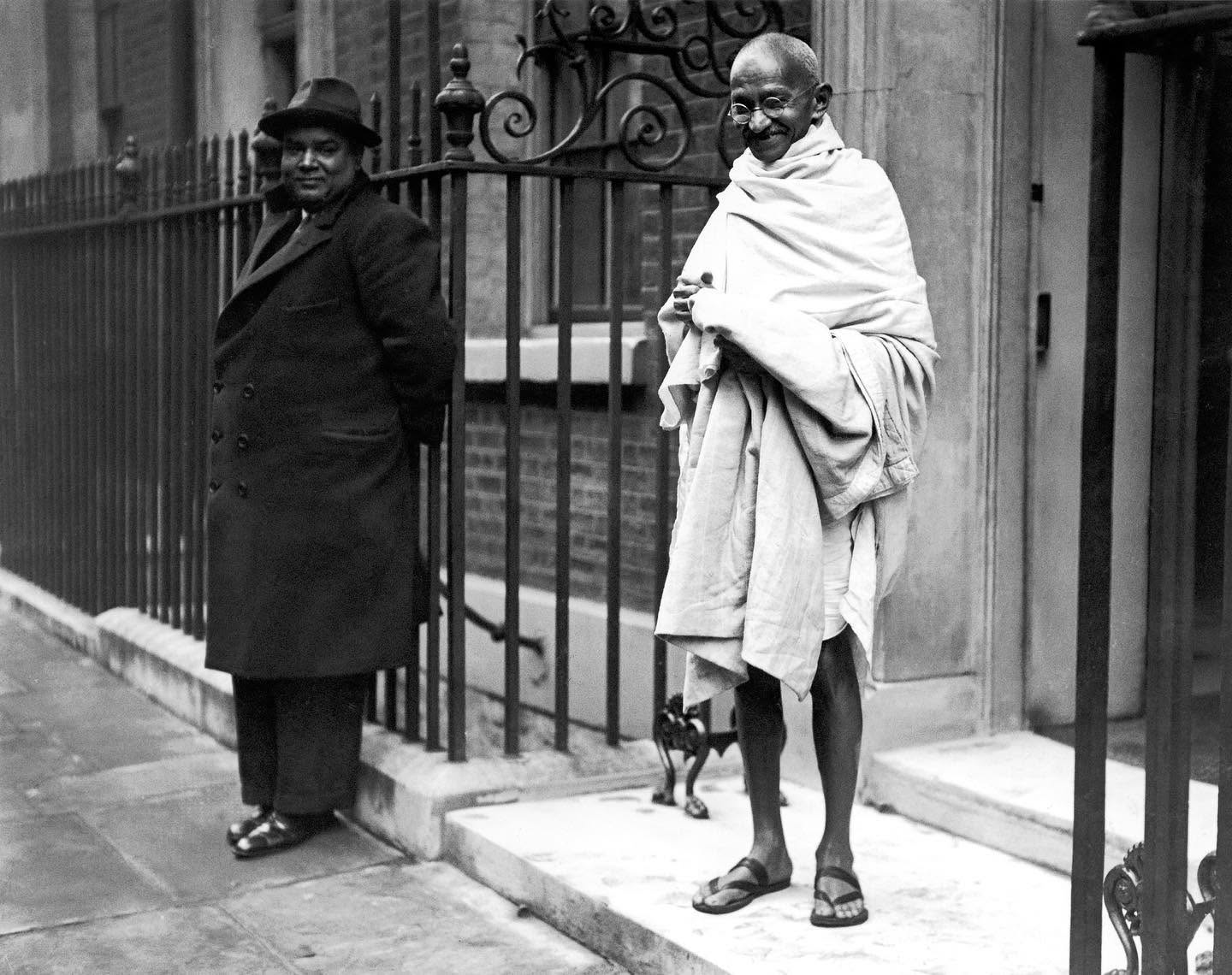
Mahatma Gandhi, a journalist par excellence, was also a highly effective speaker whose speeches perfectly complemented his written word. His 1931 speech at Chatham House, widely rated as one of his best, is a prime example. In this brilliant address, he passionately articulates his hopes for the future of an independent India.
Chatham House, the Royal Institute of International Affairs, is a world-renowned independent policy institute. For over one hundred years, it has served as a trusted source of independent analysis, informed dialogue, and influential ideas, offering unique access to insights from world leaders, policy influencers, and academics.
On October 20, 1931, Mahatma Gandhi had the unique opportunity to address an overflowing hall at Chatham House in London. The meeting was attended by influential British citizens drawn from all parts of England and was presided over by Lord Lothian. Full of hope and determination, Gandhi delivered a brilliant address outlining his vision for a future sovereign Indian State.
He began by telling the audience that he would seize every possible opportunity to connect with British public opinion and explain the core purpose of his mission: "I have therefore come before you quite selfishly, and I hope that the words I speak to you this evening will find a lodgement in your hearts."
He also invited the audience to ask questions at the end to clear any lingering doubts, noting, "I should like you to cross-examine me and ask me any questions you may like to put. I have found by experience that that is the only way of removing the mists of misunderstanding."
Why British Rulers Ignore India's Problems
Before diving into the core of his message, Gandhiji was at his satirical best as he boldly reminded the British people of their own domestic challenges: "You have your own problems, and at the present moment this great island of yours is going through a crisis such as you have never had to face within living memory. My whole heart goes out to you in your troubles, and I hope that you will soon be able, with your marvellous energy, to cut a way out of them." He hit the British Empire directly, suggesting that because they were so deeply immersed in their own pressing domestic crises, they lacked the time to truly study the complex problems of a distant land like India, which they were occupying.
India of Gandhiji's Time
Before mapping out the future, Gandhiji described the demographic reality of the India of his era: "India is a sub-continent by itself, nineteen hundred miles long, fifteen hundred miles wide, with a population of roughly 350 million. Of these about 210 million are Hindus, 70 million are Muslims, 3 million are Sikhs; there is also a fairly large Indian Christian population, and a very small European or, more correctly speaking, English population." The India of Gandhiji's time was heavily plagued by Hindu-Muslim-Sikh tensions. However, the issue that most deeply wounded his conscience was the practice of untouchability. The term itself, he argued, was a reproach and a curse upon Hinduism. "If untouchability is not rooted out of Hinduism, Hinduism should perish ... and if Hinduism harbours untouchability, it has no place on earth."
Yet, Gandhiji remained deeply hopeful: "Congress has made the removal of untouchability an integral part of its programme, and under the inspiration of Congress there are hundreds, perhaps thousands, of young Hindu reformers who have dedicated their lives to the removal of this blot upon Hinduism and upon India." He highlighted how these reformers dug wells, opened schools, built temples, and set up spinning wheels. Untouchables, who had long been condemned exclusively to scavenging, were being given opportunities to work as teachers, weavers, and skilled labourers. This shift, Gandhiji noted, restored tremendous self-respect to the community. He expressed firm confidence that once India gained independence, the curse of untouchability would be eradicated forever.
Rural Realities and Economic Reconstruction
Gandhiji outlined how more than 80 per cent of the Indian population depended entirely on agriculture. Because these villagers relied on precarious seasonal rainfalls, they were left without an occupation for more than half the year, resulting in abject poverty. "That being so, there is deep and ever-deepening poverty among the masses. The average income of the people for the whole of India is two pence per day." He became deeply emotional as he described his people living in semi-starvation: "They have no more than one meal per day, consisting of stale chapati and a pinch of dirty salt. There is no such thing as bread..."
In his speech, Gandhiji outlined a clear blueprint to look after the economic welfare of these masses. He argued that economic revitalisation could be achieved by introducing hand-spinning and hand-weaving during their six idle months – an occupation that had already successfully doubled the income of thousands of villages. "When we have done that, we have given these people a little bit of hope and courage and have put a little lustre into their eyes." Seeking to restore dignity to specimens of humanity who were "mere skin and bone," he insisted, "If we give them this occupation, we put into them new life and new hope."
Health, Sanitation, and Education
Turning to the despicable village conditions, Gandhiji offered a highly practical proposal for hygiene and sanitation: "Briefly speaking, it consists of turning human excreta into manure ... We are trying to do two things – to add to the wealth of the nation and to the health of the nation – and if we teach the people this method of treating human excreta, the result would be that we shall rid ourselves somewhat of the plague of flies, and sterilise, to some extent, the poisonous mosquito – not fully, I know, but it is a step in the right direction."
Furthermore, he noted that "malaria is essentially a disease induced by want." He argued that it could not be driven away simply by distributing packets of quinine; it was virtually useless unless starving villagers were also provided with milk or fruit, as their weakened digestive systems were otherwise incapable of absorbing the medication.
On education, Gandhiji openly blamed the British administration for rampant illiteracy, arguing they had dismantled the traditional village school system to introduce European-patterned institutions. "They scratched the soil and began to look at the root, and left the root like that, and the beautiful tree perished." Looking ahead, he was optimistic that a free Indian State would revive the traditional village schoolmaster and dot every single village with a school accessible to both boys and girls.
Restructuring National Expenditure
Even back in 1931, Gandhiji passionately advocated for sweeping cuts to military spending to balance the national budget: "I have told you what we would do constructively, but we should have to do something destructive also. The military expenditure takes 62 crores – an enormous sum for this country whose average income is two pence a day. Compare that with the military expenditure of any country on earth, and you will find that India is groaning under a weight that is insupportable. We should immediately set about restoring the scales, and if I could possibly have my way, we should get rid of three-quarters of the military expenditure."
He also firmly maintained that India's massive military budget was entirely inconsistent with the non-violent methods being used to fight for freedom, asserting, "We are convinced that we do not need the arms that India is carrying."
Political Freedom for India
Finally, at the request of the Chairman, Gandhiji spoke directly on India's terms for political freedom. He clarified that the Indian National Congress wanted nothing short of complete political independence, which inherently meant full domestic control over the army, foreign relations, and national finance.
He struck a powerful chord when he stated that Indians were determined to throw off the foreign yoke at any cost, regardless of how much the "British Lion might put out his claws and defy the civil disobedience that India might offer."
Gandhiji's ultimate faith in a free India never wavered despite the nation's immediate material vulnerabilities. He acknowledged that Indians were not armed like the British and did not know the science of conventional warfare. "They are called a gentle race, and I am glad to belong to a gentle race," he remarked. "But weakness of body did not matter when we have stout hearts."
According to Gandhiji, India was undergoing a massive awakening and its people had grown deeply impatient with foreign control. India was bound to regain the freedom it had lost for so long – with British cooperation if it were given, and without it if it were withheld.
He concluded with a stirring appeal not just to the British public, but to all of humanity, asking that a nation attempting an experiment in non-violence on a scale completely unknown to human history should receive the full measure of moral support from the nations of the world.
A Contemporary Reflection: The Ongoing Quest for True Freedom
As India celebrates another Independence Day on August 15, Gandhiji's words at Chatham House echo with profound relevance. Nearly a century after he outlined his vision, India has achieved extraordinary milestones that would have been unimaginable in 1931. The nation has broken the shackles of absolute poverty, emerged as a global economic powerhouse, and sent missions to space. The "gentle race" Gandhiji spoke of has built a resilient, modern republic. Yet, as the tricolour unfurls across the nation, this annual milestone brings a moment of sharp introspection: Has India achieved the true freedom that the Mahatma envisioned?
Tragically, the modern Indian consciousness still longs for liberation from systemic internal crises. In stark contrast to the democratic ideals Gandhiji visualised, the present reality is marred by the deliberate misuse of democratic institutions – stretching from investigative agencies and the judiciary to the Election Commission, elected representatives, media organisations, and the centres of higher education. They conspire to suppress dissent and snatch and grasp absolute power to subvert the Constitution of India.
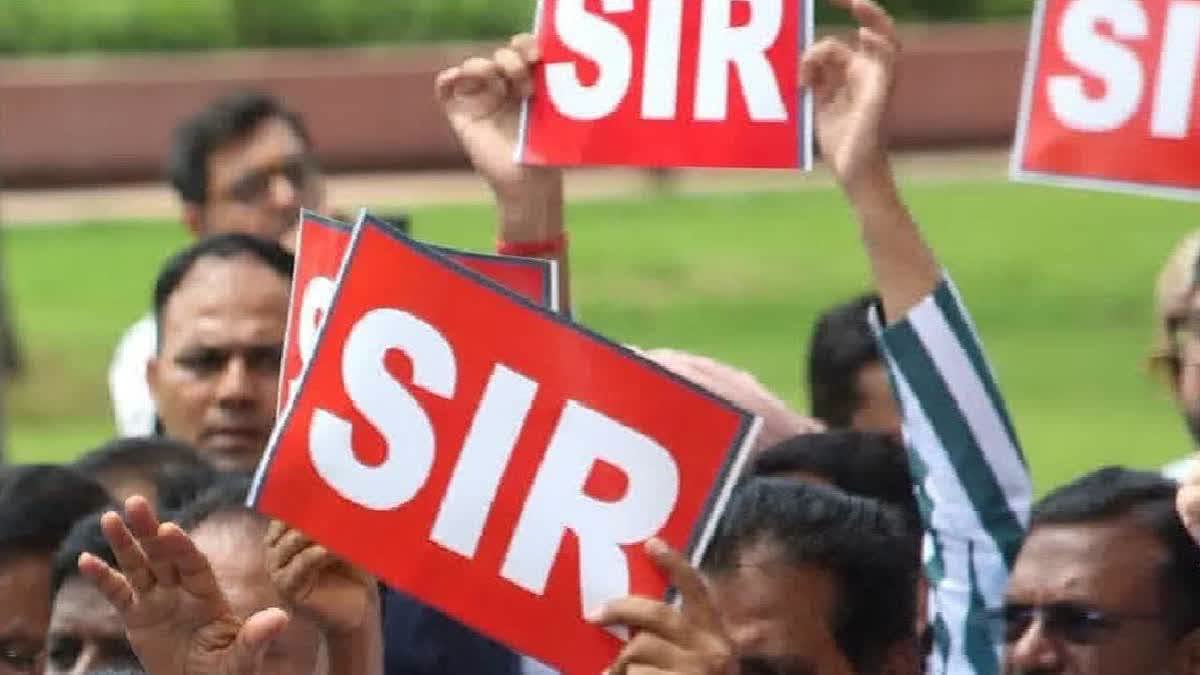
Today, the citizens witness an alarming erosion of fundamental rights, state-backed media censorship, and systematic attacks against minorities that threaten the very pluralistic fabric Gandhiji spoke of and died protecting. Compounding this distress is the profound anxiety surrounding the "vote chori" – the subversion of electoral integrity, manipulation of democratic mandates, and a flagrant lack of respect for constitutional checks and balances.
True freedom, in the Gandhian sense, was never merely replacing a foreign ruler with a domestic one; it was the total moral and social upliftment of the last person in the queue. To honour his legacy on this August 15 is to realise that independence is an ongoing battle against autocracy in all its forms. True freedom will be realised only when the nation pairs its material might with the moral courage of "stout hearts," firmly reclaiming the spirit of the Constitution to ensure justice, absolute harmony, and equal dignity for every citizen.
.jpeg)
 A. J. Philip
.jpg)
.png) Jacob Peenikaparambil
Jacob Peenikaparambil
.jpg)
.png) John Dayal
John Dayal
.jpg)
 Pachu Menon
.jpg)

.png)
.png)
.png) Robert Clements
Robert Clements
.jpg)