

The youth protests that forced the resignation of the Education Minister marked a genuine political blow to the government. For the first time, public pressure compelled a government that has otherwise projected arrogance and manufactured invincibility to remove one of its own. Worse for the government, the pressure came from the very constituency it had taken for granted — the youth — a group it assumed it had captured through relentless messaging on social media.
The blow did not come in isolation. It came in the very next sitting of Parliament, in which the delimitation bill was decisively defeated. Two blows in two consecutive sittings dealt a significant setback to a government that has spent enormous resources cultivating, through its IT Cell and a compliant legacy media, an inflated image of competence and control under Prime Minister Modi.
True to form, Modi tried to salvage the situation the way he has managed adverse political winds before — through rhetoric and propaganda at full blast, this time through Instagram, one of the youth's primary information channels.
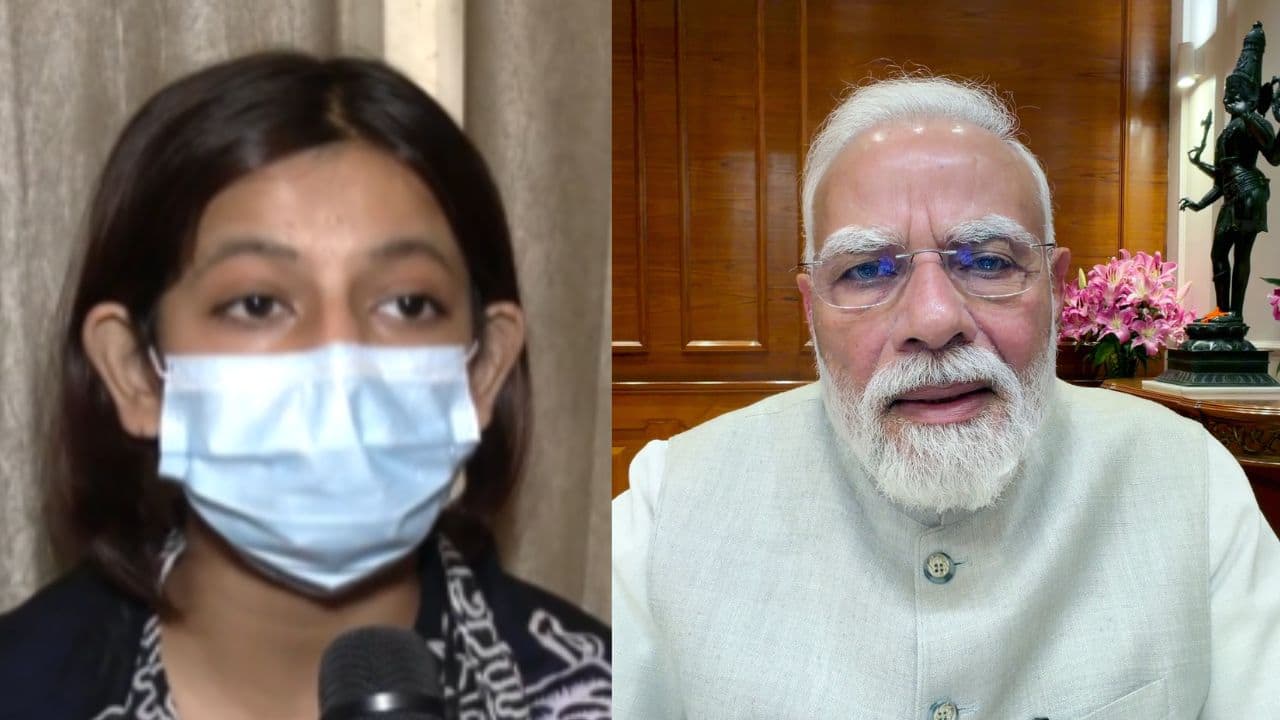
"These are misled children. Showing them the right path is our duty. Punishing them, making them run around courts, or tormenting them in society will not change the situation," Modi said in a video posted on social media, adding that "disgusting expletives" had been directed at his late mother during the protests.
Instead of defusing the anger, the remarks triggered a sharp backlash across society — for good reason.
The BJP operates under the illusion that its propaganda machine has successfully hoodwinked the public, even while presiding over what critics call the poorest-performing government in India's post-independence history. But it is lived experience, not messaging, that shapes public judgment — and that experience has included a fraying social fabric, economic strain, persistent price rises, rising unemployment, the growing reach of extra-constitutional actors, breakdowns in law and order, increasing caste and communal violence, and reputational damage on the world stage.
Holding power is not proof of good governance either, and the BJP's last two electoral victories remain contested. In 2019, the party rode a wave of support following the Balakot strikes—an episode critics say was never fully explained to voters. In 2024, when the BJP was reduced to a minority government, the opposition alleged electoral fraud and says it has presented evidence that the Election Commission of India has failed to independently verify.
Importantly, none of that changes the deeper problem facing the party: the electorate itself is shifting beneath it. The BJP's electoral base skews towards Gen X and Millennials. According to Population Pyramids data, Gen Z numbers roughly 406 million, Gen X 347 million, and Millennials 229 million — together forming the overwhelming majority of the population, with a large share of Gen Z set to join the electorate by 2029.
Further, Gen X remembers a more promising India and has seen governments come and go. Millennials have watched governance fall short of its promises and find the present government wanting. Gen Z is different again. It is the most informed generation in the country's history. It reads widely, aspires to a globalised and progressive future with real economic opportunity, personal freedom and the rule of law, and has little patience for the theocratic, supremacist and caste-based framing the BJP-RSS hopes to fold it into. Rebellion comes naturally when its future feels threatened—and nowhere has that been clearer than in the protests now sweeping the country.
These generations are not misled. If anything, they are more aware than any previous generation of the gap between propaganda and reality.
Given the depth and persistence of these grievances—which extend well beyond a single question-paper leak—lecturing these generations was always going to backfire. That is now evident in the escalation of their demands to include the resignation of the Prime Minister, the Home Minister and others. They understand precisely what they are protesting.
For instance, these news-savvy youth know that India, once seen globally as a rising power and competitor across multiple sectors, now ranks 149th globally in nominal GDP per capita according to the International Monetary Fund (IMF), 157th out of 180 countries in the 2026 World Press Freedom Index of Reporters Without Borders, and 127th out of 163 countries in the Global Peace Index. Propaganda and misinformation — a staple aspect of the regime's governance — cannot fool young people who read such data regularly.
What fuels these generations' fury, however, isn't only the regime's record — it's also the morality, ethics, conduct and hypocrisy of the figures leading it.
"Who is Modi to forgive the teenage girl?" many are asking. After being pressured into apologising for a video criticising the Prime Minister, the girl from Noida has since faced rape and death threats from the same networks and public figures that have used degrading language, including slurs and insults hurled inside Parliament. The latest example came from former BJP MP Ramesh Bidhuri, who dismissed the Jantar Mantar protest by claiming that puncture repairers and locksmiths outnumbered actual students there — a remark widely reported as a veiled communal jab — and that those using abusive language "must be the children of puncture repairers."
It's true that, as social media shows, the Prime Minister himself is routinely subjected to far harsher personal abuse — now a recurring feature of political discourse worldwide. But the pointed question being asked is different: will Modi take responsibility for the backlash the teenager is now facing, and does his lecture on being "misled" apply equally to his own supporters?
"Does he understand the consequences of his statements?" ask some online, pointing to the hate campaign now targeting the teenager. "Or is it deliberate — meant to energise the hard-line right-wing base?" ask others. Whatever the answer, the outcome is not in dispute: hostility and threats of violence, in plain view.
Similarly, youth anger over the hypocrisy and duplicity of the BJP-RSS again came to the fore after RSS chief Mohan Bhagwat tried to do damage control following the Jantar Mantar police violence, saying, "Today's youth need discussion, not dictation." Youth promptly retorted on social media: "The same Bhagwat was in silent mode with eyes closed when lathi-charge was ordered on Gen Z and cases were filed against them..."
There is also the matter of a broken promise. The government committed to withdrawing cases against protesters and pursuing no FIRs against them. Yet FIRs have been registered against protesters in multiple states, and arrests have followed. The Indian Express has reported that even the teenager from Noida became the subject of a Zero FIR. For a generation already convinced the regime cannot be taken at its word, prosecuting the very protesters it promised to spare is not going to cool tempers. It will only confirm what they already suspected.
In short, the BJP-RSS ecosystem appears out of step with both the moment and the public mood. Its priorities, values, worldview and governing style seem rooted in an earlier era, when hierarchy and orthodoxy could sustain unequal and repressive structures regardless of public suffering. That era, critics argue, is over. The problem is not a billion misled young people. The problem is the regime.
Modi's clumsy attempt at conciliation is understandable given how much of the youth vote has slipped away — a trend underscored by the 2024 parliamentary elections, in which BJP support among young voters, according to data reported by The Hindu, fell by roughly three percentage points. In India's First-Past-the-Post system, a swing of that size is routinely enough to reshape electoral outcomes — a dynamic further compounded by opposition allegations that more than 70 parliamentary seats were affected by electoral malpractice that year. That erosion is now visible on the streets, as growing numbers of young people speak out against the regime's governance.
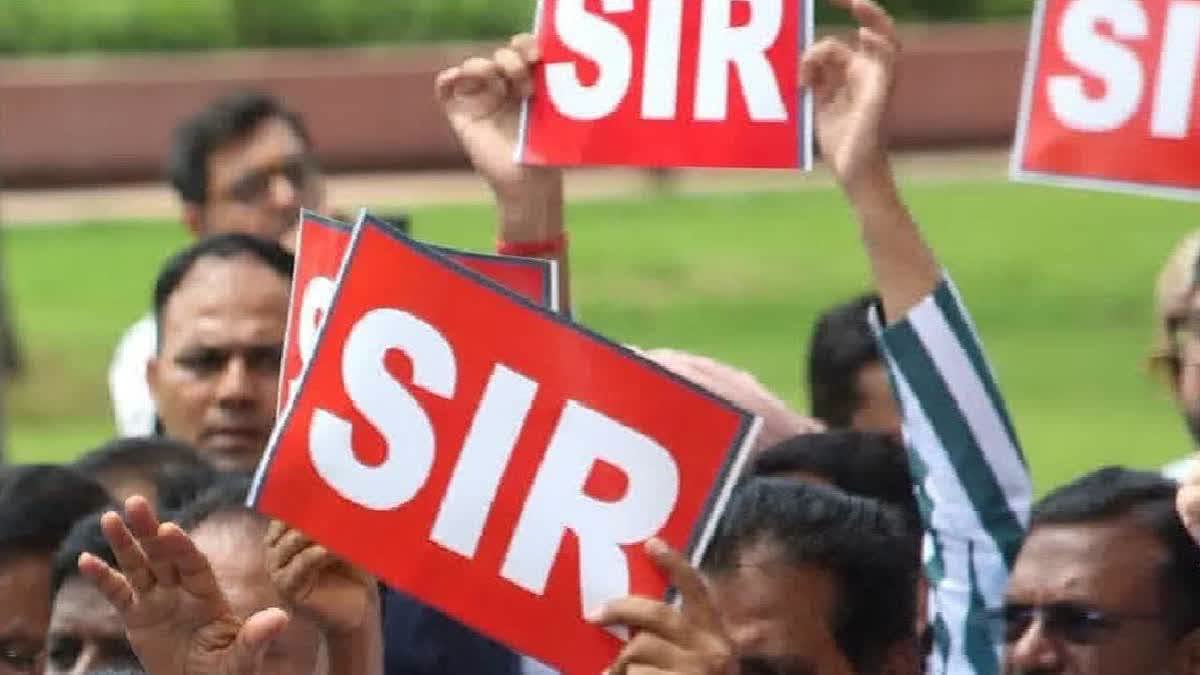
The manufactured "Modi wave" has run its course. Instead of attempting to win back the youth it was losing, the regime pursued a redrawing of electoral boundaries that would have reshaped the electoral map in the BJP's favour — potentially alongside the contested Special Intensive Revision (SIR) exercise — helping it retain power in 2029 and beyond, regardless of how the youth vote moved. In doing so, it appears to have hastened the very political backlash it sought to avoid.
Ultimately, the question is one of limits. At what cost can a regime cling to power? How far can it go in overriding the electorate? How much moral and ethical inconsistency will be tolerated in political life before the damage becomes irreversible? And how far will the country's international standing erode before the world takes notice?
The youth are not misled — they have had enough, and they are saying so in the streets.
The protests were not spontaneous. They are the culmination of years of frustration first voiced on social media and now in public squares. All that was needed was a trigger, and the NEET paper-leak scandal provided it. What began as anger over exam integrity has grown into open calls for the resignation of the Prime Minister, the Home Minister and others over grievances that touch nearly every aspect of public life.
The real question now is whether the regime has absorbed the scale of the backlash. Between the ongoing protests demanding Modi's resignation, the twin parliamentary defeats — the delimitation bill and the Education Minister's exit — and the Prime Minister's own Instagram videos, the signals are hard to miss.
And if neither side appears willing to yield, wouldn't it serve the national interest for the regime to change course — whatever the political cost — rather than dig in? As the Leader of the Opposition put it, "the past cannot fight the future." One side will win. One side will lose.
That is the reality now facing the regime. The real test is whether it responds with the judgment of statesmen focused on the national interest, or continues down a path shaped by the trappings of power, heedless of where it leads — for the country and for itself. It is the regime that is on trial, not the youth. To dismiss the youth as "misled" is to add insult to injury.
.jpeg)
 A. J. Philip
.jpg)
.png) Jacob Peenikaparambil
Jacob Peenikaparambil
.jpg)
.png) John Dayal
John Dayal
.jpg)
 Pachu Menon
.jpg)

.png)
.png)
.png) Robert Clements
Robert Clements
.jpg)