

.jpg)
Dharmendra Pradhan resigned as Education Minister. On the surface, it was student protests and national outrage over the brutality unleashed on young protestors in Delhi that forced his hand. The protestors deserve credit for their persistence over the last couple of months, culminating in the state violence of July 20, which shocked large sections of the national conscience.
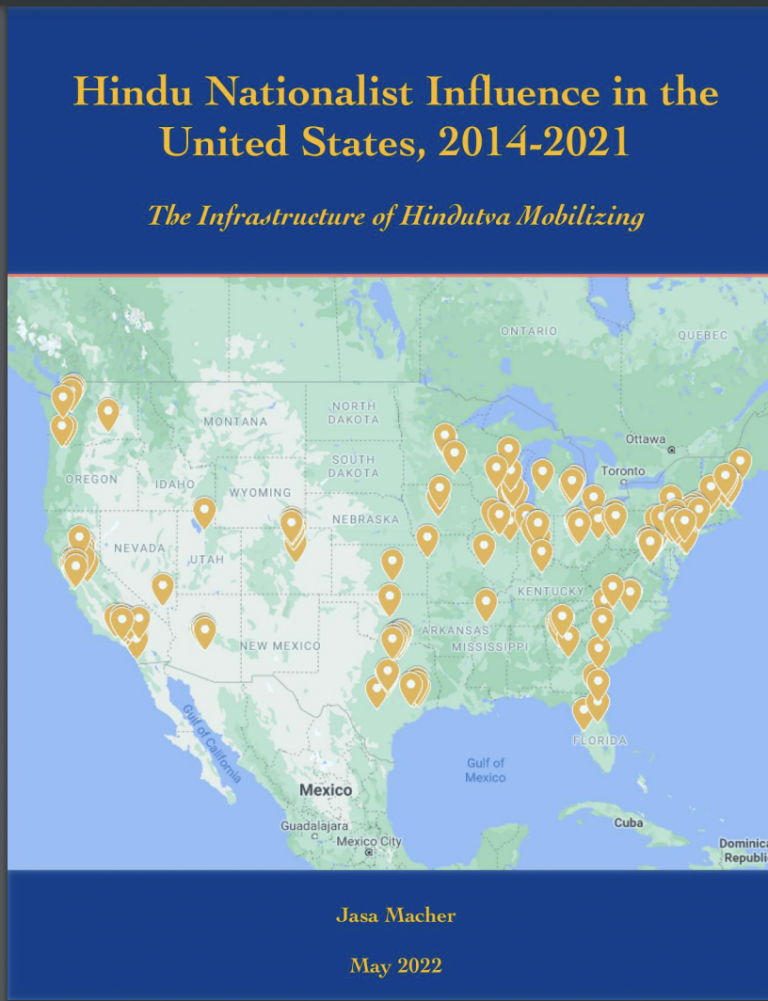
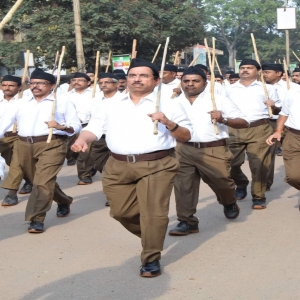
Analysts, on the other hand, argue that the regime acted against the former Education Minister because of the political implications of student power and its precipitating effect on the electorate over Bharatiya Janata Party's (BJP) electoral fortunes — implications that extend to Prime Minister Modi and the Hindu nationalist project he runs in partnership with the Rashtriya Swayamsevak Sangh (RSS), an organisation seeking to remould the nation according to a theocratic, Hindu-supremacist, majoritarian vision in which others are not equal citizens.
But the identity of the caretaker Education Minister makes clear that the resignation was only a tactical move to defuse the heat — whether it succeeds is another matter, as the subsequent parliamentary sessions revealed. The larger problem remains: that the nation's youth, along with the rest of the population, is being dragged, against their will, along a course that 63% of the electorate rejected at the ballot box.
Nothing demonstrates this better than the non-education banners that youth carried around the country: "From Class to Courtrooms, We Demand Justice." "You Are Not Rulers, You Are Servants." "Tax the Banks, Not Students." "Make Tea, Don't Make Fools of Us." "Dictators Fear Protest, Democracies Don't." "Free Pranab Doley (Adivasi Activist)." "All Is Not Well." "Down, Down with Linguistic Imperialism." "Stop Attacks on Minorities, Dalits and the Marginalised." "Modiji, Return My Achhe Din." "Down, Down with Hindutva-RSS." "Sell Tea, Not the Nation."
The theme is unmistakable: youth anger at a government in the dock for far more than leaked exam papers. One banner summed it up best: "No Sign Is Enough to List All the Reasons I Am Here."
While the NEET scandal and related grievances finally tipped India's youth into nationwide protest, their anger runs well beyond Education. Gen Z is a far more informed generation than any before it, armed with a lifetime of technological leaps that older generations never had.
Critics may note that some of these banners came from student unions aligned with opposition parties. Yet party youth wings exist precisely to give voice to constituents, and they have long protested the same issues the banners raise. Well before the concentrated Delhi protest of July 20 — met with pellet guns, nail-studded batons, and shock batons — youth had been on the streets under many different banners.
It was the convergence of all these grievances that produced the turnout that alarmed the state enough to answer with brutal violence. The NEET scandal, and the government's refusal to immediately sack the Education Minister despite repeated failures, was simply the tipping point that brought every strand of discontent together as one voice.
The youth's frustrations are many, not merely paper leaks — incompetence, democratic backsliding, the pursuit of Hindutva ideology as camouflaged state policy, economic mismanagement, erosion of the rule of law, the compromising of constitutional institutions, and crony capitalism, among other issues, as the banners reveal. These are the concerns of a vast majority of the population as well.
Crucially, the movement did not end with Pradhan's resignation. "We are resting and regrouping on what's next for us," Sudhir Sangwan, a member of the Cockroach Janata Party (CJP), told Al Jazeera. "The idea going forward is to put our weight behind one issue at a time. We want to take this movement to the grassroots."
Political analysts note that the CJP has offered no clear roadmap—possibly because it has none. Others accuse it of being a ploy by the regime to provide an outlet for frustrated youth. If true, the strategy appears to have backfired, as the movement was subsumed by youth mobilising under diverse banners and ultimately helped bring about Pradhan's resignation.
At the same time, social media fills with demands for the resignations of PM Modi, Home Minister Amit Shah, Transport Minister Nitin Gadkari, and Finance Minister Nirmala Sitharaman. Each of their governance records leaves much to answer for.
A Reuters digital-news survey underscores the scale of public frustration and distrust. It found that a striking 52% of the population now avoids the news altogether. Among those who do consume it, 58% turned to YouTube rather than legacy media, followed by 56% on WhatsApp, 45% on Instagram, 39% on Facebook, 23% on Telegram, and 16% on Facebook Messenger.
The reason for this disdain is not hard to find. It has long been evident that many mainline TV and print outlets function as conduits for government propaganda disconnected from ground reality — most blatantly when several of them tried to pin blame for the Delhi violence on the youth themselves. The public and the government are, on issue after issue, simply not on the same page.
What is even more revealing, though, is who replaced Pradhan: Pralhad Joshi, who already held the Union portfolio for Consumer Affairs, Food and Public Distribution, as well as New and Renewable Energy, has now been given additional charge of Education.
Pradhan and Joshi share one crucial trait: both are RSS members. As widely reported, Joshi joined the organisation young in Karnataka and rose to prominence during the communally charged Idgah Maidan flag-hoisting agitation in Hubballi between 1992 and 1994, before moving into full-time electoral politics with the BJP.
Pradhan's trajectory is similar: he began as an RSS pracharak-type grassroots organiser in 1983, building core loyalties to the BJP-RSS leadership and closely advancing the RSS's ideological priorities, particularly its push to restructure India's education system.
An investigation by The Reporters Collective found that under a new public-private partnership model for establishing 100 new Sainik Schools under Pradhan's watch, 62% of the first 40 school agreements went to entities linked to the Sangh Parivar, BJP politicians, and allied right-wing organisations. Of those 40, roughly eight schools are run directly by the RSS and its affiliates, while the rest went to BJP legislators or associated trusts.
It is also reported that Pradhan's ministry used central funding as leverage to pressure states like Tamil Nadu and Kerala into accepting the contentious National Education Policy (NEP), in which ideology takes centre stage. Under his watch, an increasing number of vice-chancellors and governing boards at premier institutions were filled directly from within the RSS ecosystem.
The News Minute also reports that the state-owned Oil and Natural Gas Corporation (ONGC) — one of India's largest public sector undertakings — donated ?670.97 crore to twenty RSS-linked organisations starting in 2013. Just under ?3 crore of that went to three of the twenty organisations between 2013 and 2015; the remainder was disbursed over the following decade, from 2014 to 2021 — precisely the years Pradhan served as Union Petroleum and Natural Gas Minister.
Now Prahlad Joshi — cut from the same RSS cloth — takes over as Education Minister, even as he remains under a cloud for his own record of gaffes and dubious mindset, recirculating via resurfaced media reports. A 2023 India Today report of a political rally in Karnataka quotes Joshi claiming that the lack of rural electrification under Congress rule was one reason the country's population had grown. A 2022 Indian Express report cites him calling for the release of the eleven convicts in the gruesome Bilkis Bano rape case — the accused additionally convicted for the murder of seven of her family members.
Whether a competent replacement has actually been found is debatable. But given his background, the strategy is transparent: concede Pradhan's resignation to placate the protesters while ensuring that the ministry remains under the stewardship of leaders with longstanding RSS backgrounds committed to advancing the RSS's ideological vision.
This fits a wider pattern of RSS influence within the Union government. As early as 2014, Scroll reported that senior bureaucrats were seeking the RSS's goodwill, believing ideological proximity could influence appointments. A 2020 report by ThePrint found that 71%—39 of 53—Union ministers in the BJP government had an RSS background, up from 61% during Modi's first term.
Likewise, in Modi's third term, although the Council of Ministers expanded to 72 members to accommodate coalition allies, many of the government's most influential portfolios—including the office of the Prime Minister and the ministries of Home Affairs, Defence, Education, Social Justice and Empowerment, Heavy Industries, and Road Transport and Highways—remain in the hands of ministers with RSS backgrounds. Taken together, these appointments highlight continuity in the RSS's influence over both ministerial appointments and the broader direction of government.
So while Pradhan's exit is welcome and a real demonstration of youth power in India's political life, the reality is that little is likely to change in educational policy — one RSS member exits, another cut from the same cloth steps in. A bill is introduced in the Parliament to punish those indulging in question paper leaks, but the bill does not include needed changes in education policy away from the ideological pursuit of the BJP-RSS.
This is not change; it is damage control that leaves the RSS's ideological grip on Education fully intact. Whether paper leaks stop under Joshi remains to be seen, but expecting any shift in the BJP-RSS's ideological project in Education as in other areas, such as social justice and economic parity, would be naive. It is a case of pouring old wine into a new wineskin.
Finally, even as Joshi took charge of the ministry and the government agreed to drop all cases against the protesting youth, it has stayed silent on demands that the police officials who orchestrated the violence be held accountable. Responsibility for that violence does not end with the Delhi Police, which falls under the Union Home Ministry, nor with the central forces that only the Home Ministry has the authority to deploy. Partial accountability is partial justice, and partial justice is no justice at all.
Until all the issues plaguing the nation are addressed in full, no reshuffling of portfolios will change the underlying reality: old wine keeps thriving in new skins, and responsibility for that rests with the BJP-RSS as much as with the allies propping up the government while showing scant regard for national welfare and democracy. Both the wine and the skin must change. The youth have shown the way — it is now up to every citizen to take it to its logical conclusion.
.jpg)
.jpg)
.png) Jacob Peenikaparambil
Jacob Peenikaparambil

.png) John Dayal
John Dayal
.jpeg)
.png) Joseph Maliakan
Joseph Maliakan

.png) Dr Arnald Mahesh SDB
Dr Arnald Mahesh SDB

.jpg) Jose Vattakuzhy
Jose Vattakuzhy
.png)

.jpg) Isaac Gomes
Isaac Gomes
.png)
.png) Robert Clements
Robert Clements