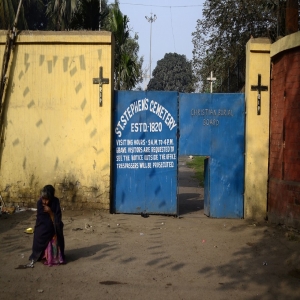


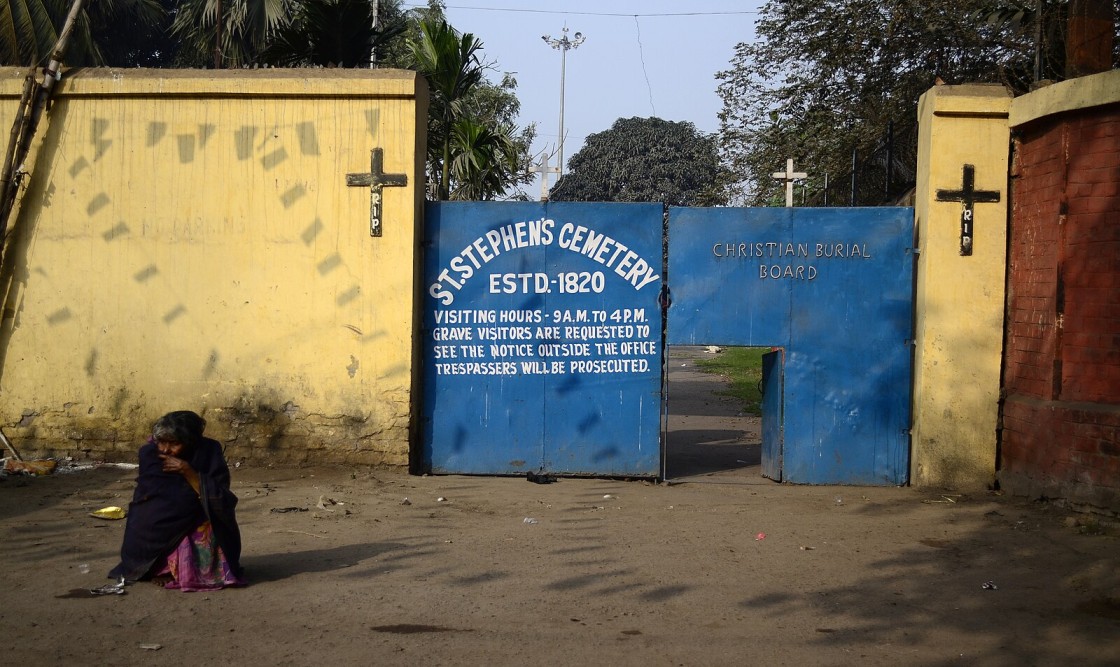
On December 15, 2025, in Kanker district, Chhattisgarh, a province in the central part of India, the father of Rajman Salam, an elected sarpanch (village headman), was buried according to Christian rites on the family's farmland. This is the traditional way of burying the dead in the area. Soon thereafter, a large mob allegedly incited villagers with a claim that under the PESA Act, they had a right to exhume the body. The mob asserted the land belonged to a local deity, and that a Christian burial was impermissible.
In November 2022, in the same region, an elderly Christian woman, Chaitibai, in Krutola village, Chhattisgarh, was denied burial space by village authorities, forcing her son to use family land. The family had initially been denied access to the village cemetery and was directed to bury the deceased on their own land. Subsequently, villagers and local political leaders attempted to exhume the body using a tractor, but the police prevented this attempt. The following day, however, the police themselves exhumed the body and reburied it in the Christian graveyard in Anantgarh pursuant to the orders of the District Collector.
These cases follow a documented pattern of violence and hostility against Tribal Christians.
Cases in Chhattisgarh, Odisha, and Jharkhand reveal coordinated intimidation. Burials are becoming contentious and politically charged. Grieving families are forced to face violent mobs, forced exhumations and forced conversions of faith.
The United Christian Forum recorded 23 burial-related incidents (19 in Chhattisgarh, 2 in Jharkhand, and one each in Odisha and West Bengal) in 2025, whereas 2024 saw around 40 such cases (30 in Chhattisgarh, 6 in Jharkhand, and others in Bihar and Karnataka). One recent report also describes Christians being denied burial rights on ancestral land and a climate of fear among pastors and converts.
Most affected villages do not have designated Christian burial grounds, and historically shared communal graveyards have increasingly been treated as Hindu-only spaces. Families attempting to bury their dead within the village face opposition, even where they have buried relatives for generations. Where Christian-only graveyards exist, they are often located far from tribal settlements.
Additionally, families frequently lack access to a mortuary, transport, or time to undertake legal procedures while a body is decomposing at home. This practical hardship often prevents immediate complaint-making, which in turn allows authorities to record "no dispute."
In November 2025, villagers in Jewartala of Balod district in Chhattisgarh refused to allow the burial of Raman Sahu, a Christian convert, claiming that only "traditional" village rites were permissible. Just weeks earlier in Koderkurse, Kanker district, Chhattisgarh, another Christian man's body was turned away from multiple villages for three days, with police unable to secure a burial site.
There have also been numerous instances of Ghar Wapsi and violence. The media has, over the years, documented Hindu nationalist groups in Bastar, Chhattisgarh, pressuring Adivasi Christians to "reconvert," including a filmed ceremony led by a local BJP leader. One recent report also describes a climate of fear among pastors and converts.
Exclusion of Tribal Christians from Constitutional Protections
Calls to delist Christian tribals from the Scheduled Tribe status are creating fear and division in states like Chhattisgarh, Madhya Pradesh, Jharkhand, Odisha and Rajasthan. Organisations such as the Janjati Suraksha Manch (JSM) have held large rallies urging that tribal communities who adopt Christianity or Islam be stripped of Scheduled Tribe protections, framing conversion as abandonment of "tribal identity."
These campaigns insist that conversion leads to the "loss of tribal identity," even though tribal status in the Constitution is not tied to religion. Field reports show that these campaigns have contributed to unprecedented violence, excommunication, and coercion. On the other hand, no similar objection is raised when tribals adopt Hindu practices, exposing the selective and discriminatory nature of the movement.
Many Adivasi Christians fear that being pushed to use these Christian-only burial sites will later be used to challenge their Scheduled Tribe identity and demand their "delisting."
Larger Context of Violence against Christians In India
Between 2014 and 2024, incidents of violence against Christians rose from 139 to 834, reflecting an alarming increase of more than 500% over a single decade. The total number of documented incidents over these 12 years reached 4,959, affecting Christian individuals, families, and institutions nationwide.
There are over 700 incidents in 2025 (Jan-November) affecting families, churches, schools, hospitals, and service organisations. Vulnerable communities impacted: Dalit Christians, women, and tribal Christians. Just two states, Uttar Pradesh and Chhattisgarh, account for 48% of all violence.
Only 45 FIRs (criminal complaints) were registered against members of the mob, despite nearly 580 incidents recorded in 2025, leaving 93% of incidents unreported due to administrative inaction and victims' fear of retaliation.
230 FIRs were filed against Christians, out of which 155 were under the Anti–conversion laws, and 800+ people went behind bars.
The two states with the highest number of wrongful arrests of Christians under anti-conversion laws are Uttar Pradesh and Madhya Pradesh. In Uttar Pradesh alone, since the law came into effect in 2020 and up to October 2025, more than 350 FIRs have been registered, resulting in the arrest of over 1,000 individuals.
This extreme violence and hostility at the time of bereavement in the family is a reminder that all is not well in the country. No family should be met with intimidation, assault, or threats in their time of grief because of their faith. The recent incidents, where Christian families have been blocked from burying their loved ones, forced to bury outside their villages, or even compelled to exhume bodies under pressure, show how grief and vulnerability can be weaponised.
The government's first obligation is to protect life, liberty, and dignity, especially when a family is most vulnerable. If police and local authorities cannot ensure a lawful, peaceful burial and instead allow mobs to dictate who may grieve and how. The State, by failing to protect communities, is enabling impunity.
We call on the governments of Chhattisgarh and Odisha to:
1. Implement a time-bound compensation and rehabilitation plan for displaced Tribal Christians, including land restitution, rebuilding of homes, and livelihood support.
2. Direct the State Director General of Police to initiate departmental action against police personnel who fail to prevent or respond to violence against religious minorities.
3. Direct every Gram Panchayat and urban local body to identify, notify, and maintain a "common graveyard" area that is religion-neutral and accessible to all residents, including converts and minority communities. The allotment should be backed by written land demarcation, public signage, and entry in local land records, with a clear protocol that no burial may be obstructed by private actors or mobs.
4. Designate a nodal officer at the district level to ensure immediate police protection during funerals where tensions are anticipated, and any attempt to block a lawful burial or exhume remains should trigger prompt criminal action and disciplinary proceedings for official inaction.
 A. J. Philip
.jpg) A. J. Philip
A. J. Philip
.jpg)
.png) Jacob Peenikaparambil
Jacob Peenikaparambil
.jpg)
.png) Cedric Prakash
Cedric Prakash
.jpg)

.png)
.jpg)
.png) Ram Puniyani
Ram Puniyani
.png)
.png) Robert Clements
Robert Clements
.jpg) Cedric Prakash
Cedric Prakash