

 Pachu Menon
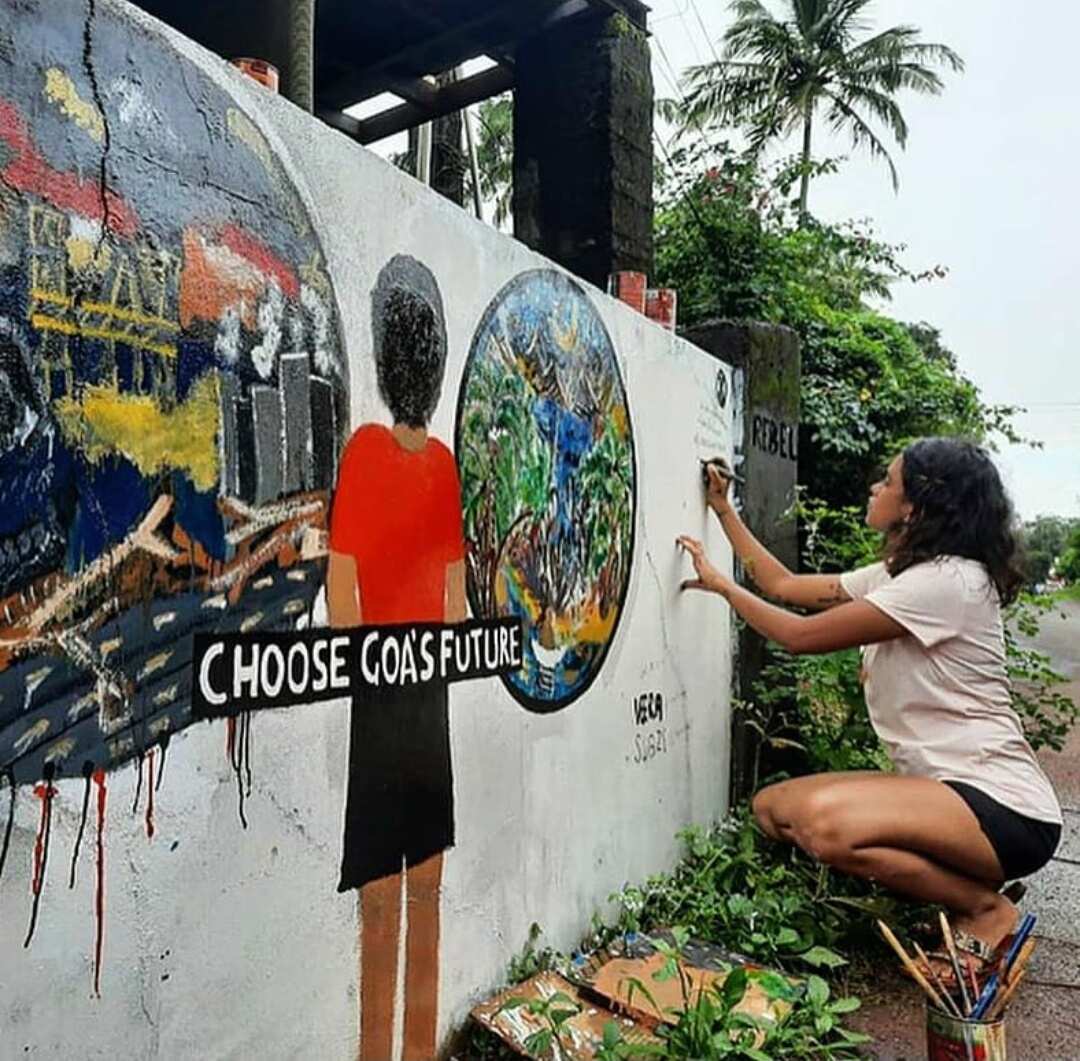
Modern-day anti-government campaigns have heavily banked on digital platforms to spread their message, mobilise support, and challenge existing power structures. In Goa, though, it has been all about saving Goa for posterity! The unique fight to save Goa involves a multifaceted movement by citizens, scientists, artists, and lawyers to protect its environment and cultural identity.
Key battles have focused on stopping environmentally destructive projects like mega-highways and coal corridors, leading to successful campaigns such as the 'Amche Mollem' Initiative, which used strategic litigation, digital activism, and protest art to force government and court scrutiny of these projects.
Over recent decades, environmental activism has centred heavily on championing sustainable development, advocating for the preservation of natural heritage, and pushing these issues to the forefront of public and political discourse.
These initiatives collectively aim to balance economic progress with long-term environmental stewardship, ensuring that current development does not compromise the ability of future generations to meet their own needs.
Goans have demonstrated significant mobilisation against development projects perceived as threats to the state's unique environment and cultural identity.
In this respect, activism in Goa has at times scaled unprecedented heights.
For a long time now, the state has had a band of dedicated campaigners who have been crying hoarse over the systematic denudation of the state, not only of its natural assets but also of its unique cultural identity. The long-standing and active environmental activist community in Goa has been vehemently opposed to anything that threatens the region's environment, natural resources, and unique ecological balance.
But the vanguard action of these 'crusaders' notwithstanding, Goa is seemingly tumbling into a vortex of environmental crisis and unsustainable development.
The destruction of natural habitats, pollution, and the strain caused by rapid, often unregulated, urbanisation and tourism boom have been persistent issues in Goa, leading to visible and severe environmental degradation.
However, it is observed that the success of activist movements in Goa relies heavily on the dedication and perseverance of a motley crew within them. The struggle in Goa is a conflict between development projects and environmental conservation, leading to protests from locals who fear the destruction of hills, water resources, and agricultural land.
The massive turnout from different corners of the state that greeted the 'Goyant Kollso Naka' meeting at Margao's historic Lohia Maidan on Sunday, November 9, needs to be seen as a representation of public will, marked by sustained grassroots activism, legal challenges, and community mobilisation. It was all the more encouraging to notice the sizable presence of 'digital natives' who have made the 'Save Goa' theme central to their very existence and advocated for the preservation of the region's unique environment, culture, and social fabric in the face of rapid, often unregulated, development.
Politicians, including MLAs and leaders of political parties, as well as social activists and citizens, took a back seat in the audience as they listened with rapt attention to the young brigade, which made its voices heard loud and clear. One couldn't help but be proud of the young generation and their commitment to safeguarding the land of their ancestors.
As the first generation to have grown up with the internet and social media as constant presences in their lives, Gen Z can play a crucial, positive role in conserving Goa through several impactful avenues, leveraging their digital fluency, social awareness, and innovative mindset.
When this young brigade shares the stage with older individuals to raise awareness about issues like Goa's environmental challenges, the dynamics often feature contrasting communication styles and activism approaches, but undoubtedly hold powerful potential for complementary action.
It is worth noting that Gen Z is changing the subtleties of activism by leveraging their digital fluency to create leaderless, decentralised, and hybrid movements that can mobilise rapidly and challenge traditional power structures.
Given their significant numerical representation, Gen Z's participation thus becomes crucial for shaping future political dynamics and public opinion. There, however, appears to be a significant level of cynicism towards traditional political institutions and the efficacy of conventional methods like voting. But their engagement does seem to extend beyond traditional voting to include signing online petitions, participating in demonstrations, using social media to voice opinions, and supporting influencers.
Activism by this generation can help Goa by pushing for environmental protection, promoting sustainable practices, holding the government accountable for local issues through grassroots movements and digital campaigns, and shaping consumer behaviour.
This young brigade has shown it has the resolve to raise concerns and demand answers to the anomalies plaguing the system today, in no uncertain terms. For all purposes, the anti-coal rally on Sunday served to be that catalyst not only for a rare political unity among Opposition parties in the state, but also for the emergence of the generation that has the potential to give the necessary fillip to a movement that could be a precursor to many more, which have the interests of Goa and the Goans at its core.
Realising that balancing community and conservation is crucial for sustainable development, Gen Z has been working to implement community-based conservation, addressing both human well-being and environmental protection by engaging local communities in managing the natural resources they depend on. These efforts often leverage social media for broader outreach and highlight a growing commitment among the younger generation in Goa to protect their local environment and heritage.
They partner with government bodies like the Goa State Biodiversity Board and local Biodiversity Management Committees to amplify their impact. Overall, Gen Z in Goa is actively shaping societal change. The collaboration between the Gen Z and seasoned activists in Goa is crucial because this synergy provides a powerful, multi-pronged approach to address the region's complex environmental and social challenges.
These youngsters can save their state by becoming active citizens who hold leaders accountable, protect the environment, preserve their cultural heritage, and drive positive change through entrepreneurship and social work. This would, however, entail speaking out against issues such as unemployment and environmental degradation, participating in civic and cultural activities, supporting sustainable tourism, and choosing paths that contribute to the long-term well-being of the region.
The need for youth activists to save Goa from destruction gains all the more importance. The view that the banner of revolution must be passed to the new generation is gaining wide endorsement in the state. The recent youth-led demonstrations, which signal a growing, proactive youth presence, are a hopeful sign that the state can address its challenges, including environmental concerns and the need for self-reliance.
With youth to the fore, Goa can breathe easy now!
.jpg)
 A. J. Philip

.png) Cedric Prakash
Cedric Prakash
.jpg)
 P. A. Chacko
.jpg)
.jpg)
.jpg) Thomas Menamparampil
Thomas Menamparampil
.png)
.png)
.png) Robert Clements
Robert Clements
.jpg)
.png)
.png) Chhotebhai
Chhotebhai