

.jpg) Bishop Alex Dias
Bishop Alex Dias
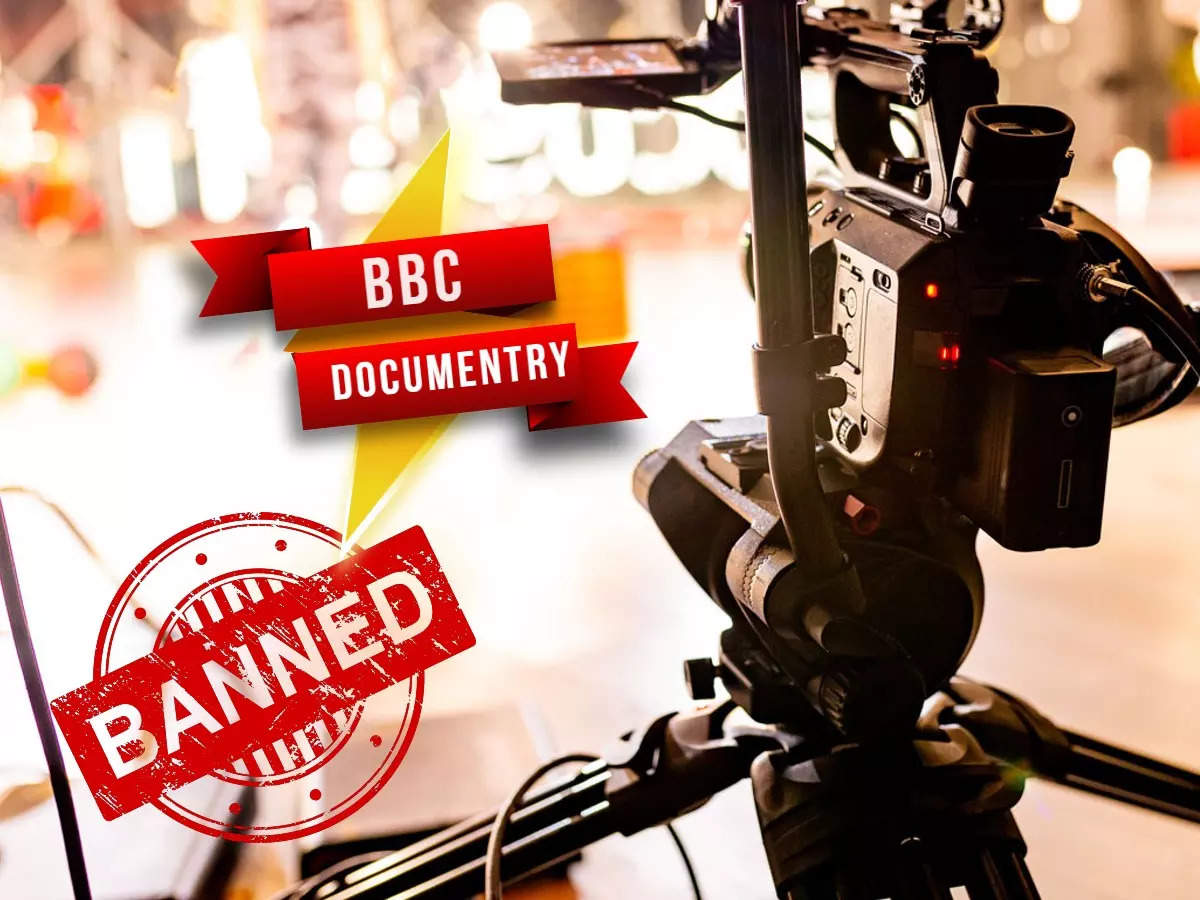
“Hi Buddy”, I said to my friend, whom I was meeting after a long time. “Where have you been, and what have you been up to, these years?” “Well,” he said, “I have been working for BBC”. That sounded very interesting since BBC has been very much in the news these days, since their documentary on Prime Minister Narendra Modi was banned by the Indian Government. Someone working for BBC, would certainly be able to give me much from the horse’s mouth, I thought.
Eager to have some more news from a BBC man, I pressed him into sharing what he was doing with the BBC. Laughing loudly, he said his BBC had nothing to do with the British Broadcasting Corporation, but it stood for Bombay Bekaar Company! All my hopes of getting something from the horse’s mouth being dashed, I couldn’t but help thinking I would have slapped this man for his unwanted joke!
The British Broadcasting Corporation has always been my favorite source for news and other knowledge. Apart from being a reputed News Corporation, I consider it a kind of an Alma Mater for me. I pursued my Communications Arts Studies at the Hatch End Communications Centre, London, way back in the late 1970’s. Although the Hatch End Communications Centre was an Independent Entity, it depended much on the BBC for its Staff. Most of our Staff members were drawn from the BBC.
I still remember our Study Visits to the BBC offices, in particular to the Bush House, which at that time served as the Headquarters of the BBC World Service. The Hatch End Communications Centre was led, at that time, by Rev. Fr. Agnelus Andrew, a Communicator Par Excellence. At that time, I remember how the BBC would fall back on Fr. Agnelus Andrew whenever they found themselves in difficulties. I remember the surprise election of Pope John Paul II, Papa Wojtila, from Poland. Nobody had expected a man from Poland to be brought in to replace John Paul I, the ever-smiling Archbishop from Venice.
With the rest of the world, BBC were also in the dark not knowing the newly elected Pope at all, and not knowing what to tell the listeners about the new Pope. It was a situation in which the reputation of the great BBC was at stake to fill in the slot reserved for the announcement of the election of the new Pope. The BBC could do nothing better than making a frantic call to Fr. Agnelus Andrew to ask him to say something about the new Pope, and save the reputation of the British Broadcasting Corporation. Fr. Agnelus Andrew very efficiently rose to the occasion. He played this clip for us to hear, to teach us, communicators in the making that, as communicators, we have to be prepared to step in and fill the void, whenever and wherever necessary. As a matter of fact, Fr. Agnelus Andrew did not have much to say in that clip. But he stepped in and filled in for the BBC to save its reputation.
My respect and admiration for BBC, therefore, goes back to those years when I almost held BBC as my Alma Mater because of the close cooperation, which existed between the BBC and the Hatch End Communications Centre, where I studied.
While I was still at the Communications Centre, Fr. Agnelus Andrew was picked up and taken by Pope John Paul II, and made the Director of the Communications Department of the Vatican. His gain for the Vatican and the Church was, no doubt, a loss for the Hatch End Communications Centre.
My regard and appreciation for the BBC continue still. The Government’s ban on the BBC documentaries has not been able to do away with that. If at all, it has provoked a surprise reaction in me. Why should India, which claims to be the biggest democracy, take such a harsh decision, casting aside all the regards the world has for the BBC, and every democracy worth its name should have for the independence of the Media, rightly considered to be the Forth Pillar of democracy.
Have we reached a stage where we are afraid of our own shadow, because we are afraid to be confronted by Truth? Even if the Documentaries of the BBC were not true and objective, why would the citizens of the world’s largest democracy not be allowed to act as mature citizens of a mature democracy? I did not have access to the documentaries, but what we have read about them, is very much corroborated by the media reports we had seen and read already at the time of Godhra incidents.
Truth and God
The third chapter of the book of Genesis of the Bible has a very interesting story about Adam and Eve. Tempted by the devil, who appeared to them in the form of a serpent, they gave in to the temptation of the devil, and sinned against God by breaking His commandment by which he had forbidden them from eating the fruit of the tree from the middle of the Garden of Eden. Immediately after they had broken the commandment of God, their eyes were opened, and they were standing in front of the Truth which confronted them and reduced them to shame. They realized that they were standing in front of God, whom they were afraid to face. God’s holiness confronted them in their misery, and made them realize that they were stark naked in His presence. So, they started to hide themselves by trying to cover their nakedness with the foliage of trees.
The people who are afraid of Truth try to hide themselves from it, but that is not possible because hiding from it, is hiding from God himself. God is all-knowing and He knows everything. Hiding from Him is not like sweeping the Truth under the carpet. All those who do this will be facing God in His time, and realize the futility of their efforts to run away from him. Even now we see that God often confronts those who engage themselves in a futile flight from God and from Truth. Sometimes at the hour of death, they are shamefully led to see their nakedness before God’s might. Haven’t we, and aren’t we seeing this happen even now?
Almost concomitant with the banning of the BBC documentaries was another incident, that of the shaming of the Adani Corporate following the exposure of its misdeeds by the U.S. based Hindenburg Research Group. The Adani Group, which had overtaken several other billionaires to be listed as the world’s third richest person on the Forbes billionaire list, came sliding down the Forbes ladder. Of concern for me, at this moment, is not the downfall of the billionaire. After all, he is only paying for his misdeeds.
My concern is that, once he has been caught by the study done by Hindenburg Research, he tries to defend himself by telling the world that Hindenburg findings are an attack on India! What a sorry piece of nationalism! And what is even worse is that our leaders keep quiet as if India were at fault in this misdeed. They should have come out shouting and yelling like they did after the BBC documentaries. After all, BBC was only using its freedom of speech, which it has always done in its transmission of the news to the world. And yet there was not a word to distance itself from Adani and his group. Were we afraid, or were we hand-in-glove?
Kudos to the BBC which bore with courage and determination the after-effects of its reporting. I was greatly encouraged to hear the Management of the BBC telling its Staff to go on reporting objectively and courageously. It is because of this courage and reliability of BBC that it has built up a reputation of a great News Corporation. It is no surprise that during the World War, some military decisions were taken only after listening to the broadcast of the BBC. May there be more of these who value truth more than anything else.
.jpg) Adv. Jijo Thomas Placheril
Adv. Jijo Thomas Placheril
.jpg)
.jpg)
 A. J. Philip
.jpeg)
.png) John Dayal
John Dayal
.jpg)
.png) Joseph Maliakan
Joseph Maliakan
.jpg)
.png) Cedric Prakash
Cedric Prakash
.jpg) Joe Eruppakkatt
Joe Eruppakkatt
.png)
.png)
.png) Robert Clements
Robert Clements
 A. J. Philip