

.jpg) Joe Eruppakkatt
Joe Eruppakkatt
"The President of India, as advised by the Prime Minister, has accepted the resignation of Shri Dharmendra Pradhan from the Union Council of Ministers, with immediate effect, under clause (2) of Article 75 of the Constitution of India…. With Mr Pradhan stepping down, Dipke described it as the movement's "first victory" but reiterated that the remaining demands – compensation for the bereaved families and action against those responsible for the alleged paper leak – were yet to be fulfilled" (thehindu.com – July 25, 2025).
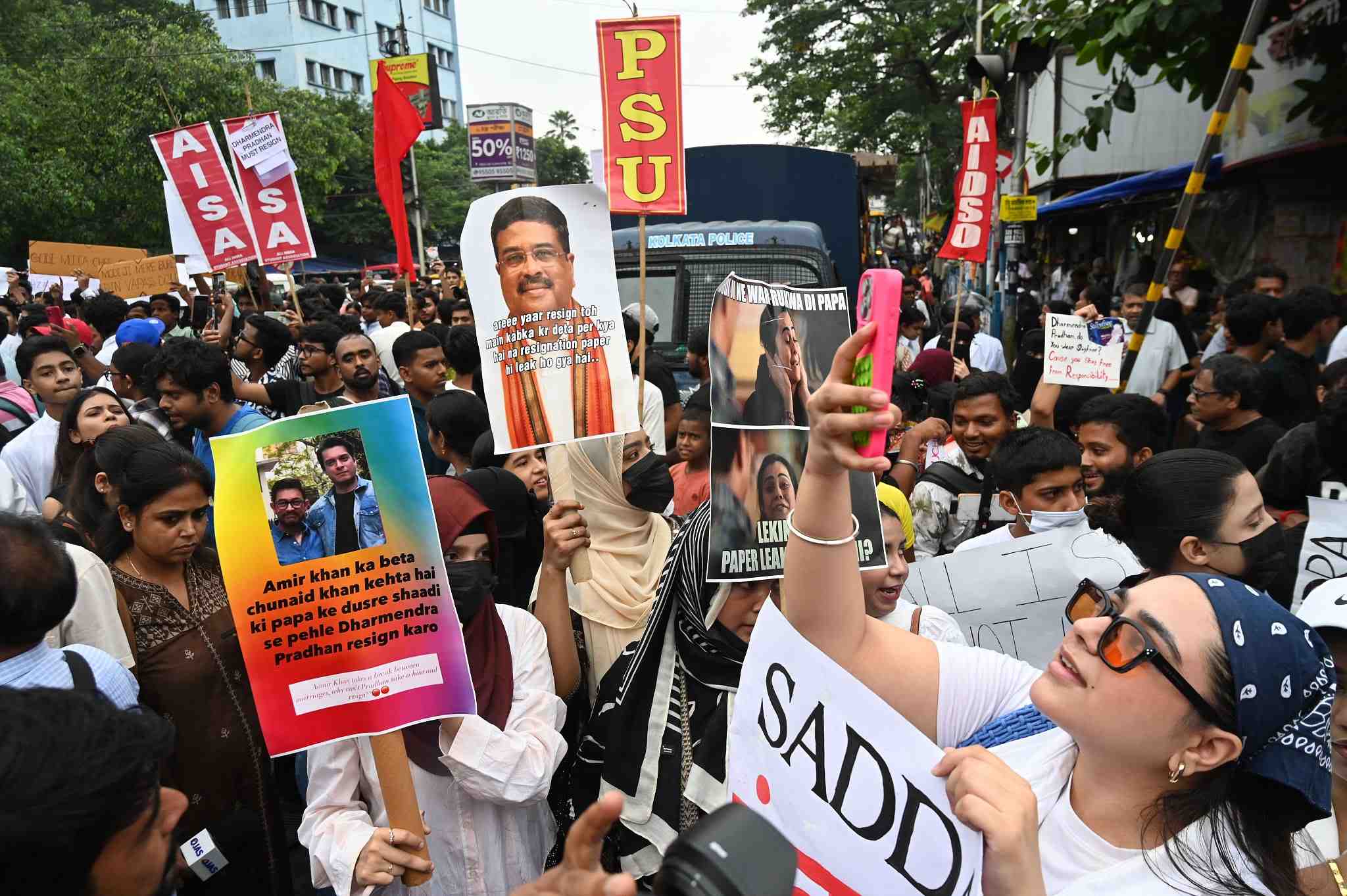
When tens of thousands of young students converged on the streets of Delhi under the banner of Cockroach Janata Party (CJP), filling the capital with slogans, banners, and an unyielding energy, they forced the political establishment to take notice. After ten intense days of agitation led by the youth movement, Education Minister Dharmendra Pradhan finally submitted his resignation.
On the surface, this looks like a resounding victory. The government yielded to a key demand, and other promises – such as financial compensation for the families of students driven to suicide, strict punishment for police officers involved in brutal crackdowns, and the complete withdrawal of legal cases against student leaders – may soon follow.
However, a critical question remains: Who truly won in this bargain?
Was such a massive, nation-shaking movement worth settling for these narrow compromises? While the forced resignation of a minister provides symbolic satisfaction and the appearance of victory, it simply serves as a quick escape route for those in power to silence public anger without fixing the core flaws of the system. If the youth simply accept these concessions and return home, the underlying basic issues that plague our nation will remain unchanged. Gen Z must not stop at temporary political fixes; they must look beyond quick wins and demand systemic solutions for the democratic challenges facing India today.
Six Structural Issues Gen Z Must Challenge
For real change to occur, young citizens must leverage their collective momentum to address the broader systemic crises weakening Indian democratic institutions.
1. Reclaiming Education from Commercialisation
Higher education in India has increasingly drifted away from its core purpose – fostering critical thinking and accessible learning. Today, education is treated more like a lucrative business than a public good.
Tuition fees at universities continue to surge while degree programmes remain disconnected from actual job market demands. Without viable job opportunities at home, India suffers a severe "brain drain," losing its brightest young minds to countries offering better career prospects and institutional support. Gen Z must demand a complete revamping of higher education – making degrees affordable, practical, and directly linked to sustainable employment so that national talent stays and thrives within India.
2. Protecting Electoral Integrity and Institutional Neutrality
A thriving democracy relies on fair elections overseen by an independent Election Commission. In recent years, public confidence in electoral bodies has eroded significantly due to concerns over appointment processes, absolute legal immunities granted to Election Commission officials, and persistent debates regarding the integrity of Electronic Voting Machines (EVMs).
To restore faith in the democratic process, the appointment of election commissioners must be entirely neutral and free from executive influence. Furthermore, institutional accountability must remain intact even after an official's tenure ends, and electoral systems must prioritise total transparency – including a serious consideration of returning to paper ballots to eliminate voter distrust.
3. Ending Political "Horse-Trading" and Demanding Accountability
The practice of political defection – where elected representatives throw party affiliations for monetary or political gain – devalues every vote cast by the public. When an MP or MLA switches sides after winning an election, they betray the electorate's mandate.
To eliminate horse-trading, any elected official who defects from their party must be legally mandated to resign immediately. Additionally, defectors should be barred from contesting elections or holding public office for a minimum of five years. Elected officials must answer to the voters who put them in office, not to political interests or financial incentives.
4. Stopping the Misuse of Federal Agencies
Independent investigative bodies such as the Enforcement Directorate (ED), Central Bureau of Investigation (CBI), and National Investigation Agency (NIA) are meant to uphold the law without bias. However, their selective deployment against political opponents, journalists, and dissenters undermines the rule of law.
When federal machinery is weaponised to intimidate critics, state agencies shift from public guardians into political enforcement tools. Gen Z must insist on strict judicial oversight over these agencies to restore their independence and constitutional integrity.
5. Safeguarding Minority Rights and Free ex
Article 25 of the Indian Constitution guarantees every citizen the right to freely practice, profess, and propagate their religion. Yet, minority communities and their institutions face increasing pressure from fringe elements, accompanied by legislation like the Anti-Conversion Law and the Foreign Contribution Regulation Act (FCRA).
Democracy cannot survive without protecting its minorities and safeguarding free speech. Young citizens must champion pluralism, ensuring that constitutional protections apply equally to every individual, regardless of faith, identity, or economic standing.
6. Ensuring Transparency in Public and Religious Trusts
Financial transparency is essential across all public institutions – including those governing major religious trusts like the Ayodhya Temple and other historical shrines across the nation. Those responsible for stealing public donations and heritage funds are to be strictly punished. Ruling authorities and trust managers must be held fully accountable to the public, ensuring that sacred and national resources are protected from misuse.
Keeping the Momentum Alive: A Blueprint for Civic Action
This moment does not call for violent unrest or the unlawful overthrow of elected governments. True democratic strength lies in continuous, vigilant citizen engagement, not in temporary chaos. Reactive agitation often focuses on single-issue resignations and disbands once empty promises are made. In contrast, proactive democratic action demands long-term policy reform and holds institutions continuously accountable.
Gen Z has proven that youth-driven movements can force the government to listen. The challenge now is to convert this temporary breakthrough into lasting institutional reform. By asking hard questions, monitoring legislative actions, and refusing to settle for surface-level compromises, the youth can ensure that government remains truly answerable to the people.
.jpg)
.jpg)
.png) Jacob Peenikaparambil
Jacob Peenikaparambil

.png) John Dayal
John Dayal
.jpeg)
.png) Joseph Maliakan
Joseph Maliakan

.png) Dr Arnald Mahesh SDB
Dr Arnald Mahesh SDB

.jpg) Jose Vattakuzhy
Jose Vattakuzhy
.png)

.jpg) Isaac Gomes
Isaac Gomes
.png)
.png) Robert Clements
Robert Clements