

 A. J. Philip
.jpg)
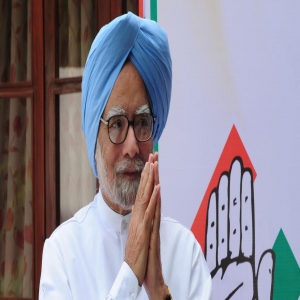
There is an old saying that courts pronounce judgments, but history delivers the final verdict. Every now and then, however, history requires the assistance of a court to set the record straight. That is what happened when the Supreme Court exonerated former Prime Minister Manmohan Singh in the coal block allocation case, eleven years after the case was registered and 17 months after he had departed this world.
Justice came, but much too late. When I wrote about the CBI court's decision in 2015 to summon the former Prime Minister as an accused, I welcomed it in an editorial for the New Indian Express. My reasoning was simple. No individual, however exalted, should be above the law. If the Court found sufficient grounds to summon a former Prime Minister, he should appear before it and prove his innocence. That, I believed then, would strengthen public confidence in the rule of law.
Today I have no hesitation in saying that I was wrong in one crucial respect.
Of course, the principle that everyone is equal before the law remains inviolable. What failed was the system's ability to distinguish between suspicion and evidence, between political accountability and criminal culpability. Eleven years of litigation have shown that there was no criminal conspiracy involving Manmohan Singh. Nor was there any corruption or quid pro quo. The Supreme Court has now made that abundantly clear.
Changing one's opinion in the light of fresh evidence is not inconsistency; it is intellectual honesty. Mahatma Gandhi said that if any of his views conflicted with an earlier one, his latest view should be regarded as his true opinion.
The Bench headed by Chief Justice Surya Kant did something remarkable. Since Manmohan Singh had already passed away, the Court could have quietly accepted the CBI's closure report. Nobody would have questioned such a course. Instead, the judges examined the merits of the case and concluded that the CBI court had erred in rejecting the closure report and summoning him as an accused. Allowance must also be made for the fact that the coal scam was investigated closely under SC's watch.
The verdict on July 29 restored not merely the reputation of one individual but reaffirmed an important constitutional principle: criminal law should not become an instrument for punishing people without adequate evidence.
To be fair, Manmohan Singh always maintained that the allocation of coal blocks was a policy decision approved collectively by the Cabinet. Governments may make flawed policies. Policies may subsequently be struck down. Administrative decisions may deserve criticism. But none of these automatically constitute criminal offences. That is precisely what the Supreme Court has now recognised.
Ironically, not a single tonne of coal was extracted from any of the blocks whose allocation became the centrepiece of what came to be known as Coalgate. Yet the phrase "?1.86 lakh crore scam" entered public discourse as though it were an established fact. The theory of "presumptive loss" articulated by the then Comptroller ànd Accountant General (CAG) Vinod Rai acquired a life of its own. Television debates converted estimates into convictions. Political speeches transformed allegations into accepted truth.
The damage was enormous. The coal controversy became one of the principal weapons used against the UPA government in the run-up to the 2014 general election. It helped create an impression that corruption had become institutionalised. Whether that perception alone determined the electoral outcome is debatable. That it substantially influenced public opinion is beyond dispute.
Manmohan Singh bore the brunt of that campaign. He was portrayed as weak, indecisive and complicit. His famous observation that history would be kinder to him than contemporary politics was mocked at the time. Today it sounds prophetic.
Long before this judgment, I had begun revisiting my assessment of him. About a decade ago, when Sanjaya Baru published The Accidental Prime Minister, I questioned the fairness of reducing a ten-year Prime Ministership to a tale of helplessness. I argued then that Indian politics was far more complex than the simplistic narrative of a powerless Prime Minister.
A man who successfully completed two full terms, steered India through the global financial crisis, secured the Indo-US civil nuclear agreement and presided over transformative legislation could hardly be dismissed as a mere spectator. That reassessment deepened after his death.
While writing an obituary, I recalled incidents that revealed the extraordinary simplicity of the man. His daughter, Daman Singh, narrates in her biographical work Strictly Personal how, as Governor of the Reserve Bank of India, he kept a notebook beside the official residential telephone so that every personal call made by his family could be recorded and the expense reimbursed to the government. I also remembered my own interactions with him during official visits abroad. Unlike many political leaders who prefer carefully managed encounters, he willingly answered uncomfortable questions from journalists with patience and courtesy.
He carried no air of office. He travelled light in every sense of the term. He used a Reynold pen that cost ?10. His possessions never defined him; his scholarship did.
I have often wondered whether such personal integrity has become a political disadvantage in contemporary India. Charisma attracts crowds. Rhetoric dominates headlines. Humility is mistaken for weakness. Silence is interpreted as inability. Yet there are moments when quiet decency leaves a deeper imprint than loud triumphalism.
The Supreme Court judgment cannot restore the eleven years he spent under the shadow of criminal prosecution. It cannot compensate for the humiliation of seeing his name in a chargesheet. It cannot erase the emotional burden borne by his family.
But it does something equally important. It reminds future generations that allegations are not evidence, and that reputation deserves protection until guilt is established. Public life often rewards the loud and overlooks the gentle. Democracies celebrate orators, campaigners and political gladiators. They seldom know what to do with scholars who speak softly, avoid confrontation and believe that reason is more persuasive than rhetoric.
Manmohan Singh belonged to that increasingly rare category. His greatest political weakness, according to many critics, was that he did not shout. Ironically, that was also his greatest strength.
Ironically, the man who derided Manmohan Singh as a "Mauni Baba" is himself unwilling to face the Press, whether in India or abroad. He mocked Manmohan Singh by saying he could "stand under a shower wearing a raincoat." History has turned that jibe on its head: the raincoat remained spotless because the man wearing it was never tainted by corruption.
I had the privilege of travelling with him on three overseas visits when he was Prime Minister. Anyone who accompanied him on those trips would remember a ritual that has almost disappeared from Indian political life.
Once the aircraft reached cruising altitude, the Prime Minister would emerge from his cabin and meet the journalists travelling with him. He would make a brief opening statement and then invite questions—any questions. They could relate to the visit, Parliament, domestic politics or any controversy of the day. There were no planted questions, no favourites and no visible irritation if someone asked an uncomfortable question. Representatives of the media houses accompanying him were chosen on a rotational basis.
He answered patiently. He listened carefully. He rarely evaded.
Those interactions were perhaps more revealing than the formal press conferences held with foreign leaders. Yet he acquired the label "Silent Prime Minister."
The irony has become sharper with time. Some of those who criticised his silence later discovered that speaking frequently is not the same as answering questions. Public communication is measured not by the number of speeches but by the willingness to face scrutiny. Manmohan Singh never feared scrutiny.
That confidence arose from something increasingly uncommon in public life: intellectual preparation.
Born in Gah, now in Pakistan, he lost his mother early and was largely raised by his grandparents. The trauma of Partition marked his childhood, yet it never poisoned his outlook. He excelled academically wherever he studied, eventually earning distinction at Cambridge and Oxford before returning to serve India in multiple capacities — as an economist, bureaucrat, central banker, Finance Minister and Prime Minister.
His life demonstrated the power of merit in a society often dominated by privilege. One of my favourite stories about him concerns his marriage.
When he first met Gursharan Kaur, he reportedly asked her what class she had secured in her BA examination. She replied, "Second class." Characteristically, he verified the information before agreeing to marry her. It sounds amusing today, but it also reveals the economist's instinct to verify facts before accepting them. Verification defined his public life as well.
His daughters never became informal centres of power. They never interfered in appointments or government functioning. The family maintained a dignified distance from political influence. In an age when public office often becomes a family enterprise, that restraint deserves recognition. That did not prevent his wife Gursharan Kaur from accompanying him on all his foreign visits. She was equally remarkable.
A relative of my wife served as her personal security officer. He often spoke about her kindness and simplicity. When he once suffered a fall while on duty, she repeatedly telephoned to inquire about his health. Such gestures never found their way into political speeches or publicity campaigns. They did not need to. They reflected character.
Much has been written about the legislative achievements of the UPA years—the Right to Information, the Right to Education, the rural employment guarantee programme, food security, forest rights, Aadhaar and the civil nuclear agreement with the United States. Critics may debate individual policies, but few governments have attempted such a broad expansion of citizens' rights within a decade. Now most of them are under threat from the successor government.
The tragedy is that these achievements were overshadowed by corruption allegations, many of which eventually collapsed under judicial scrutiny.
The 2G spectrum case ended in acquittals. Now the coal allocation prosecution against Manmohan Singh has also come to an end. History, it appears, has begun separating political narrative from legal reality.
This does not mean that every decision of his government was flawless. No government enjoys that distinction. Democratic governance demands accountability. Policies deserve criticism. Ministers must answer for administrative failures. Whenever his ministers came under a cloud, he asked for their resignation.
However, criminal prosecution requires evidence, not assumption. That is the lesson emerging from the Supreme Court's verdict.
The judgment is therefore larger than one individual. It should compel governments, investigating agencies and courts to ensure that prosecutions are not allowed to linger endlessly. An innocent person who spends a decade defending his reputation suffers punishment regardless of the final verdict. Justice delayed remains justice diminished.
When I wrote after Manmohan Singh's death, I observed that he was "more sinned against than sinning." The phrase, borrowed from Shakespeare's King Lear, captures his public life better than any elaborate biography.
He lacked the instinct for self-promotion. He did not cultivate personality cults. He never mistook office for personal entitlement. He believed institutions mattered more than individuals.
As India debates leadership in the twenty-first century, it may be worthwhile to remember another model of leadership, not dramatic, not theatrical, not constantly in campaign mode, but grounded in scholarship, restraint and personal integrity.
The Supreme Court has cleared Dr Manmohan Singh of criminal wrongdoing. History will decide everything else.
My own journey—from supporting his summons in Court, to defending his larger legacy, to mourning his passing, and now welcoming his complete exoneration—has reinforced one enduring lesson: opinions should never become prisoners of ideology. They must remain open to facts.
The final tribute we can pay Manmohan Singh is not merely to praise his honesty but to ensure that no honourable citizen has to wait until after death for justice to acknowledge it. May his soul rest in peace!
.jpg)
.jpg)
.png) Jacob Peenikaparambil
Jacob Peenikaparambil

.png) John Dayal
John Dayal
.jpeg)
.png) Joseph Maliakan
Joseph Maliakan

.png) Dr Arnald Mahesh SDB
Dr Arnald Mahesh SDB

.jpg) Jose Vattakuzhy
Jose Vattakuzhy
.png)

.jpg) Isaac Gomes
Isaac Gomes
.png)
.png) Robert Clements
Robert Clements