

.png) Joseph Maliakan
Joseph Maliakan
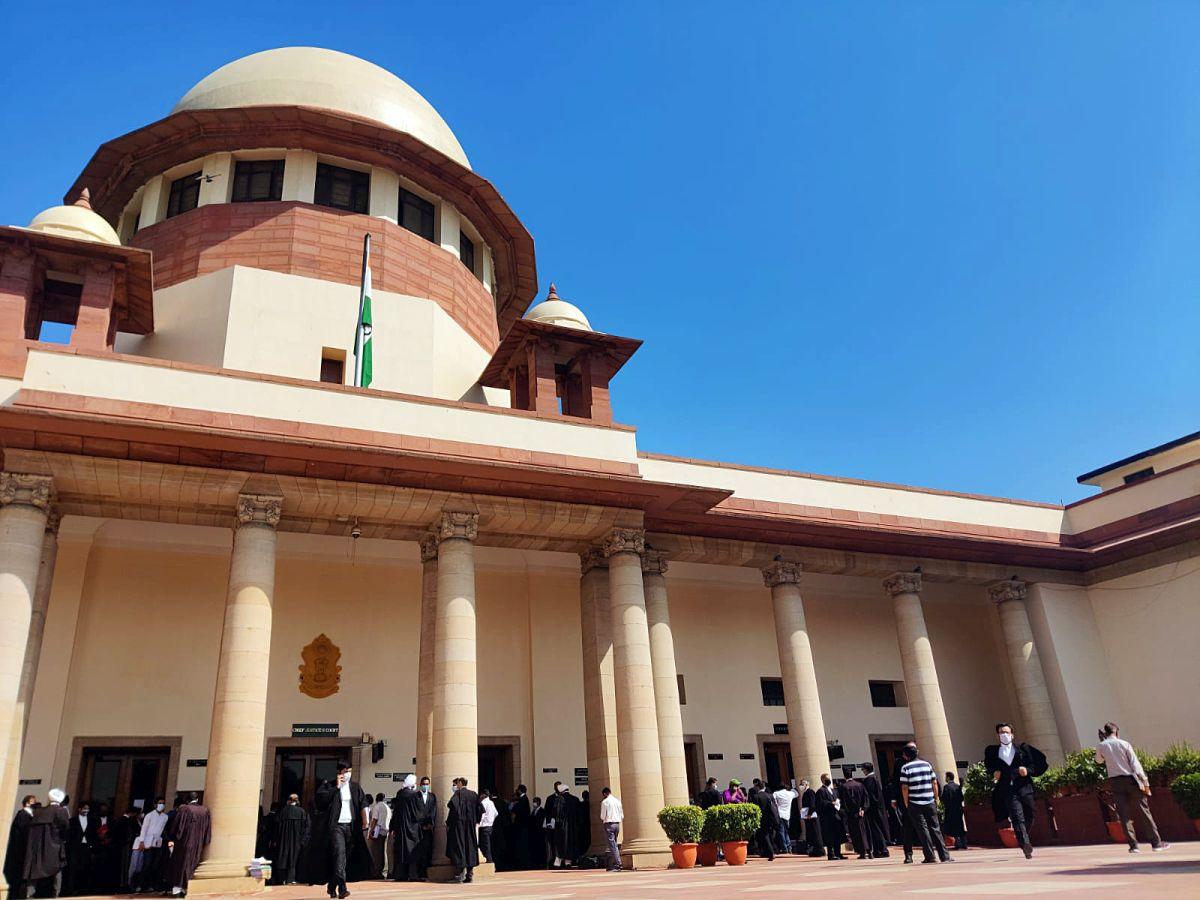
The nine-judge bench of the Supreme Court of India, presided over by the outgoing Chief Justice of India, DY Chandrachud, ruled on 5 November 2024 that not all private property can be considered "material resources of the community" under the Constitution. This ruling will have grave adverse consequences for India's endeavour to build a Welfare State.
The Supreme Court's ruling, which asserts that property serving individual needs cannot be seized by the state solely for welfare distribution, comes at a critical juncture. India is grappling with extreme inequality, with the top 1 per cent of the population holding a disproportionate share of the country's income and wealth.
In 2022-2022, the top 1 per cent of India's population earned 22.6 per cent of its national income and 40.1 per cent of its wealth, the highest since 1961. The Indian government spends very little on public healthcare and has promoted a commercial healthcare system, meaning decent healthcare is only available to the wealthy.
While poverty has decreased, many people who have escaped poverty are at risk of slipping back into poverty. The infant mortality rate in some of the poorest states in India is higher than those in sub-Saharan Africa.
According to the World Inequality Report 2022, India is among the unequal countries in the world, with the top 10 per cent and 1 per cent of the population holding 57 per cent and 22 per cent of the national income, respectively. The share of the bottom 50 per cent has reduced to a mere 13 per cent.
Viewed from the perspective of Article 39(b) of the Constitution (Part IV: Directive Principles of State Policy), which states that "The State shall, in particular, direct its policy towards securing that the ownership and control of the material resources of the community are so distributed as best to subserve the common good," the Indian State has failed in its duty to promote economic and social equality.
Supreme Court rulings so far have held that the Article in question grants states sweeping powers to acquire private resources for the common good. In the latest case, the question before the Supreme Court was whether private properties fell under the definition of "material resources of the community," as stated in the Article.
The 7-2 majority judgement authored by the outgoing Chief Justice DY Chandrachud categorically clarified that the state cannot appropriate property serving individual needs solely for welfare distribution.
The nine-judge bench delivered three separate judgements in the case. The Chief Justice wrote the majority judgement, and six judges, Justices Hrishikesh Roy, JB Padiwala, Manoj Misra, Rajesh Bindal, Satish Chandra Sharma, and Augustine George Masih, endorsed it.
Justice Sudhanshu Dulia, in his dissenting judgement, endorsed Justice V.R. Krishna Iyer's minority view in a seven-judge bench ruling in the 1977 Ranganath Reddy v. State of Karnataka case, which said that "material resources of the community in Article 39 (b) included privately owned property."
Justice BV Nagarathna disagreed with the interpretation of the Article. She wrote as separate judgements but concurred with the majority view on the substantive issues." Not every resource owned by an individual can be considered a "material resource of the community merely because it meets the qualifier of material needs," she wrote.
Though the Supreme Court, in the Ranganatha Reddy case, by a 4-3 majority in 1977, held that private property did not fall within the ambit of "material resources of the community," Justice Krishna Iyer's contrary minority view held sway in the years to come.
Article 39(b) was later reaffirmed by the Supreme Court in 1983, when the Court upheld the nationalisation of coal mines, relying on Justice Krishna Iyer's ruling. The SC held that the provision "takes within its stride the transformation of wealth from private ownership into public ownership and is not confined to that which is already public owned."
In the 1977 ruling, Justice Krishna Iyer said that both private and public resources form part of the "material resources of the community." Excluding ownership of private resources would undermine the very purpose of redistribution.
Justice Iyer further pointed out that "material resources included all the national wealth, not just public possessions." Everything of value or use in the material world is a material resource, and the individual's resources are a part of those of the community.
Endorsing Justice Iyer's opinion, Justice Dulia said, "There should be no confusion that the ex
The Supreme Court gave the present ruling acting on a challenge to the Maharashtra Housing and Area Development Act by property owners following a 1986 amendment. In 1986, a new chapter was added to allow the state to acquire properties for preservation purposes.
The addition declared that the amendments in the housing law intended to give effect to Article 39 (b), allowing the state to make policies for controlling, owning, and redistributing a community's material resources for the public good.
.png) Cedric Prakash
Cedric Prakash
.JPG)
 A. J. Philip

.png) Jacob Peenikaparambil
Jacob Peenikaparambil
.jpg)
.png) John Dayal
John Dayal
.jpg)
 Pachu Menon
.png)
.png)
.png) Robert Clements
Robert Clements