

.png) Dr Suresh Mathew
Dr Suresh Mathew
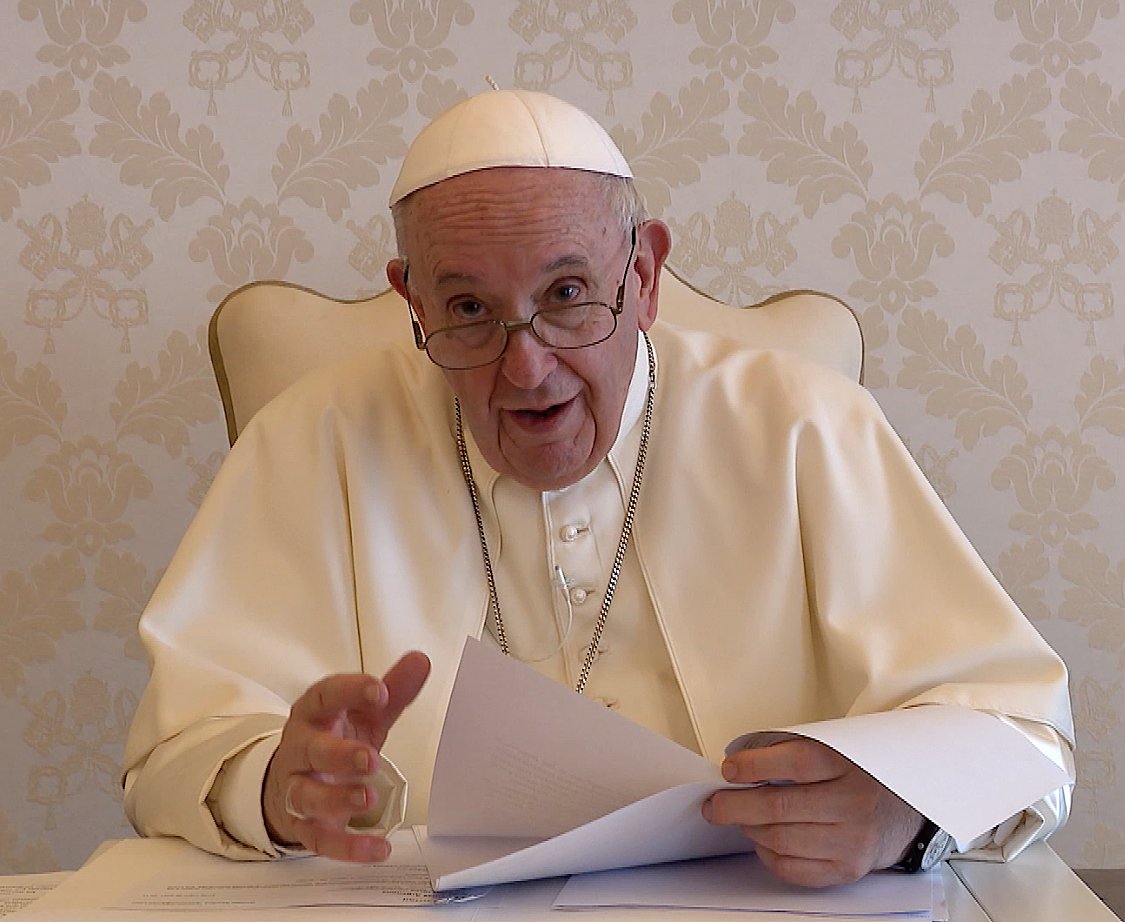
As the world is beset with unprecedented crises on various fronts, Pope Francis has made a timely intervention with a powerful message. In his recent video message to the Fourth World Meeting of Popular Movements, he reiterates his oft repeated opinion of preferential option for the poor and working for the common good. His message is an ex
His prescription to save the world from an impending danger of massive upheavals is to ensure proper implementation of redistribution schemes by the governments so that the excess wealth of one part of society is shared fairly with the other parts where there is a dearth of it. It is in line with this thought process that he calls for a universal basic income so that every human being is able to fulfill one’s basic necessities of life. His advice is in tune with economists who have recommended the same and many governments which have given effect to it. At a time when activists, academics, and religious leaders, who are engaged in the struggle for human rights and justice, are persecuted, put behind bar or bumped off with the backing of powerful individuals and organizations, the Pope’s gesture of calling them “the blessed” is relishing.
In a rare move, Pope Francis reinforces his appeals “in the name of God” giving it an aura of inescapability. His appeals are directly addressed to those in whose hands the reins of world economy and the fate of ordinary mortals revolve; he asks the financial groups and international credit institutions to help poor countries to come out of the debt-trap; he urges industries like mining, oil, forestry, real estate and agri-business to stop destroying forests and mountains, to stop polluting rivers, poisoning food and inflating prices; he tells technology giants to end exploiting human weakness without caring about the spread of hate speech and fake news; he wants telecommunication giants to ease access to educational materials and connectivity so that the poor children can be educated; he counsels media to stop disinformation, defamation and slander; and he demands the powerful countries to end aggression and unilateral sanction against any county anywhere.
The Pope’s direct appeals are termed ‘nine commandments for a just economy” which could have a major impact if taken seriously by the respective stakeholders. His advice to religious leaders aptly summarises his dream and hope for a new world: “Let us stand by the peoples, the workers, the humble, and let us struggle together with them so that integral human development may become a reality. Let us build bridges of love so that the voices of the periphery with their weeping, with their singing and joy, provoke not fear but empathy in the rest of society.”
.png) Cedric Prakash
Cedric Prakash
.JPG)
 A. J. Philip
.png) Jacob Peenikaparambil
Jacob Peenikaparambil
.jpg)
.png) John Dayal
John Dayal
.jpg)
 Pachu Menon
.png)
.png)
.png) Robert Clements
Robert Clements