

 Fr. Gaurav Nair
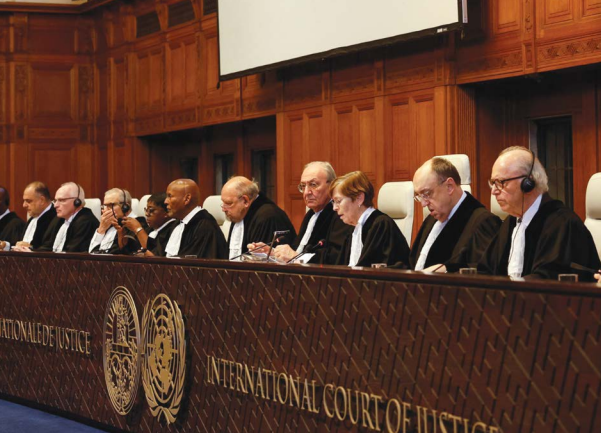
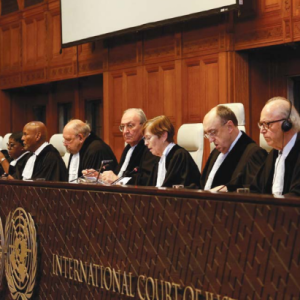
Amidst the heart-wrenching stories of inhuman murders and human suffering emerging from the Gaza Strip, the ICJ ruling is like a breath of fresh air. Though the court has accepted the plausibility of a genocidal aura surrounding the Israelite offensive as implied in the application filed by South Africa and issued directives to safeguard the Palestinian civilians, Israel doesn't seem too keen to fall in line. The reactions of Netanyahu and his backers seemingly imply rebellion against all precepts of justice that they claim to uphold.
At first blush, the ICJ stands vindicated by its response. It recognized that something was wrong and requested Israeli leaders to protect the Palestinians from harm proactively. But could it not have explicitly called for a ceasefire since that is the only way for further deliberations to bear fruit? It would not have been the first time it did so since it did call for a ceasefire during the Ukraine conflict. Its reluctance does not put it in a favourable light. Indeed, judging from Israel's unyielding stance, they would not have bothered with it anyway. However, they would have voiced the displeasure of the rest of the international community.
Somehow, the court's observations of a doomed generation seem lifeless, and the assurances expected feel empty. As the offensive enters its fifth month, more than 2 million people are affected. Many are dead, the tally much higher than that of the Russia-Ukraine war. Those displaced are living as refugees in undignified and pathetic conditions, surrounded by despair. A whole generation of children is undergoing the trauma that accompanies war, and many are orphaned or lost. Still, some find difficulty in condemning those whose actions brought about this situation. The irony is that those protesting are now divided into different camps, weakening their case.
Sometimes, it feels like the whole world has flown off the handle. Conflicts are visible everywhere; their degrees might vary, but they are conflicts nevertheless. Why go all the way to the Gaza Strip when tensions are brewing close by? Because, as the wise observe, we cannot see what is right under our nose. It becomes crucial to learn by observing others.
We can draw sufficient parallels between all the current instances of conflict. Each has an overpowered perpetrator or one with enough backing and exudes madness but swears to be cultured. Their claims generally only resonate with some of the vast majority. A target group suffers for the fruition of a hidden agenda. Some people who cry foul won't go beyond that because it does not affect them, while others will be satisfied if there is any action.
The takeaway is that things will continue being gift-wrapped to distract from reality unless everyone takes the initiative to stand up and call a spade a spade. South Africa can be proud that it rose to the challenge even though it may have consequences. And while all the requirements it laid out in its application are not implemented, it has at least shone a ray of light amid complete darkness for the Palestinians.


.jpg)
 A. J. Philip
.jpg)
.png) Jacob Peenikaparambil
Jacob Peenikaparambil
.png) Chhotebhai
Chhotebhai

.jpg) P. A. Joseph
P. A. Joseph
.png)
.png) Robert Clements
Robert Clements
.jpeg) A. J. Philip
A. J. Philip
.jpg) Jacob Peenikaparambil
Jacob Peenikaparambil