.jpg)


 A. J. Philip
.jpg)
My first published work was a poem written by Ralph Waldo Emerson (1803–1882) that I translated into Malayalam for the monthly magazine Naveenam. A group of friends, led by the late Nellickal Muralidharan Nair, then a budding poet, Thomas Abraham, and TK Shajahan, brought it out in 1970. My translation was not great, but when Nair polished it, the Malayalam version was as good as the original.
I am sure Emerson, in his grave, would have been flattered by the enthusiasm to publish him in Malayalam. To tell the truth, I chose it from the Penguin Book of Poems because it was the easiest to translate. A word about Emerson would be in order.
He was an American essayist, lecturer, and poet who led the Transcendentalist movement. He championed self-reliance, individual freedom, and the spiritual value of nature. His influential essays, including "Self-Reliance" and "Nature," inspired generations to think independently, trust their conscience, and pursue moral and intellectual growth.
My choice of the poem might have been accidental, but Emerson and his fellow Transcendentalist Henry David Thoreau believed that truth and spiritual insight came from personal intuition and direct experience rather than from tradition, institutions, or established religious authority.
In essence, Transcendentalism teaches that people can "transcend" the material world through intuition, moral integrity, and communion with nature, discovering deeper truths about themselves and the divine. Though rooted in Christian faith, they drew upon Buddhist and Hindu texts, especially the Upanishads.
Small wonder that Mahatma Gandhi was greatly influenced by the writings of Thoreau, whose philosophy of civil disobedience, moral courage, and peaceful resistance profoundly shaped India's nonviolent struggle for freedom. It was not a one-way process.
Many decades later, when I visited the Martin Luther King Jr. Memorial in Atlanta, I saw moving evidence of how profoundly Gandhi had shaped the American civil rights movement. On my way to the Statue of Liberty in New York, I was struck by a giant billboard bearing Gandhi's timeless warning: "An eye for an eye will make the whole world blind."
This reminded me that the intellectual and moral bonds between India and the United States have long transcended diplomacy and trade. Each nation has enriched the other through ideas that continue to inspire humanity. I was reminded of these experiences in the light of America turning 250 on July 4.
On that day in 1776, the thirteen American colonies adopted the Declaration of Independence, proclaiming their separation from British rule. The new nation was founded on the ideals of liberty, equality, and self-government, principles that would inspire democratic movements and freedom struggles across the world for generations.
For comparison, when the United States declared independence in 1776, India was not a unified political entity. The Mughal Empire was in steep decline, while powerful regional kingdoms such as the Maratha Confederacy, the Kingdom of Mysore, and the Sikh Confederacy competed for power.
Meanwhile, the East India Company was steadily expanding its political and military control following its victory at the Battle of Plassey in 1757. I read a series of articles in "Religion Unplugged" that report how religion has been impacting politics, brought out on the occasion of the 250th anniversary.
I was happy to read about the Liberty Bell in Philadelphia, which became an enduring symbol of American independence. Although it developed its famous crack years later, the bell is associated with the ideals proclaimed in 1776. Its inscription from the Bible—"Proclaim liberty throughout all the land unto all the inhabitants thereof"—captured the spirit of the American Revolution.
The Jews, the Puritans, the Catholics, and countless others could all relate to the Liberty Bell, for its stirring inscription was drawn from the Old Testament, proclaiming liberty as a divine gift to all people.
The Declaration of Independence, drafted by Thomas Jefferson, spoke not merely to the thirteen American colonies but to all humanity. Its stirring affirmation, "We hold these truths to be self-evident, that all men are created equal," was a universal proclamation of human dignity and liberty.
It inspired freedom movements across the world, including India's own struggle for independence. I am tempted to recount an incident, perhaps apocryphal, but too delightful to ignore.
When President John F. Kennedy hosted American Nobel laureates for a dinner at the White House, he remarked: "I think this is the most extraordinary collection of talent, of human knowledge, that has ever been gathered together at the White House—with the possible exception of when Thomas Jefferson dined alone."
Whether or not the anecdote has been embellished over time, Kennedy's tribute captures Jefferson's extraordinary stature as a statesman, philosopher, scientist, architect, inventor, and principal author of the Declaration of Independence.
The US was one of the first countries to recognise the independence of India on August 15, 1947. Harry S. Truman sent a message of congratulations to Rajendra Prasad, expressing America's best wishes to the new nation.
The two countries established full diplomatic relations immediately, and the United States opened its embassy in New Delhi later that year. This marked the beginning of a relationship that has since evolved into one of the world's most significant strategic partnerships.
However, the two countries gradually drifted apart after independence as Prime Minister Jawaharlal Nehru adopted non-alignment as the cornerstone of India's foreign policy. Ideologically, he was more drawn to socialism, and for much of the Cold War, India remained within the Soviet sphere of influence.
Yet some of the independent India's most significant achievements were made possible with American assistance. Institutions such as the AIIMS and the IITs benefited from US support, as did India's early space programme, including its rocket-launching capabilities and the pioneering Satellite Instructional Television Experiment (SITE).
I was too young to understand the slogans I shouted against China in the aftermath of the 1962 war. By the time I reached adulthood, however, I was passionately raising full-throated slogans condemning American intervention in Vietnam.
One of the enduring paradoxes of Indo-American relations is that even when New Delhi and Washington were at diplomatic loggerheads, ties between their peoples remained remarkably warm. While few Indians ever queued up for visas to the Soviet Union, long lines outside the US Embassy became a familiar sight, reflecting the enduring attraction of America for generations of Indians.
I was amused to read, in MR Narayan Swamy's "God in Kanchi" (Delhi: Konark Publishers, 2026), that the highly conservative Shankaracharya of Kanchi, Chandrasekharendra Saraswati (1894–1994), blessed a young Brahmin woman who was leaving alone for the United States to pursue higher studies. It was an extraordinary gesture for the time.
She was among the early wave of Indians who helped lay the foundations of a remarkable success story. Today, Indian immigrants have risen to the highest levels of American corporate life, with leaders such as Sundar Pichai at Google, Satya Nadella at Microsoft, Indra Nooyi at PepsiCo, and Arvind Krishna at IBM.
As a community, Indian Americans are also among the most prosperous ethnic groups in the United States, with median household incomes well above the national average.
I remember attending a conference of the Indo-American Press Club where delegates from India repeatedly referred to those settled in the United States as Non-Resident Indians (NRIs). Clearly annoyed, Varghese Korason of Valkannadi fame responded, "We are not NRIs; we are American citizens." His remark underscored a larger reality: they had ceased to be mere expatriates and had become an integral part of the American melting pot, enriching it while retaining pride in their Indian heritage.
Recently, I heard a friend, now a proud American citizen, speak with great satisfaction about a legal battle he had won against a neighbour, praising the fairness and efficiency of the American judicial system.
Whether the dispute truly warranted litigation is another matter. It might well have been resolved had he chosen to follow the Biblical counsel of forgiveness and good neighbourliness instead. His "tormentor" was a white American.
As someone who has lived across two centuries and two millennia, I have accumulated many memories of America. I still remember how fireworks manufacturers in Sivakasi, Tamil Nadu, received a massive order from the United States to mark the bicentenary of American independence in 1976. It was a reminder of how even a distant Indian town could become part of a great American celebration.
There was also a time when American Presidents were widely regarded as statesmen, and US ambassadors to India—men like Chester Bowles and Daniel Patrick Moynihan—were admired as public intellectuals and scholars as much as diplomats.
The Cold War witnessed America's share of reverses. It became embroiled in the Vietnam War, and the Soviet Union stole an early march in the space race when Yuri Gagarin became the first human to journey into space.
Yet, despite intense ideological rivalry and even the perilous Cuban Missile Crisis, the leaders of the two superpowers refrained from the kind of coarse, personal invective that has become all too common in contemporary political discourse. Even at moments when the world stood on the brink of nuclear catastrophe, they preserved a measure of dignity in public life.
The collapse of the Soviet Union and the emergence of the United States as the world's sole superpower gave rise to the phrase Pax Americana, modelled on the earlier Pax Britannica. It was an era when America was widely seen as the global policeman, shaping international politics with unmatched military, economic and diplomatic influence.
History, however, reminds us that no power remains at its zenith forever. Once a nation reaches its peak, decline, whether gradual or swift, becomes inevitable. In the case of the United States, many believe that this descent has been strikingly rapid. Nothing illustrates this irony more poignantly than the country's 250th anniversary coinciding with the presidency of Donald Trump.
Promising to restore American greatness through bluster and brinkmanship, he has instead invited ridicule and eroded the moral authority that once underpinned American leadership.
After vowing to teach Iran an unforgettable lesson, his administration found itself appealing to Tehran to ensure the safe passage of ships through the Strait of Hormuz, a remarkable reversal for a nation that once dictated the terms of global security.
America's traditional allies, including Britain and much of Europe, have grown increasingly distant, strained by President Trump's unilateralism and grandiose view of America's role in the world. It is no coincidence that influential American commentators such as Thomas Friedman and Fareed Zakaria have repeatedly warned that China is overtaking the United States in several cutting-edge technologies, from advanced manufacturing to artificial intelligence.
At the same time, the deep economic interdependence between the two powers has created new vulnerabilities. China holds substantial investments and financial interests linked to the United States, and any large-scale disengagement would have consequences that are difficult to predict and potentially severe for both economies.
It is still too early to conclude that China will eclipse the United States as the world's largest economy. America continues to lead the world in innovation, registering more patents than any other country and remaining the preferred destination for entrepreneurs and venture capital.
No other nation generates as many new business ideas or transforms them into global enterprises. Despite the disruptions and controversies of the Trump years, the resilience of American institutions remains evident. The constitutional system of checks and balances continues to function, with the courts, including the Supreme Court, asserting their role in safeguarding the rule of law.
There was once a widespread belief that a man like Barack Obama could never be elected President. America proved the sceptics wrong. That capacity for self-correction has long been the strength of the world's oldest continuing constitutional democracy.
As the United States celebrates the 250th anniversary of its independence, it has every reason to take pride in its extraordinary journey. No other nation has contributed as profoundly to the advancement of science, technology, higher education, entrepreneurship and democratic ideals. America has stumbled, as all great nations do, but its greatest strength has always been its ability to renew itself.
On this historic milestone, one can only wish the United States the wisdom to rediscover its finest traditions and the courage to remain a beacon of liberty, innovation and opportunity for generations to come. Happy 250th Birthday, America.
.jpg)
.png) Cedric Prakash
Cedric Prakash
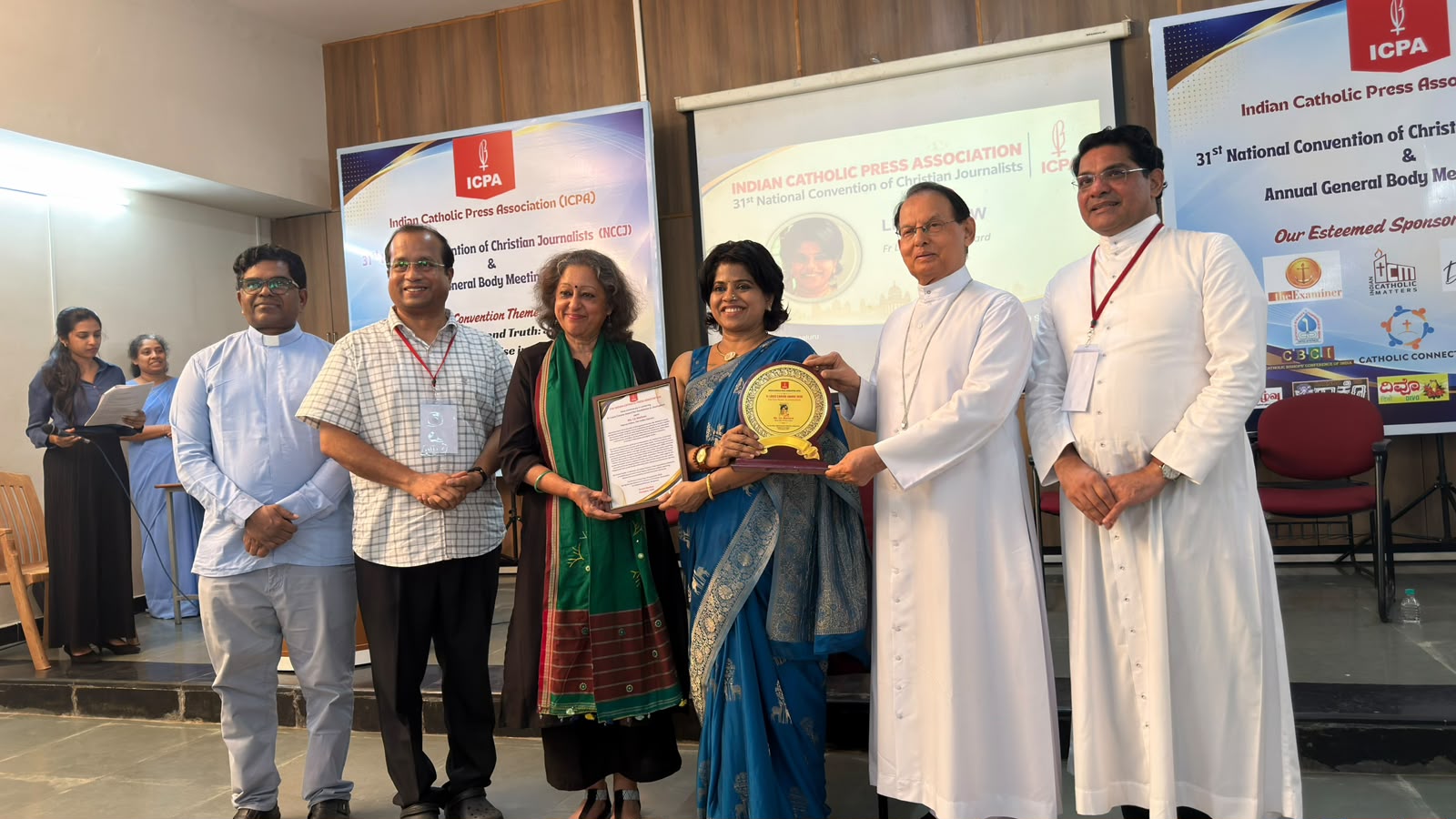
 ICPA
ICPA
 ICPA
ICPA
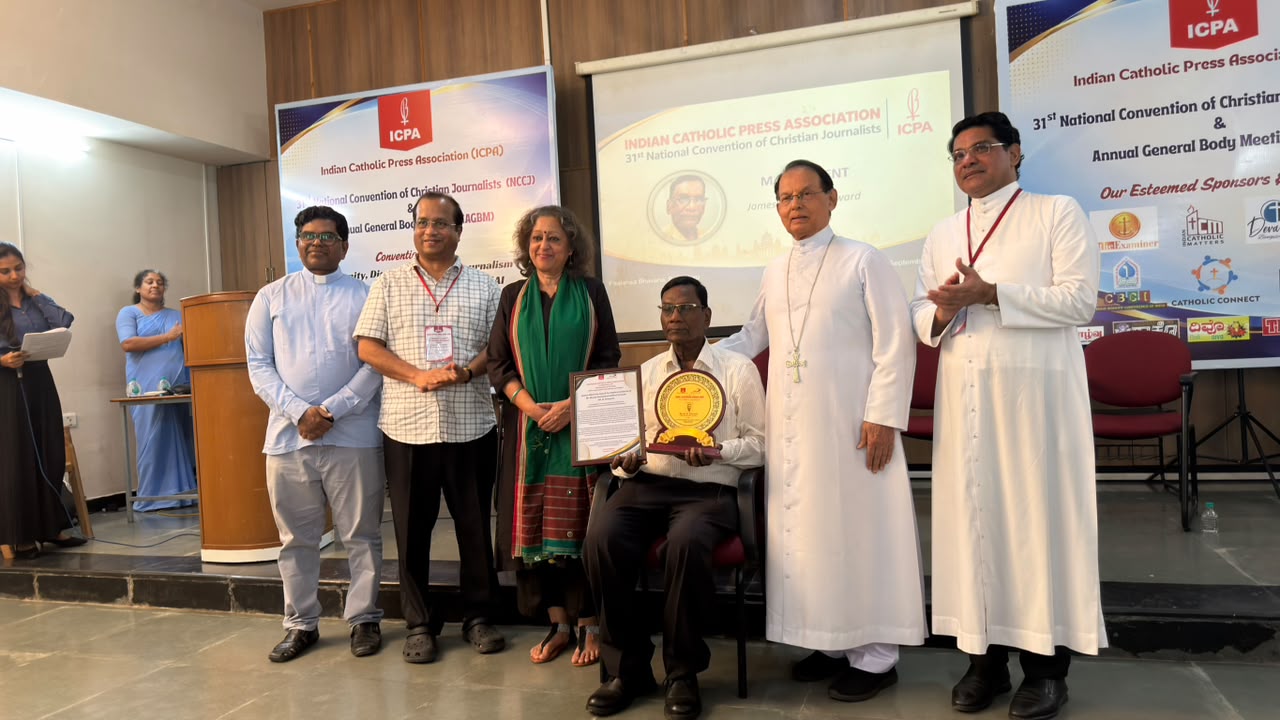 ICPA
ICPA
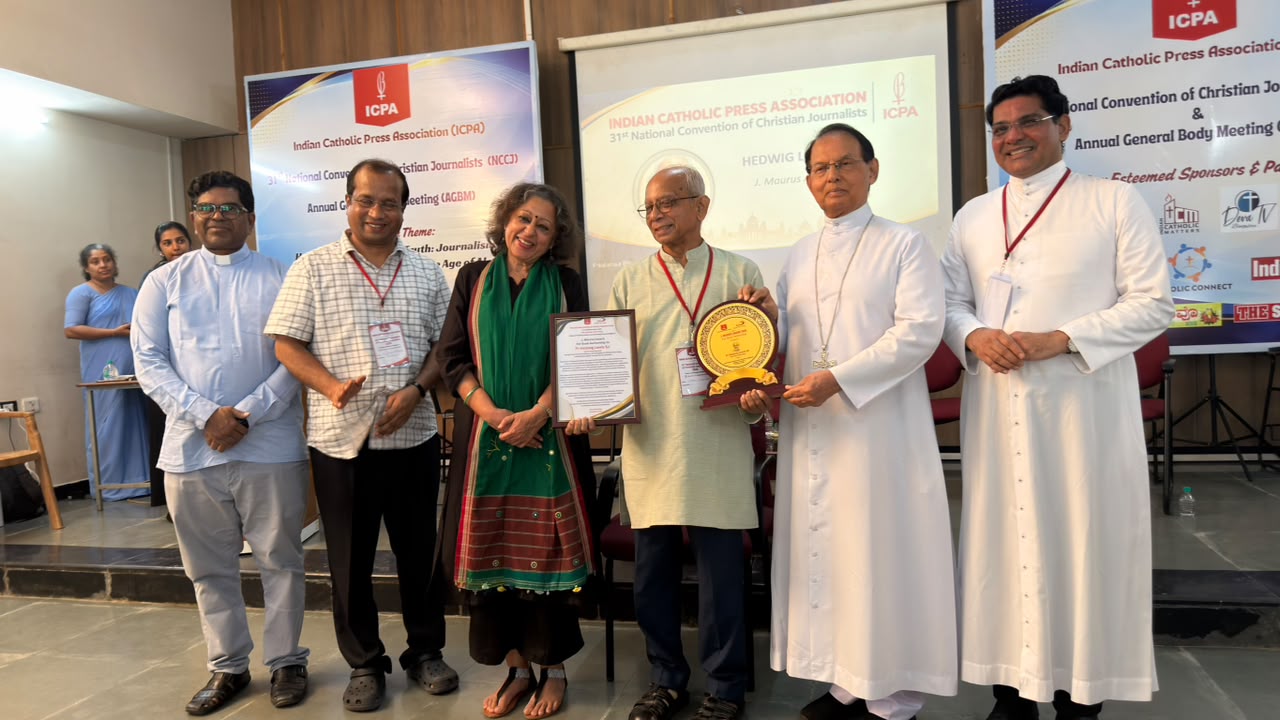 ICPA
ICPA
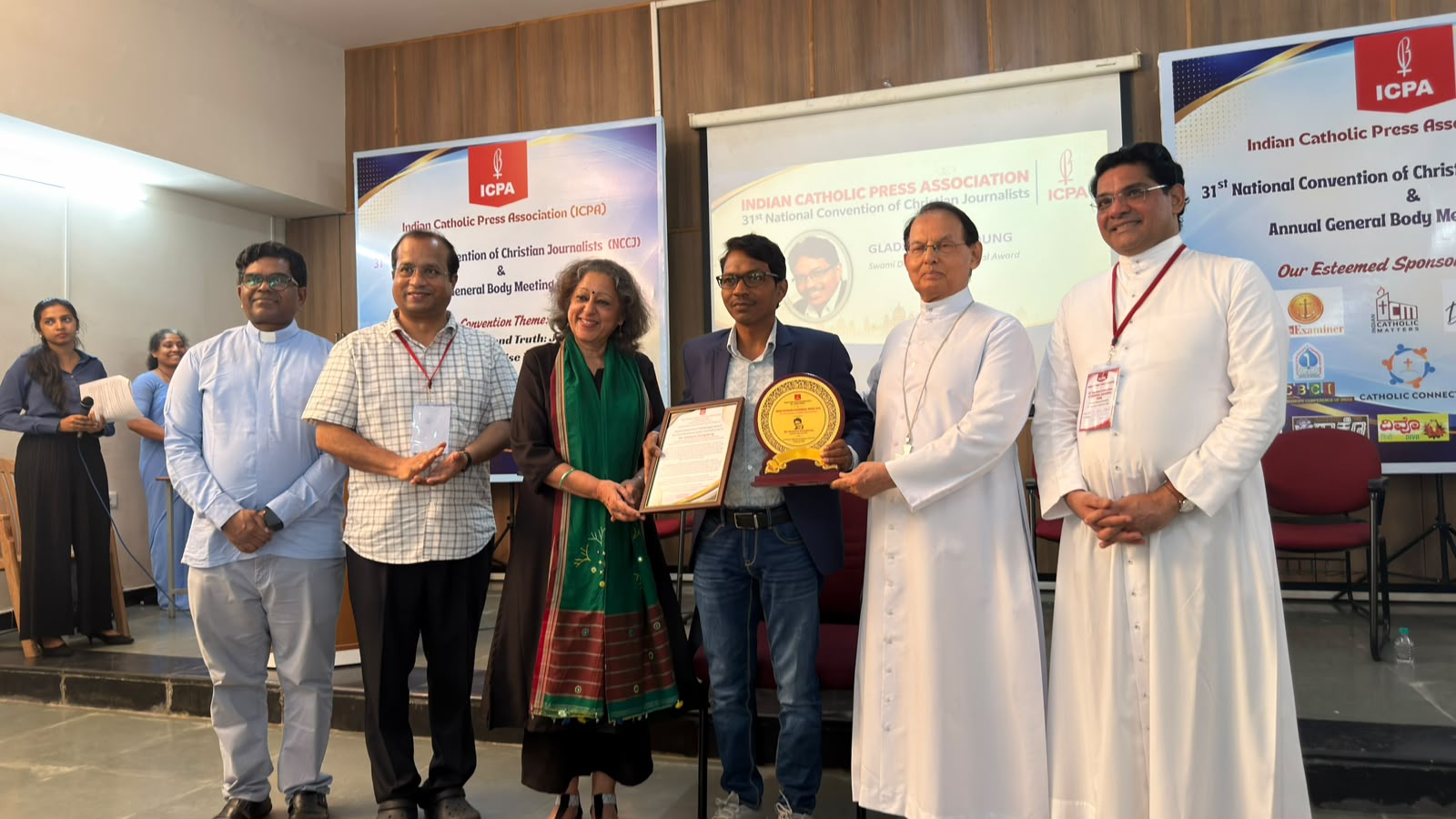 ICPA
ICPA
 ICPA
ICPA
.jpg) A. J. Philip
A. J. Philip
.jpg)
.png) Jacob Peenikaparambil
Jacob Peenikaparambil
.jpg)
.png) John Dayal
John Dayal