

.jpg) Jose Vattakuzhy
Jose Vattakuzhy
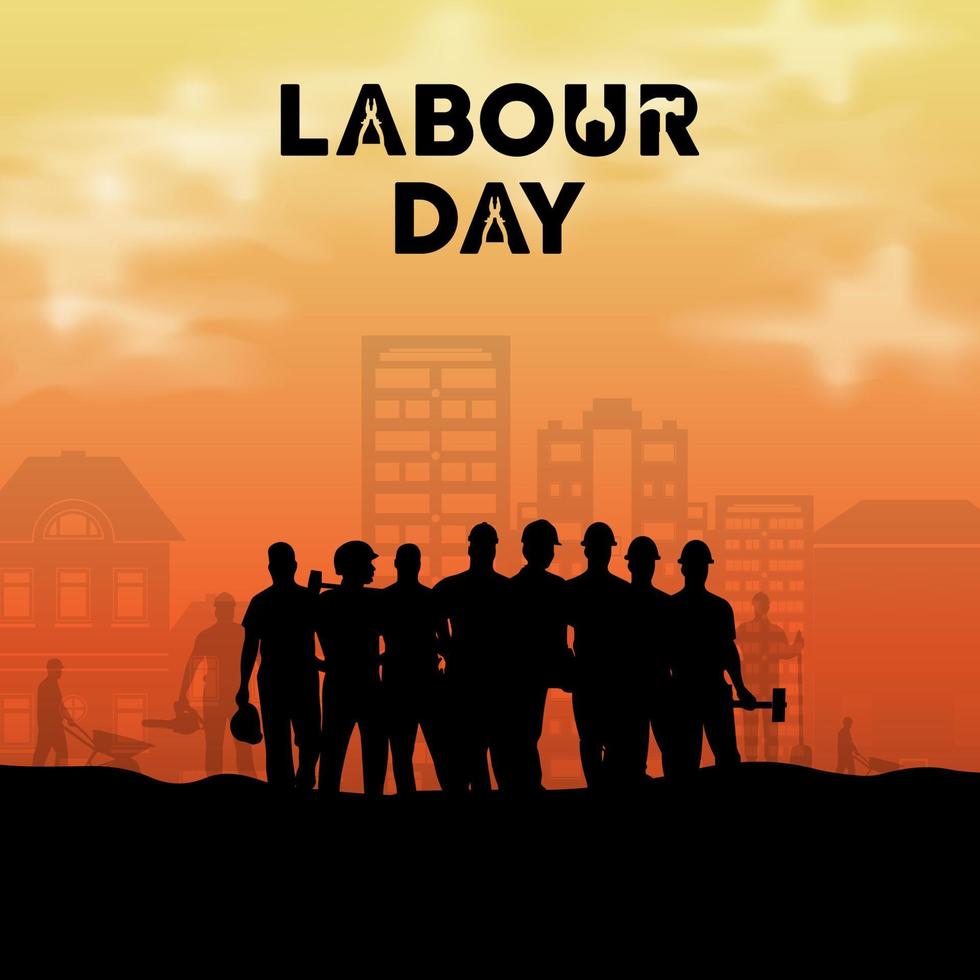
Every year on May 1, people celebrate International Labour Day, also known as May Day or Workers' Day, in about 80 different nations throughout the globe. May Day 2024 falls on a Wednesday. The history of Struggle Day is rich and fascinating. Every Labor Day celebrates the achievements and travails of workers.
In the wake of the Industrial Revolution and the resulting productivity growth in the late 19th century, the workplace witnessed increasing employee dissatisfaction with less pay, longer working hours, and worse working conditions. Moreover, due to the worker's workload, it became necessary to separate the personal life from the work and the work situation. For this reason, the slogans of eight hours of work, eight hours of rest, and eight hours of recreation have gained general acceptance in various countries.
Origin of May Day
On May 1, 1886, the American Federation of Labour organised a nationwide strike supporting the eight-hour workday. Protests culminated in a riot at the Chicago Haymarket on May 4, when demonstrators and police engaged in deadly clashes. History records that eight people died, including four hanged, 70 were injured, and more than 100 were arrested.
Later, in 1889, the Socialist Second International Workers' Conference in Paris declared May 1 as International Workers' Day in response to the events in Chicago and the global struggle for workers' rights. May 1 is commemorated as Labour Day in recognition of the Haymarket incident and its symbolic importance to the labour movement. However, in 1894, Labour Day was officially declared a national holiday in the United States.
Pope Leo XIII published an encyclical, "Rerum Novarum", on the Rights and Duties of Capital and Labour in the Catholic tradition on May 15, 1891. In this, the Pope emphasised the need to address the situation of the working classes and explored the obligations and relationships between capital and labour as well as between the government and its constituents. In addition, Pope Pius XII established the feast of St. Joseph the Worker on May 1.
May Day observations gradually extended to other continents and countries, including India, after spreading quickly throughout Europe. Demonstrations, marches, and rallies that emphasised the demands and unity of the workforce began to be associated with the day. Over time, May 1 was declared a public holiday by the governments of many different nations, enabling employees to participate in celebrations and even protests where needed.
ILO Contribution
The International Labour Organisation (ILO), a UN agency tasked with improving working conditions worldwide, established International Labour Day as an official holiday after World War II. As the day has evolved, its goals have expanded from demanding an eight-hour workday to addressing social security, minimum wages, workplace safety, and marginalised workers' rights. The ILO selects a new topic yearly to focus discussions and advocacy on specific concerns affecting workers worldwide.
ILO has proposed a decent work agenda with four pillars: employment creation, social protection, rights at work, and social dialogue. Those are integral elements of the new 2030 Agenda for Sustainable Development and its 17 Sustainable Development Goals (SDGs) of the UN.
Based on the ILO's recommendations, employment opportunities, adequate income, productive work, decent working hours, balancing work, family, and personal life, elimination of redundant work, stability and security of work, equal opportunity and treatment at work, social security, social dialogue, and representation of employer and worker are included in the call for 'social justice and decent work for all'.
Indian Workforce
The number of workers in the unorganised sector is increasing in India today. According to the Economic Survey 2021-2022, there are 43.99 crore unorganised workers. In India, home to over 25 per cent of the world's population, 43.9 per cent of its citizens are employed in various sectors, but 91 per cent work in the informal sector.
By December 2024, 300 million unorganised workers will be registered on the e-Shram website. This is the official data collection website of the country's unorganised workers verified through the Aadhaar document. According to the statistics released on July 18, 2023, out of the 28.96 million unorganised workers registered on this website, 5.58 per cent earn between Rs 10,001 and Rs 15,000 per month, and 92.37 per cent of the workers earn less than Rs 10,000.
According to a report published in 2022 by the Times of India, a study conducted in Delhi among 1076 workers in the construction, industrial, security, and domestic sectors revealed that approximately 74 per cent of workers could not save more than Rs. 500 per month, 95 per cent of workers did not receive the government-mandated minimum wage, and 46 per cent of workers could earn between Rs. 5000 and Rs. 9000.
According to an ILO research paper from 2022, the working class's earnings in India declined by 20 per cent. The report stated that growing inflation caused a significant fall in real wages. During this period, prices rose unprecedentedly. India ranks between 140 and 125 in GDP per capita, indicating that Indians lag far behind the rest of the world in purchasing power.
Unemployment in the country stands at 430 million, a fifty-year high. Government records show that about 5 million applicants enter the workforce each year, and less than a million of them get jobs each year. In March 2024, it was reported that there were 3700 PhD graduates among those who applied for the post of peon in UP Police, which was only Class 5 criteria. Meanwhile, as per Union Minister of State Jitendra Singh's reply in the Lok Sabha in December 2022, the study highlights 9.79 lakh vacancies in central government jobs alone. All this indicates that many people in the country had to work for less pay, mainly in agriculture and unstable working sectors.
The number of self-employed entrepreneurs has increased in the country's social system. Low-income earners who are self-employed under loan schemes like MUDRA have seen a rise due to a lack of regular paying jobs.
According to research released in March 2024 by a civic action forum, the percentage of self-employed individuals grew between 2011–12 and 2022–23. Specifically, the number of self-employed males climbed from 51.5 per cent to 53.4 per cent, while that of self-employed women rose from 56.5 per cent to 64.3 per cent. It means the rural weavers, farmers, potters, urban roadside sellers, tailors, barbers, and under/ unpaid labourers in modest home businesses, those engaged in animal husbandry and labelling and packing, building and construction workers, leather workers, weavers, artisans, salt workers, workers in brick kilns and stone quarries, workers in sawmills, oil mills, sales girls, etc are all included in the self-employed and unorganised workers' group.
At the same time, studies show that self-employment ventures are not sustainable. According to the National Business Capital and Service (NBCS) September 22, 2023 report, only 40 per cent of self-employed enterprises are small businesses that can make a small profit. 30 per cent of the entrepreneurs are in loss, and the remaining 30 per cent are either in loss or profit. This situation results in low-income earners and increasing indebtedness in the country.
Again, due to climate change, green-collar jobs such as waste management and solar installation have been segregated from those of the informal sector workers. In addition, the platforms and gig workers are also new forms of unorganised workers created by information technology and artificial intelligence. Platform workers are employed by companies that provide services directly to businesses and individuals via internet platforms. Platform workers include Swiggy and Zomato delivery agents, Ola and Uber drivers, etc. According to a 2022 NITI Aayog study, there are around 6.8 million gig workers in India.
Over the past 20 years, the Indian economy has expanded gradually, but its progress has been unequal across social and economic groups, geographical regions, and urban and rural areas. According to a report by the World Inequality Lab, the wealthiest Indians, who are classified as the top 1 per cent based on their net worth, own 40 per cent of the nation's total wealth. Niti Aayog, whose last study said that 14.96 per cent of Indians live in multidimensional poverty, has acknowledged this reality. A person who experiences various forms of poverty, such as poor nutrition or health, a lack of power or clean water, low-quality work, or a limited education, is said to be multi-dimensionally poor.
There are abundant indicators that the nation has long suffered from structural inequality and poverty. These include the high percentage of unpaid and underpaid workers, the low rate of women entering the workforce, the prevalence of child labour, the extreme division between organised workers and unorganised workers who lack social security, health insurance, and pensions, high unemployment rates, and the government's failure to enforce the four labour codes. With all these, India has a long way to go to achieve "decent work and social justice for all". Otherwise, the above labour issues should be addressed by adopting the newly adopted ILO living wage system.
(Jose Vattakuzhy is the Founder-Director of the Workers India Federation)
.png) Cedric Prakash
Cedric Prakash
.JPG)
 A. J. Philip
.png) Jacob Peenikaparambil
Jacob Peenikaparambil
.jpg)
.png) John Dayal
John Dayal
.jpg)
 Pachu Menon
.png)
.png)
.png) Robert Clements
Robert Clements