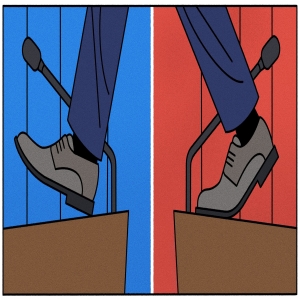


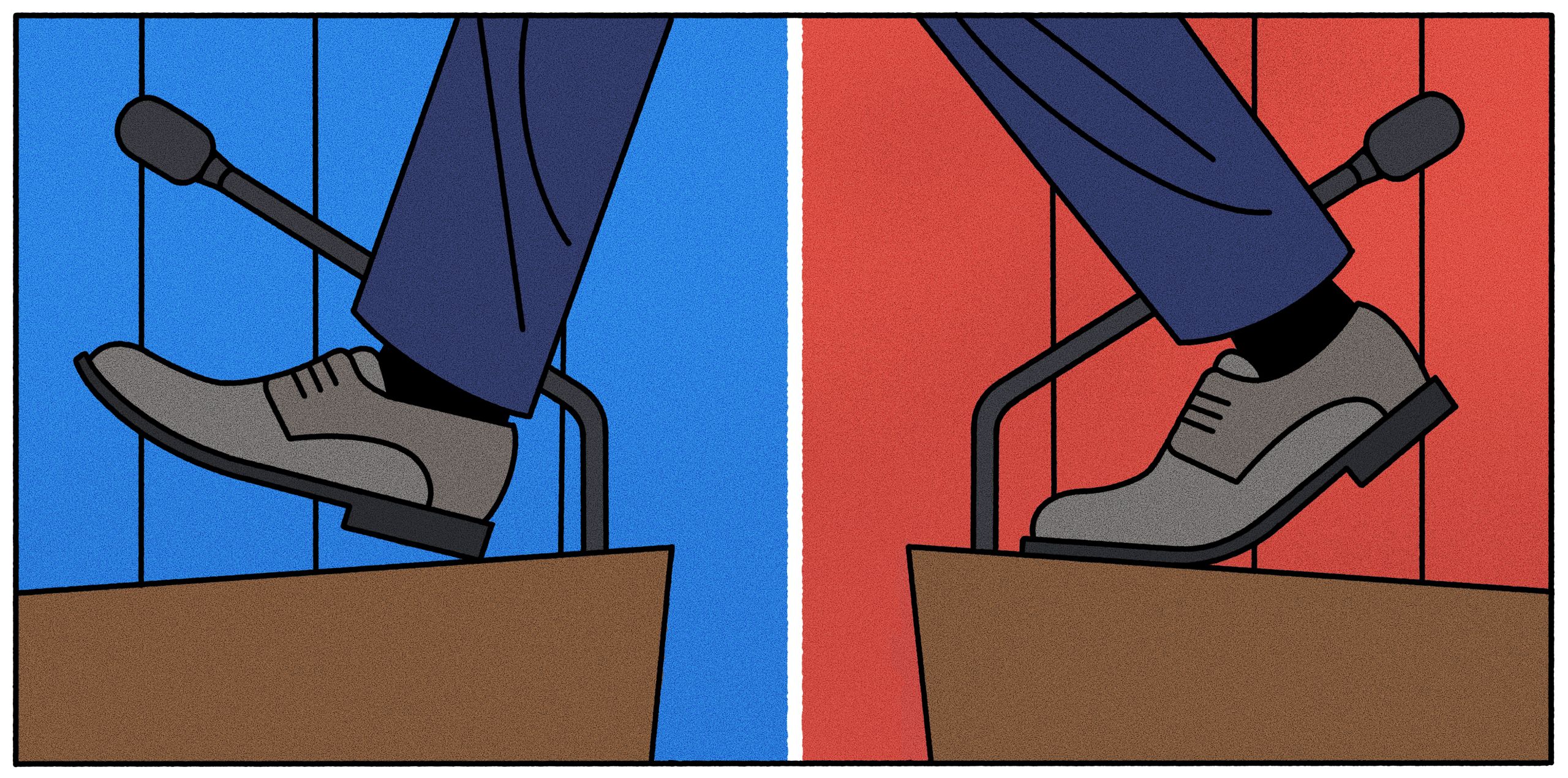
The political landscape in India suggests that no politician can be fully trusted to prioritise the public's welfare and the nation's development. A significant number of them have become entirely corrupt, deceiving the people for their personal fame and gain. Some lack a personal political ideology, while others are willing to sell their beliefs and conscience for their own interests. There are far more than just the outlying instances of politicians switching allegiance from one party to another.
It is imperative to initiate the 'Ghar Vapasi' for those politicians who have changed parties. The use of threats, violence, promises, and systematic pressure to coerce MPs and MLAs into altering their political beliefs constitutes a forced political conversion and infringes upon fundamental rights. If a ruling government, which is supposed to protect and uphold these rights, engages in or endorses such violations, the situation becomes even more grave.
Raghav Chadha was a prominent leader of the Aam Aadmi Party and a vocal critic of the BJP. He went so far as to declare that the BJP is the most corrupt party in India's history, labelling it as a party comprised of illiterate thugs. He accused the BJP of utilising central agencies to target opposition parties and opposed the government's policies regarding federalism, economics, and social justice. He consistently criticised the BJP for its poor governance.
On Friday, April 24, 2026, Raghav Chadha announced his resignation from the Aam Aadmi Party and his decision to join the BJP. What led to his political ideology aligning with the BJP's? What coercive influences compelled him to seek refuge within the BJP? Did he experience any form of enlightenment or revelation from supernatural forces?
If politics is not merely a mechanism for power acquisition and financial gain, it should reflect an individual's beliefs, values, and ideologies. To change these beliefs and align with those whom you have previously criticised suggests that you may have been coerced or enticed by offers of money or power. Mr Raghav Chadha, you have compromised your dignity and credibility, becoming a traitor to your original party.
If you encountered disagreements with your party, you could have chosen to resign and remain independent rather than join another party. The public would likely have supported you. The significant drop in your Instagram followers indicates that you have lost public support.
In a democratic governmental framework, the opposition plays a crucial role. A democracy lacking a strong opposition would lead to autocracy. The opposition's function is not solely to criticise the government; it must also ensure that the ruling party remains accountable to the public. It is essential for the opposition to challenge government policies and highlight administrative shortcomings. A strong opposition serves as a powerful parliamentary weapon for scrutinising the government.
India's democracy is safeguarded by the presence of an opposition in parliament. The ruling party's inclination to eliminate opposition reflects a desire to transition the government from a democratic to an autocratic system. Regardless of which political party holds power, both the media and the public should lend their support to the opposition party. As responsible citizens, we must scrutinise government actions. The media is expected to operate as an independent counterbalance to the government. Unfortunately, the government often becomes the financial backer of the media.
The government has auctioned off public sectors and has been known to purchase MLAs and MPs. It seeks to avoid public scrutiny of its actions. The essence of democracy lies in the government's accountability to its citizens.
There will be many individuals, such as Raghav Chadha, eager to join the BJP, believing it is the only party capable of ruling India in the future. Their focus is not on national development or the welfare of the people; they are driven by a desire for power and positions.
We, the people, should make a shift in government every five years. Let not a single political party rule India like a monarch. No government will take the initiative to regulate the mass conversion of politicians to another party.
.jpg)
.png) Cedric Prakash
Cedric Prakash
 ICPA
ICPA
 ICPA
ICPA
 ICPA
ICPA
 ICPA
ICPA
 ICPA
ICPA
 ICPA
ICPA
.jpg)
 A. J. Philip
.jpg)
.png) Jacob Peenikaparambil
Jacob Peenikaparambil
.jpg)
.png) John Dayal
John Dayal