

 Dr Suresh Mathew
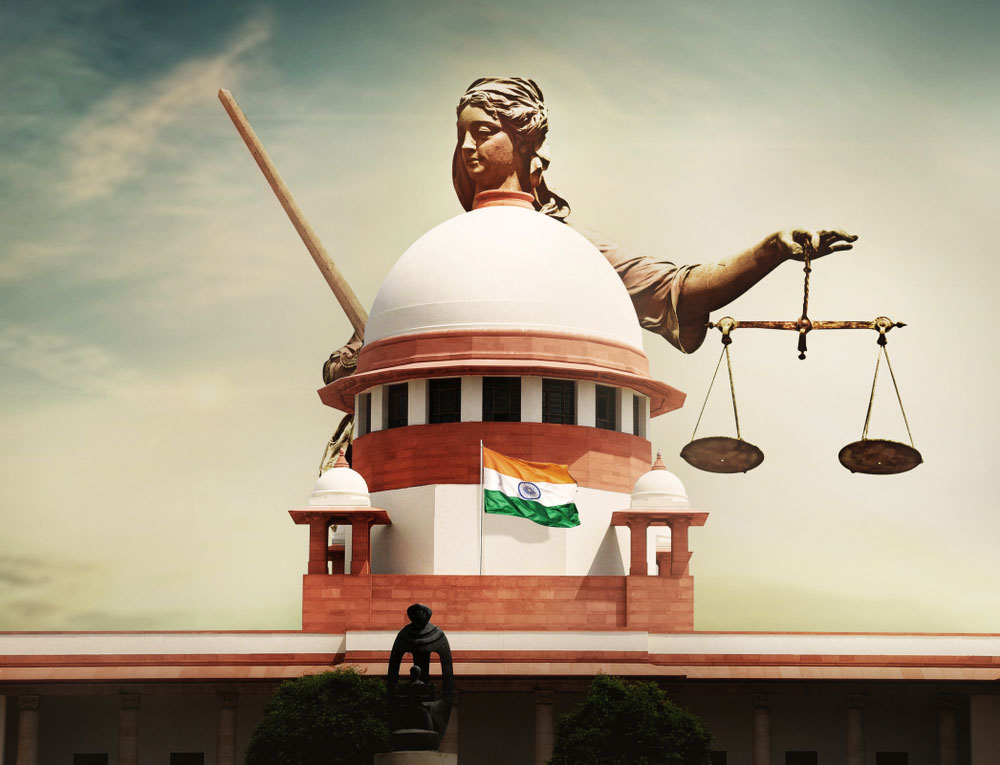
A law is meant to save the victim, not to provide a safety gear to the culprit through contrived loopholes in it. It is meant to punish the guilty, not to protect them. This is all the more so about laws intended to protect children. Protection of Children against Sexual Offences (POCSO) Act is meant to provide ‘impenetrable’ shield to children. In a country where as many as 130 children are abused every day, as per the latest report of the Crime Records Bureau, the protection of a stringent law is inevitable. Unfortunately, the law is made to stand on its head by judges with jaundiced eyes as happened in the Nagpur Bench of the Bombay High Court. A person convicted under POCSO Act by a lower court was treated with kid gloves when the High Court judge decided to punish him under a much lenient section of Indian Penal Code instead of the POCSO Act.
The case against the accused was clear. He had lured a girl to a room, pressed her breasts and tried to undress her. It is a case of sexual assault under section 7 of the POCSO Act. The lower court judge convicted and punished him accordingly. However, the High Court judge, under a weird argument that there was no ‘skin-to-skin’ contact, tried him under IPC and handed out just one-year jail term instead of three to five years under POCSO Act.
In yet another case of child sex abuse, the same judge set free a man who had unzipped pants in front of a girl. The judge could not see any sexual abuse in this act and acquitted the accused. The above verdicts are the result of twisting of the law which is meant to be a deterrent against those who indulge in sexual offence against children.
The judge of the Bombay High Court is not alone when it comes to tweaking the law to suit the accused. In bail applications, as seen in many recent cases, judges have apparently given verdicts to help powerful persons. When influential persons could approach the apex court and elicit favourable verdicts, many ordinary mortals have been told to approach the lower courts first to seek relief. Judicial insensitivity was exposed when octogenarian Stan Swamy, who cannot even hold a glass of water due to illness, had to knock at the doors of the court for weeks together for obtaining a piece of plastic straw. He is among the several human rights activists languishing in jail for backing a Dalit rally in Bhima Koregaon in Maharashtra. We have also witnessed stand-up comedians being put behind bars for the jokes they made which in no way leave even a scratch on the government.
Thus, we come across several instances of inconsistent verdicts wherein judges indulge in hair-splitting exercise to limit or tweak the scope of the law. In some cases, the verdicts are unmistakably made to suit those who sing paeans to the government. In some other cases, judges go out of the way to clip the wings of those who are seen at the wrong side of the powers-that-be. Such dilution and stretching of law defeat the very purpose for which they are enacted.
.jpg)
 Cedric Prakash
.jpg)
 A. J. Philip
.jpg)
 Jacob Peenikaparambil
 Dr Suresh Mathew
.jpg)
 John Dayal
.jpg)
.jpg)
.png)
 Robert Clements
.jpg)
 P. A. Chacko