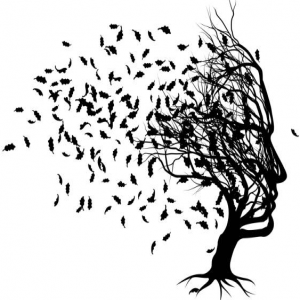


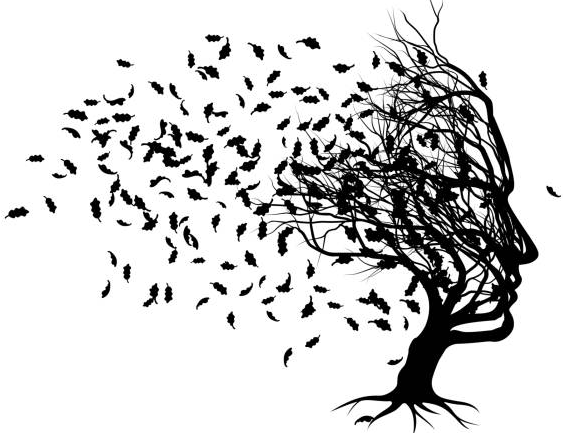
I was born like anyone else.
Yet I was never treated like anyone else.
The name Pariah was given to me.
And its meaning was carved into my skin.
I learned to walk alone.
Quietly understanding
That some lives are marked from birth
Not by what we do,
But by the ascriptive status.
As a child, I carried things.
I could not understand:
A broom to erase my own footsteps,
A pot holds my spit.
As if my foot and saliva itself were impure.
These were not tools of life, love, liberty, and light.
They were tools of humiliation, of death and darkness.
I loved once.
Before I knew
How the world judged my body,
Before I understood
That my love would be weighed
Against my Pariah birth.
Love like Kanchikacherla Kotesu's love
Love like Miryalaguda Pranay's love.
Love like so many Paraiah loves
That ends in blood and silence.
I loved her with a devotion
Older than the Naga hills,
But the hills answered before she did.
Their silence taught me
What no one had to say aloud:
That some castes still measure "my skin"
By how deep our wounds go,
By how far they can keep us away.
I went to see her.
Just to see her
And that journey began
Twenty years of pain.
Even now, I tremble to name it.
My body survived more
Than I thought it could.
But my deepest wound
Was not from their fits and kicks,
Not from them dragging my hair and beard,
Not from mocking my Black skin,
Not from laughing at my features,
Not from calling my muddy face ugly,
Not from forcing my body to kneel,
Not from filming my naked body,
Not from the minefield of humiliations,
Not from "you shameless creature,"
Not from "you self-respectless fellow,"
Not even from the state joining hands
With Pariah killers.
The deepest wound came from a sentence,
Thrown like a court verdict in 2006:
"You, Dalit bastard,
How dare you love my Naga girl?"
Three times the same words.
A brown mob,
One thunder.
How many articles of the 1948
Universal Declaration of Human Rights
Were broken in this one-sided love story.
Just because I am a pariah?
Whether Naga girl or Himalayan girl
When a pariah loves,
Neo-Brahmins wake up.
To teach a "Candala" a lesson
Like in Kanchikacherla or in Miryalaguda.
Just like in some Hadith stories,
When a Jew appears,
Mohammed wakes up to "teach a lesson."
Like the October 7 or Bondi Beach.
Just like Hitler wakes up to "teach a lesson;"
Like the Holocaust or "antisemitism."
In that moment,
My birth stopped feeling like a beginning.
It felt like a border.
For twenty years,
That echo has haunted me.
Not the memory of the playfield humiliations,
Or the minefield of humiliations,
But the memory of being told
That is my love itself.
Was forbidden.
She walked away.
Into her own hills,
Her own people,
Her own beliefs,
Her own purity,
Saying to me,
"Don't ever show your face,
If you really love me."
While I remained
At the exact place
Where love met Caste,
And Caste refused to move.
Sometimes I wonder.
If she ever remembers
The moment our worlds
Hit each other and broke.
If she ever feels
The weight of her silence
The way I still feel
The weight of their words.
I still touch that memory.
Not to hurt myself again,
But to remember how my skin
Was forced to learn
What existence means:
That being born is not enough.
When the world decides
The meaning of your life
Before you even speak.
Hill or plain,
Caste or tribe,
Race or ethnicity,
Sex or sexuality,
That map may change.
But the border remains.
For twenty years,
I have lived knowing
Some wounds never heal.
Because they are not just injuries.
They are positions,
Places on a cruel map,
Given to us
Before we take our first breath.
Yet here I stand,
Breathing her foot,
Walking with racism,
Living with untouchability,
Carrying memory,
Holding her words.
The words that broke me
And forced me to rebuild.
Not to forget,
But to remember
Where I was born,
And what I have survived:
I am more than the name they gave me.
I am more than the love they denied me.
My being endures.
Even at the place
Where the wound began.
.jpg)
 A. J. Philip
.png) Cedric Prakash
Cedric Prakash
.jpg)
 P. A. Chacko
.jpg)
.jpg)
.jpg) Thomas Menamparampil
Thomas Menamparampil
.png)
.png)
.png) Robert Clements
Robert Clements
.jpg)
.png)
.png) Chhotebhai
Chhotebhai