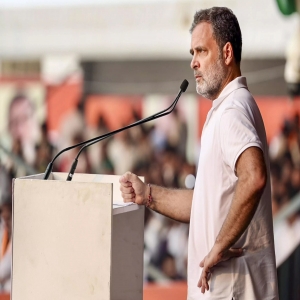

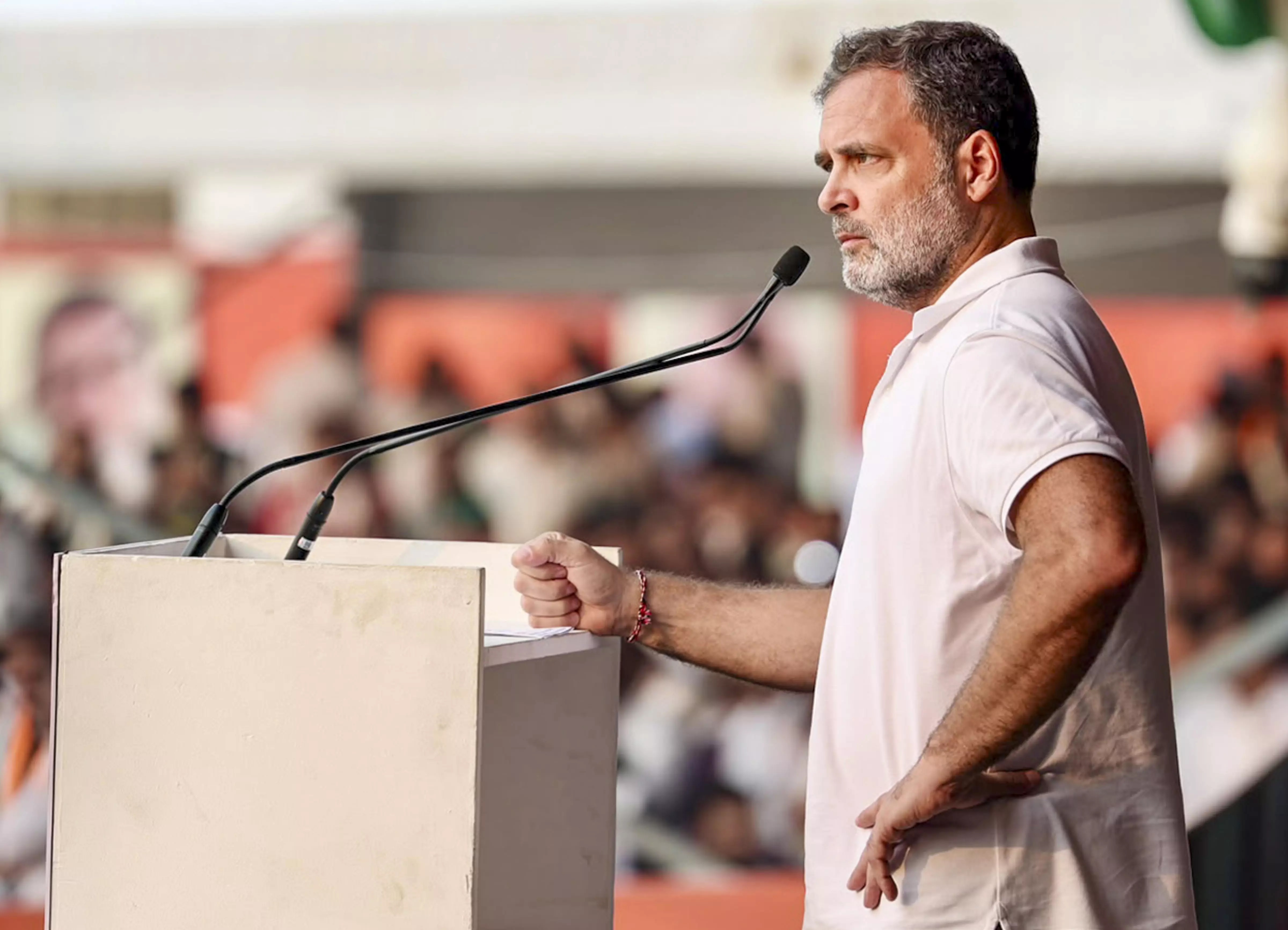
Rahul Gandhi publicly invited Prime Minister Narendra Modi to an unscripted open debate before the media, young citizens, and the public on key political flashpoints, including electoral roll revisions, financial system transparency, and allegations of foreign influence. Rahul Gandhi offered the Prime Minister the liberty to choose any venue and moderator for the discussion.
Prime Minister Narendra Modi has not responded to Rahul Gandhi's challenge; instead, Union Home Minister Amit Shah redirected it back to Rahul Gandhi to debate in Parliament. Amit Shah said Parliament is the legitimate platform for national debate, and the government is fully prepared to convene a special parliamentary session to address the issues.
It is entirely legally permissible and valid for the Prime Minister and the Leader of the Opposition to debate in front of the media outside Parliament. Constitutional law neither forbids nor obliges the government to hold a televised political debate with the opposition. Such debates are voluntary political agreements and not obligations.
In the USA, in 1960, Vice President Richard Nixon accepted John F. Kennedy's challenge to participate in the first-ever televised presidential debates. In 1976, President Gerald Ford accepted open debate challenges from challenger Jimmy Carter. In 1992, President George HW Bush accepted multi-party debate challenges from Bill Clinton and independent candidate Ross Perot. In 2012 and 2020, sitting Presidents Barack Obama and Donald Trump accepted live broadcast debates against opposition leaders Mitt Romney and Joe Biden, respectively.
In France, in 2017 and 2022, President Emmanuel Macron accepted open, unscripted live television debates against opposition leader Marine Le Pen. In 1981, President Valéry Giscard d'Estaing accepted an open TV debate challenge from opposition leader François Mitterrand.
In 2010, UK Prime Minister Gordon Brown accepted a series of live, unscripted television debates challenged by Opposition Leader David Cameron and Liberal Democrat leader Nick Clegg. In 2019 and 2024, Prime Ministers Boris Johnson and Rishi Sunak accepted head-to-head televised debates against opposition leader Keir Starmer.
In Presidential systems like the US or France, direct public debates are the norm because the head of state is directly accountable to the public vote. But in Parliamentary systems like India or the UK, the government often prefers Parliament as the ultimate constitutional debating venue. In a parliamentary democracy, the Prime Minister is accountable to the legislature.
Refusing open debate challenges is not unique to Prime Minister Narendra Modi. Opposition parties have issued debate challenges several times in Indian political history, but no sitting Prime Minister or central government leader has ever dared to accept an open, unscripted televised debate challenge.
The standard position taken by ruling governments, both BJP and Congress-led coalitions, is that Parliament is the sole constitutional venue for political debate. Sitting governments knew well that they don't gain an advantage by sharing a stage with the opposition leader. For a sitting government, an unscripted debate presents high risk with minimal reward.
During the early decades of Indian independence, opposition leaders like Atal Bihari Vajpayee repeatedly challenged Prime Minister Jawaharlal Nehru to face rigorous public and political questioning over his foreign policy and handling of the 1962 Sino-Indian War. Nehru kept all policy debates strictly inside the Lok Sabha.
Jayaprakash Narayan and Morarji Desai challenged Indira Gandhi during the Navnirman Movement and the post-Emergency period, calling for public confrontations on democratic freedoms, electoral corruption, and press freedom. Indira Gandhi rejected outside challenges, arguing that elections and parliamentary sessions were the only constitutional tests of leadership.
Congress President Sonia Gandhi and opposition figures challenged Prime Minister Atal Bihari Vajpayee to open debate on economic reforms, national defence, and governance. Vajpayee's administration maintained that India's constitutional system did not accommodate televised American-style presidential debates.
During the 2009 General Election, LK Advani formally challenged Prime Minister Dr Manmohan Singh to a live, one-on-one televised debate. Manmohan Singh declined the challenge, stating that India's parliamentary system is not a presidential contest between two individuals, but a choice between political parties and their local representatives.
Across every administration in modern Indian history, sitting Prime Ministers have responded consistently. Regardless of party, all cited parliamentary supremacy and constitutional norms.
If Prime Minister Narendra Modi accepts Rahul Gandhi's challenge, it will be an epochal moment in Indian political history, and Modi could become the first Prime Minister of India to accept an open-debate challenge from the opposition. It could offer the BJP several strategic and political advantages.
The opposition criticises Modi for avoiding press conferences and unscripted one-on-one debates. By accepting, Modi could dismantle the narrative and prove he doesn't fear questions or direct confrontation with the opposition leadership.
A face-to-face debate will give the ruling party a high-visibility platform and audience to showcase the government's achievements. In a live, unscripted debate, the BJP could rely on Modi's oratory skills to project him as confident and powerful, pressing the Congress on its past mistakes and inconsistencies.
By participating in the open debate, the Prime Minister could have directly addressed the public and refuted the opposition's allegations on a massive public stage.
Despite these potential advantages, why did no Prime Minister accept the challenge? Because the risk outweighs the reward. The Prime Minister will be compelled to defend every flaw of the government. It is a sobering reality that no sitting Indian Prime Minister has dared to face an open, unedited, unscripted media debate.
.jpg)
 P. A. Chacko
.jpeg)
 A. J. Philip
.jpg)
 Jacob Peenikaparambil
.jpeg)
 John Dayal
.jpg)
 Jose Vattakuzhy
.png)
.png)
 Robert Clements
 Cedric Prakash
.jpg)
 Mathew John