

 Jose Vattakuzhy
.jpg)
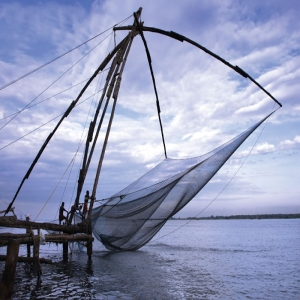
India's fisheries sector has witnessed significant growth in production, infrastructure, and exports, bringing it into greater focus in the country's blue economy agenda. Both the Central and State Governments have introduced policies and legislation to regulate the sector and promote its development. Yet, the story of fisheries goes beyond economic achievements. It is also about the millions of fishers, workers and their families whose livelihoods depend on marine and inland waters.
According to the Ministry of Fisheries, as reported by the Press Information Bureau, India has a fisherfolk population of 2,80,63,538 (approximately 28.06 million). Of these, around 4–4.05 million are marine fisherfolk, living across more than 3,288 marine fishing villages in coastal States and Union Territories. Behind these figures are millions of families whose lives and livelihoods are closely tied to fishing.
Despite economic growth, traditional fishers, crew members, vendors and other fisheries workers continue to face uncertain incomes, climate-related risks, unsafe working conditions and inadequate social protection. As India observes International Fisheries Day on November 21, 2026, we need to look beyond production and export figures and examine the sector's human realities. The fundamental question is whether fisheries development ensures fair incomes, livelihood security, and dignity for the people who sustain it.
The Human Face Behind Every Catch
A 2022 report published by the Pulitzer Centre, 'On the Front Line of Climate Change, Fisherfolk Stare into the Abyss,' highlighted the struggles of Rajamma, a fish vendor from Guppadipeta in Andhra Pradesh, and her husband, Dhanavelu, a traditional fisherman. Rajamma purchased fish on credit, carried heavy loads to market and suffered losses when inadequate ice facilities damaged her stock. Despite experiencing a stroke, she returned to work to support her family. Dhanavelu faced dangerous conditions at sea and declining catches, forcing him to migrate to Mangaluru, Karnataka, where he worked aboard a fishing trawler for much of the year.
Their experience reflects a more sweeping reality in fishing communities. A day at sea may bring a good catch or barely enough to cover fuel and other expenses. Bad weather, equipment damage, rising costs and fluctuating market prices can quickly turn hard work into debt.
Women share this burden through fish vending, processing, drying, sorting and net repair, often alongside unpaid household responsibilities. Many depend on loans to maintain their small businesses but receive limited recognition and social protection.
Children may experience setbacks in their education, nutrition and access to healthcare when family incomes decline. Young people, meanwhile, face limited employment opportunities, making it difficult to secure a stable livelihood. For older fishermen, age-related illnesses and declining physical strength often make it difficult to continue working, particularly in the absence of adequate pension benefits and affordable healthcare.
Adding to these challenges, many fishing families live in vulnerable coastal houses exposed to sea erosion, coastal flooding and the constant threat of destructive waves and tsunami-related disasters.
Blue Economy Growth Amid Insecurity
India's fisheries sector, a key component of the country's emerging blue economy, has grown remarkably over the past decade. Government data indicate that fish production nearly doubled, rising from approximately 9.6 million tonnes in 2013–14 to 19.5 million tonnes in 2024–25. Marine product exports also reached ?62,408 crore in 2024–25, reflecting the sector's increasing contribution to national economic growth.
Fisheries also support boat builders, net makers, ice suppliers, transport workers, processors, traders and vendors. Its importance extends beyond fishing itself, providing employment and contributing to food security.
However, increased production does not automatically guarantee improved living standards for every worker. National figures include marine fisheries, inland fisheries and aquaculture, whose workers experience different economic and environmental conditions. Growth in total output alone cannot establish whether traditional marine fishing households enjoy better incomes or greater security.
According to the Central Marine Fisheries Research Institute (CMFRI), marine fish landings were estimated at 3.57 million tonnes in 2025, approximately 3 per cent higher than in 2024. Their estimated value was ?69,254 crore at landing centres and ?97,702 crore at the retail level. This difference reflects the additional value generated through transportation, processing, distribution and retailing.
The important question is how these benefits are shared. Small-scale fishers and crew members, especially those who do not own boats or equipment, often have limited bargaining power. Dependence on boat owners, informal loans and intermediaries can weaken their ability to secure fair returns. Inadequate cold storage and post-harvest facilities may further reduce earnings.
Work in a Changing Climate
For fishing communities, climate change shows up in changing winds, rough seas, unpredictable fish availability, and periods when going out to fish becomes unsafe. Altered monsoon patterns, cyclones, floods, rising temperatures and ecosystem damage affect marine and inland fisheries alike.
Kerala's oil sardine fishery illustrates these difficulties. Research findings highlighted by CMFRI in September 2025 pointed to unusual variations in sardine availability associated with monsoon and ocean conditions. Such uncertainty makes it harder for fishers to decide when to go to sea, how much to spend on fuel and equipment, and what income they can reasonably expect.
Small-scale fishers are particularly vulnerable because many have limited savings and few alternative sources of employment. Even when fishing stops because of bad weather or official restrictions, household expenses, loan repayments and school fees continue. Fish vendors and processors also suffer when supplies become irregular or unsold fish spoil.
Weather warnings and seasonal fishing bans are essential to protect lives and conserve resources. However, these measures must be accompanied by adequate support for families who lose their earnings during such periods.
Climate resilience requires reliable weather forecasts, timely communication, safer boats, accessible insurance, social security and emergency assistance. Skills training and alternative livelihood opportunities can also reduce dependence on fishing alone.
The Implementation Gap
India has introduced several Central and State laws, policies and schemes to regulate fisheries, conserve marine resources and protect fishing communities. However, their success depends not only on legislation and budgetary allocations, but also on effective implementation, accountability, and the timely delivery of benefits to intended beneficiaries.
Various laws and regulations govern fishing activities, labour conditions and the conservation of marine resources. Yet, a considerable gap remains between policy and practice. Traditional fishers continue to face encroachment into fishing grounds, weak enforcement of regulations, coastal erosion and displacement caused by development projects. Indebtedness, unstable incomes and limited alternative employment further increase their vulnerability. Poor awareness, administrative delays and complicated procedures often prevent families from accessing their entitlements.
The Union Budget 2026–27 allocated ?2,761.80 crore to fisheries, including ?2,500 crore for the Pradhan Mantri Matsya Sampada Yojana (PMMSY). Government figures indicate that 4.39 lakh fishers have accessed Kisan Credit Card facilities and approximately 33 lakh have received insurance coverage. While these figures reflect public investment, the crucial question is whether support reaches the most vulnerable fishing households adequately and on time.
Similarly, PMMSY aims to modernise infrastructure, reduce post-harvest losses and improve market access. However, these benefits must extend to traditional and small-scale fishers rather than remain concentrated among larger operators. The Pradhan Mantri Matsya Kisan Samridhi Sah-Yojana (PM-MKSSY) promotes formalisation, financial inclusion and insurance coverage, but informal workers, women fish vendors and small-scale operators often face barriers to accessing these benefits.
The Climate-Resilient Coastal Fishermen Villages initiative recognises the growing threats of climate change and natural disasters. Its effectiveness, however, depends on adequate investment in protective infrastructure, disaster preparedness, rehabilitation and livelihood support. These measures must reflect coastal communities' actual needs.
The National Marine Fisheries Census 2025 can strengthen evidence-based planning by identifying fishing households, employment patterns and gaps in welfare access. Its findings must lead to targeted support, transparent beneficiary selection and regular monitoring.
The True Measure of India's Fisheries
India has made significant progress in fish production, infrastructure and exports. However, economic growth alone cannot measure the sector's success. True progress means ensuring that traditional fishers, crew members, vendors and other fisheries workers earn a fair income and live with dignity.
Climate change has made their livelihoods increasingly uncertain through unpredictable weather, rough seas and changing fish availability. Reliable weather forecasts, safer working conditions, affordable insurance, social security, better storage facilities and fair market access are essential. Fishing communities must also have a meaningful role in decisions affecting their livelihoods and resources.
This responsibility extends beyond the government. Businesses, traders, consumers, universities, and labour organisations must promote responsible practices, reduce waste, improve fish handling and storage, and uphold workers' rights, especially amid blue economy developments.
On International Fisheries Day 2026, India must look beyond production and export figures and ask some fundamental questions: Can fishing families afford education and healthcare? Can they survive periods without work without falling into debt? Are women's contributions recognised? Do government schemes reach the intended beneficiaries? Do labour laws adequately protect fisheries workers? Can ageing fishermen live securely after years of hard work?
Ultimately, the success of India's fisheries should not be measured merely by the quantity of fish produced or the revenue earned from exports, but by whether those who bring fish to our tables can secure a fair livelihood and provide their families with dignity, security and hope.
.jpg)
 P. A. Chacko
.jpeg)
 A. J. Philip
.jpg)
 Jacob Peenikaparambil
.jpeg)
 John Dayal
 Jose Vattakuzhy
.png)
.png)
 Robert Clements

 Cedric Prakash
.jpg)
 Mathew John