

 Jacob Peenikaparambil
.jpg)
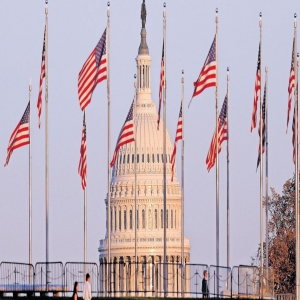
The results of the recently held US midterm elections have come as a major setback to President Donald Trump. Through their votes, the American people have delivered a strong message rejecting his controversial decisions, policies and actions. The results amount to a direct rebuke of the Trump administration's economic policies, domestic overreach and the war in Iran. The Democratic Party has taken control of both houses of Congress, the House of Representatives and the Senate. Democratic governors will now be in power in 29 states, compared with 20 Republican-governed states.
One of the most striking features of the elections was the Democrats' victory in at least seven Republican-held Senate seats, including in traditionally conservative states such as Texas, Kansas, South Carolina, Ohio, Iowa, North Carolina and Maine. Democrats also captured the governorships of Republican strongholds such as Texas and Georgia.
A Democrat-controlled Congress can now block legislation, reject the President's judicial appointments and subject his administration to greater scrutiny. It can also press for concessions on important issues such as immigration and influence the administration's foreign policy, particularly regarding the wars in Ukraine and Iran.
These results show that voters are willing to use their electoral power to question those in authority and hold governments accountable for their policies and performance.
What Can India Learn from These Elections?
1. A Strong Opposition is Essential for a Democracy
A strong and responsible opposition is indispensable to a functioning democracy. In a parliamentary system, the opposition is neither an enemy of the government nor an enemy of the nation. Its responsibility is to question government decisions, expose shortcomings, propose alternative policies and represent citizens who did not vote for the ruling party.
The American elections have strengthened the opposition and created greater possibilities for legislative scrutiny of the executive. This is an important democratic development.
In India, unfortunately, political differences are portrayed as disloyalty to the nation. Opposition leaders are labelled anti-national merely because they question government policies. Such attitudes undermine democracy. Criticism of the government should never be equated with criticism of the country. Constructive criticism is, in fact, an ex
The lesson for India is that opposition parties must work together to protect democratic institutions and challenge policies that undermine constitutional values.
2. People's Everyday Concerns Matter More than Rhetoric
The American elections demonstrate that bread-and-butter issues can outweigh ideological and political rhetoric. High inflation, rising prices and the cost of living were among the major concerns influencing voters. Ordinary people's anger over economic difficulties contributed significantly to the Republican Party's defeat.
In India, large sections of the population are also dissatisfied with rising prices, unemployment, poor-quality education, and inadequate healthcare. Minorities, Dalits, Adivasis and daily-wage workers have additional grievances arising from anti-minority and anti-poor policies.
Unlike the United States, where the two-party system lets public anger benefit mainly one opposition party, India's multiparty system divides votes among several opposition parties. Consequently, the people's dissatisfaction with the BJP may not automatically translate into electoral gains for the Congress.
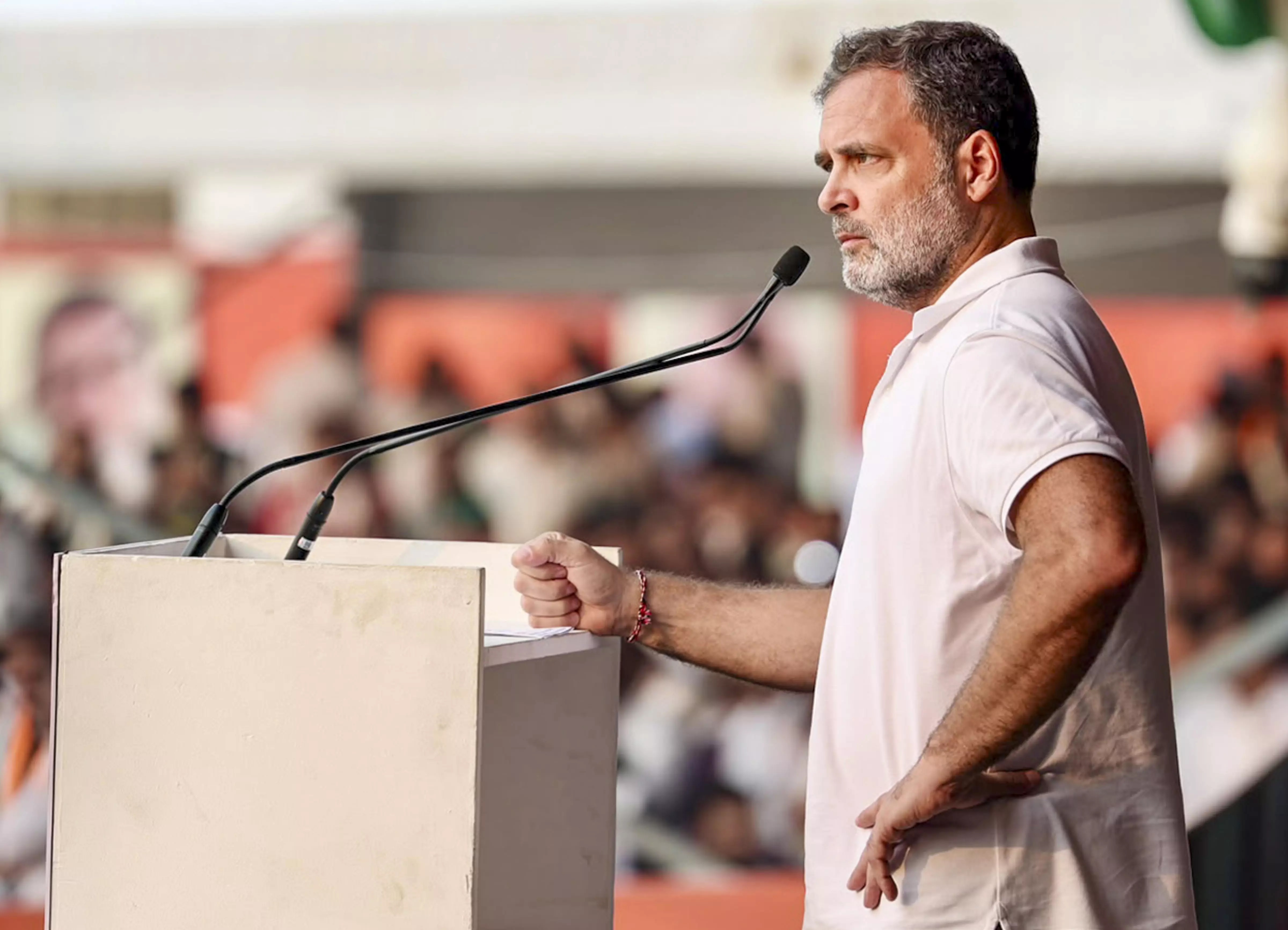
Rahul Gandhi has been attempting to mobilise public opinion against the BJP, but other opposition leaders have not always demonstrated the same willingness to confront its policies and ideology. The opposition must overcome its differences and unite around issues affecting ordinary citizens.
It must particularly address unemployment, inflation, social justice and the controversial Special Intensive Revision (SIR) of electoral rolls, through which more than 13 crore names are reportedly at risk of deletion. The opposition should demand transparency and accountability in the process. Rahul Gandhi and the Congress leadership have a special responsibility to intensify efforts to bring opposition parties together.
3. The Executive Must Be Held Accountable
The American political system provides for a separation of powers among the executive, legislature and judiciary. The midterm results have strengthened institutional checks on the President and restricted the possibility of unilateral executive decisions.
India's parliamentary system, however, often allows the executive to exercise considerable power when the ruling party enjoys a comfortable majority in Parliament. Therefore, India needs stronger legislative oversight. Parliamentary committees must function independently to strengthen accountability.
Elections should not become occasions for blindly endorsing political leaders or parties. Citizens must evaluate governments on their performance in job creation, economic development, education, healthcare, social justice, and national security. Religious identity, caste affiliations, communal polarisation and emotional nationalism should not overshadow these fundamental responsibilities.
People are to be educated that their democratic responsibility does not end with casting their votes. Civil society organisations, educational institutions and NGOs have an important role in educating citizens about their right and responsibility to question and criticise governments.
Unfortunately, Prime Minister Narendra Modi and other BJP leaders portray criticism and protests against government policies as anti-national activities. Terms such as "Dimaagi Naxals," "Tukde-Tukde Gang" and "Andolan Jeevi" have been used to discredit those who raise uncomfortable questions. On November 8, 2026, while addressing security personnel in Bastar, Chhattisgarh, on Diwali, the Prime Minister again targeted "Dimaagi Naxals," accusing them of undermining the Constitution and democracy.
Such accusations should not silence dissent. Opposition parties and civil society organisations have a responsibility to challenge baseless allegations and defend the democratic right to question those in power.
4. Overextending a Mandate can Invite Backlash
The American elections demonstrate that political mandates are temporary. Even leaders with considerable popular support and centralised authority cannot take voters for granted. Ignoring people's economic difficulties, pursuing controversial policies and exercising power without adequate consultation can generate strong anti-incumbency.
India has witnessed several such instances during the Modi government's tenure. Demonetisation caused enormous hardship to ordinary people and small businesses. The initial implementation of GST created serious difficulties for many businesses. The unplanned and chaotic COVID-19 lockdown caused immense suffering to migrant workers and vulnerable communities. The three controversial farm laws, introduced without adequate consultation, triggered a prolonged farmers' movement and were eventually withdrawn. The agitation was accompanied by the deaths of hundreds of farmers.
Despite these failures, the BJP has retained substantial political support through communal polarisation and the promotion of Hindutva ideology among the Hindu population.
Rahul Gandhi has been among the few prominent opposition leaders willing to directly challenge the Hindutva ideology propagated by the RSS-BJP. This ideology, in its political ex
However, Hindutva politics, when based on religious majoritarianism, is fundamentally incompatible with the constitutional principles of equality, secularism and fraternity. The entire opposition must expose the contradictions between the ideology of the RSS-BJP and the core values of the Indian Constitution.
The elections also remind us that money and corporate influence cannot guarantee electoral success. Even substantial financial support from powerful business figures such as Elon Musk could not save the Republican Party from electoral defeat. Similarly, the financial backing of influential corporate houses such as Adani and Ambani cannot ensure the BJP's continued political dominance. Ultimately, voters, not wealthy supporters, determine electoral outcomes.
5. Mobilising Young Voters is Essential
Young voters played a significant role in the American elections. Their concerns about immigration, economic opportunities and the future influenced their electoral choices. Growing participation by younger generations and minority communities also contributed to the changing political landscape.
India's Gen Z is increasingly politically aware and vocal about unemployment, educational opportunities, inequality and the future of democracy. Young people are beginning to question the failures and neglect of those in power.
Opposition parties should recognise this emerging political consciousness and channelise young people's energy into constructive democratic action. They must provide platforms for youth participation, listen to their concerns and offer credible solutions to the problems affecting their future. Young voters should be encouraged to become active participants in strengthening democracy rather than remaining passive observers.
6. Democracy Must Protect Diversity and Dissent
The United States is a diverse society comprising different racial, religious, cultural and ideological communities. Its democratic system gives these diverse voices opportunities to participate in public life. Election results show that political power can change hands through peaceful democratic processes.
India is even more diverse in terms of religion, language, caste, culture and ethnicity. Its democratic strength lies in accommodating, respecting and celebrating this diversity. The Constitution guarantees equality, freedom of religion, freedom of ex
No government should claim to represent only a particular religious, linguistic or cultural community. The government belongs to all citizens, regardless of religion, caste, language, or political affiliation. Democracy becomes meaningful only when minorities and vulnerable communities feel secure, respected and included.
The election of candidates from diverse backgrounds in the United States also reminds us that democracy must provide equal opportunities for people of different identities to participate in governance. Representation and inclusion strengthen democratic institutions.
The 2026 US midterm elections offer several important lessons for India. They underline the importance of a strong opposition, executive accountability, institutional independence, attention to people's everyday concerns, youth participation, and respect for diversity and dissent.
The most significant lesson is that political power is never permanent. Even a powerful leader backed by wealthy corporate interests and a well-organised political machinery can be challenged through the ballot box. However, for electoral change to become possible in India, opposition parties must overcome their differences and unite around the protection of democracy and constitutional values.
Ultimately, the people are the custodians of democracy. No political leader or party is above their judgment or the Constitution.
.jpg)
 P. A. Chacko
.jpeg)
 A. J. Philip
Jacob Peenikaparambil
.jpeg)
 John Dayal
.jpg)
 Jose Vattakuzhy
.png)
.png)
 Robert Clements

 Cedric Prakash
.jpg)
 Mathew John