


 A. J. Philip
.jpg)
There was a time when hardly any criminal case in Kerala stirred public imagination as deeply as the Madatharuvi murder case. Even today, I would argue that no other murder trial in the State has matched its combination of mystery, drama, religion, law and public fascination.
I was only a high school student then, but I doubt whether anyone followed the case with greater interest than I did. Looking back, I realise that my fascination was not merely with the crime but with the judicial process itself. Long before I entered journalism, I had become an eager student of courts, evidence and justice.
The moment I heard that the body of a young woman, Mariakutty, had been discovered near the Madatharuvi stream, I did something that would horrify any conscientious parent or teacher. I bunked classes, hired a bicycle and pedalled all the way to the lonely spot where the body had been found.
That was only the beginning.
I returned to Madatharuvi when Fr. Benedict Onamkulam, a priest accused of murdering Mariakutty, was brought there by the police to recover the knife allegedly used in the crime. It was one of those dramatic scenes that newspapers loved to describe in detail.
I visited the place a third time when the legendary advocate ASR Chari came to study the terrain before arguing the appeal before the Kerala High Court. Watching him examine the surroundings convinced me that great lawyers did not depend solely on books and precedents. They wanted to understand every physical detail connected with the crime.
These excursions were not inexpensive for a schoolboy. Hiring a bicycle cost 25 paise an hour. Today, that sounds insignificant. But in those days, the same amount could buy two dal vadas and a steaming cup of tea. Every trip meant sacrificing a small luxury, yet I never regretted spending that money.
I devoured every report that appeared in the newspapers. I even bought Thaniniram ("Real Colour"), the sensational publication brought out by Kalanilayam Krishnan Nair. It specialised in what would today be called yellow journalism.
The Sessions Court proceedings in Kollam held the entire State spellbound. One of the lawyers defending Fr. Benedict would later rise to become a judge of the Supreme Court of India, host RSS chief Mohan Bhagwat at his residence, and receive a Padma award!
Then came the verdict. Sessions Judge Kunhuraman Vaidyan pronounced Fr. Benedict guilty and sentenced him to death by hanging. The judgment came as a thunderbolt.
For Christians, it was a deeply painful moment. The very idea that a priest, ordained to preach compassion and forgiveness, could commit such a brutal crime was almost impossible to accept. Yet something remarkable happened.
No one attempted to portray the judgment as a Hindu-Christian issue. There were no allegations that the priest had been convicted because he belonged to a minority community. Christians reconciled themselves to a painful possibility. If one among the twelve disciples of Jesus could betray his Master, why should it be impossible for another human being, even one wearing a cassock, to commit a grave offence? That quiet acceptance said much about the maturity of Kerala society during that period.
When the appeal reached the Kerala High Court, another extraordinary development took place.
Justice Anna Chandy, India's first woman High Court judge, happened to be the vacation judge before whom the appeal came up. She chose to recuse herself by proceeding on leave preparatory to retirement.
The reasons were never officially stated, but speculation was widespread.
If she acquitted the priest, critics might accuse her of favouring a Christian accused. If she confirmed the conviction and death sentence, others could interpret it as an attempt to prove her secular credentials. Rather than allow either allegation to cloud public confidence in the judiciary, she stepped aside.
Eventually, the appeal was argued by ASR Chari, one of the finest advocates of his generation. Piece by piece, he dismantled the Sessions Court judgment. The prosecution's case collapsed. The Kerala High Court acquitted Fr. Benedict.
The priest spent the remainder of his life in prayer and silence. He never returned to public prominence. He died many decades later, following age-related illnesses. Ironically, the story did not end with his death. Today, there are people who visit his grave in Athirampuzha, light candles, and revere him almost as a holy man.
Whether such veneration is justified is beside the point. The larger lesson lies elsewhere. Justice, by its very nature, is expected to remain blind.
The familiar image of Lady Justice wearing a blindfold symbolises a profound principle: justice must ignore wealth, religion, caste, power, popularity and social status. The scales alone matter, weighing only the evidence and the law before reaching a verdict.
The Madatharuvi case remains one of the finest illustrations of this truth. The Sessions Court convicted a Catholic priest because the judge believed the evidence proved his guilt. The High Court acquitted the same priest because it found the evidence insufficient. In neither case did the religion of the accused become the central issue.
That is precisely how the justice system is expected to function. Sadly, some recent developments have prompted me to ask whether we are gradually moving away from that timeless ideal.
A few years ago, it was with considerable surprise that I saw the statue of Lady Justice unveiled on the premises of the Supreme Court during the tenure of Chief Justice DY Chandrachud, without the traditional blindfold. Symbolism matters. Courts understand that better than anyone else. Statues, emblems and ceremonial practices are intended to communicate values.
The blindfold is not an ornamental accessory. It is a declaration that justice refuses to see the wealth, status, religion, caste, political influence or social standing of the person before it. Remove the blindfold, and the symbolism inevitably changes.
Whether or not that was the intention behind the redesigned statue is beside the point. To many ordinary citizens, it conveys an unsettling message—that Lady Justice now sees who is standing before her. She can notice whether the accused is rich or poor, influential or powerless, a celebrity or an anonymous labourer.
That is precisely what justice must never do.
Chandrachud comes from one of India's most distinguished judicial families. His father, Justice YV Chandrachud, remains the longest-serving Chief Justice of India. Before his elevation to the Bench, he had been encouraged and mentored by the legendary Mohammad Currim Chagla, one of India's finest jurists, who served as Chief Justice of the Bombay High Court before becoming India's Ambassador to the United States and the United Kingdom and later Union Minister for Education and External Affairs.
The younger Chandrachud himself authored several landmark judgments. Among them was the unanimous verdict in the Ayodhya title dispute, popularly known as the Babri Masjid-Ram Janmabhoomi case.
Interestingly, when the judgment was delivered in November 2019, it bore the signatures of all five judges constituting the Constitution Bench, headed by Chief Justice Ranjan Gogoi. The identity of the judge who actually wrote the opinion remained undisclosed until Justice Chandrachud himself revealed it much later.
There was nothing improper in maintaining that anonymity. Courts speak through judgments, not through personalities. A judicial verdict is not a novelist's work to be identified with an individual author. Once pronounced, it becomes the decision of the Bench.
Nor do litigants ordinarily concern themselves with the religion of the judges hearing their cases. Equally, judges are expected not to concern themselves with the religion of the accused.
The legitimacy of a verdict rests entirely on the reasoning it contains and the evidence it evaluates. A recent judgment of the Gujarat High Court offers a striking example.
A Division Bench upheld the convictions awarded by the trial court in the 2008 Ahmedabad serial blasts case. Thirty-eight convicts were sentenced to death, and eleven to life imprisonment for participating in a conspiracy that killed 56 innocent people and injured nearly 200 others.
The explosions were carried out, according to the prosecution, as revenge for the communal violence that Gujarat had witnessed years earlier. No civilised society can accept such reasoning.
Nothing justifies terrorism. Those who plant bombs do not know whom they will kill. Nor do they care.
Several explosions took place near hospitals where patients, their attendants and medical personnel became victims. Had the improvised explosive devices functioned as intended, the death toll would almost certainly have been much higher. Only technical defects in some bombs prevented an even greater tragedy.
No compassionate citizen can feel sympathy for those responsible for such carnage. Equally, one cannot justify the collective punishment of innocent communities for crimes committed by a handful of individuals. Thousands suffered in Gujarat after the Godhra train burning, just as innocent citizens died in the serial blasts allegedly carried out in retaliation.
The chain of revenge never ends unless the law intervenes.
Whether it is the Samjhauta Express bombing, the Best Bakery case, the Godhra train burning or the Ahmedabad serial blasts, the principle remains unchanged. Crime is crime. Terrorism is terrorism. Murder is murder.
The religion of either the victim or the perpetrator cannot alter the moral or legal character of the offence.
That is why nobody paused to ask about the religion of the Gujarat High Court judges who upheld the convictions, or of the convicts themselves. The public response centred almost entirely on the enormity of the crime and the strength of the evidence.
Unfortunately, that healthy judicial culture has recently come under attack. The experience of Additional District and Sessions Judge Tabassum Khan of Madhya Pradesh should disturb every citizen who believes in constitutional democracy.
The case before her arose out of a horrifying incident in August 2022. Three men transporting cattle from Amravati in Maharashtra were intercepted near Barakhad village in Seoni Malwa. Suspecting cattle smuggling, a mob armed with sticks and wooden rods brutally attacked them. Nazir Ahmed, aged fifty, succumbed to his injuries, while the other two narrowly survived.
As often happens in such cases, crucial eyewitnesses turned hostile during the trial. Judge Tabassum Khan carefully examined the medical evidence, forensic reports, recovery of blood-stained weapons and blood-stained clothes before concluding that the prosecution had established guilt beyond reasonable doubt. On June 12 this year, she sentenced the convicted persons to life imprisonment.
That should have been the end of the judicial process at the trial stage. Instead, the judge herself became the target.
Social media was flooded with communal abuse. Self-styled cow vigilantes burned her effigy. Death threats followed. Videos appeared in which individuals openly abused her. The attacks were directed not against her legal reasoning but against her identity.
Nothing could be more dangerous for the rule of law.
Fortunately, the Madhya Pradesh High Court acted with commendable promptness. Taking suo motu cognisance, Justices Vivek Agarwal and Avanindra Kumar Singh directed the State to provide security to the judge, observing that intimidation of judicial officers strikes at the very root of judicial independence.
The police registered criminal cases. Security was strengthened. The cybercrime unit traced the perpetrators. Several arrests followed.
The Supreme Court Bar Association and the Supreme Court Advocates-on-Record Association also condemned the campaign of intimidation, reminding the nation that judges cannot decide cases under the shadow of threats. That united response deserves appreciation. But more remains to be done.
Those who threaten judges must face exemplary punishment. Otherwise, tomorrow another judge may hesitate before delivering an unpopular but legally correct verdict.
My concern arises because we have witnessed instances in which influential persons, such as a minister in MP, escaped meaningful consequences despite making outrageous public remarks against a lady Army officer who served the nation with distinction during Operation Sindoor. Selective enforcement weakens public confidence.
The rule of law requires that every citizen submit to the same legal standards. Judges are not angels descended from heaven. They are ordinary men and women entrusted with the extraordinary responsibility of interpreting the law impartially. They will occasionally err, and higher courts exist to correct those errors. But they must never be punished for honestly performing their constitutional duty.
The day judges begin looking over their shoulders before pronouncing judgment, democracy itself will be in peril. Lady Justice, therefore, deserves her blindfold back, not merely on a statue but in our collective constitutional imagination.
.jpg)
.png) Cedric Prakash
Cedric Prakash
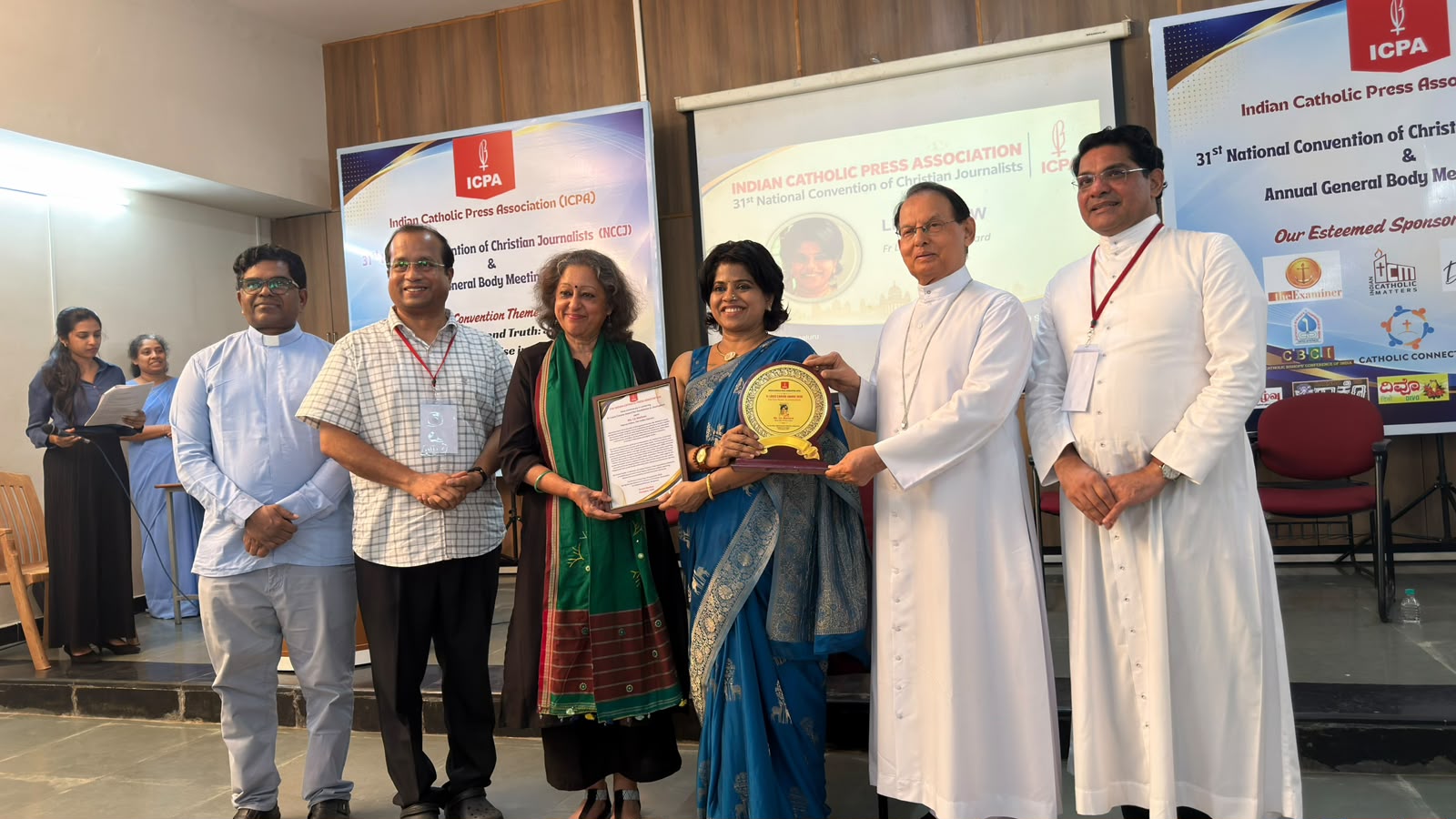
 ICPA
ICPA
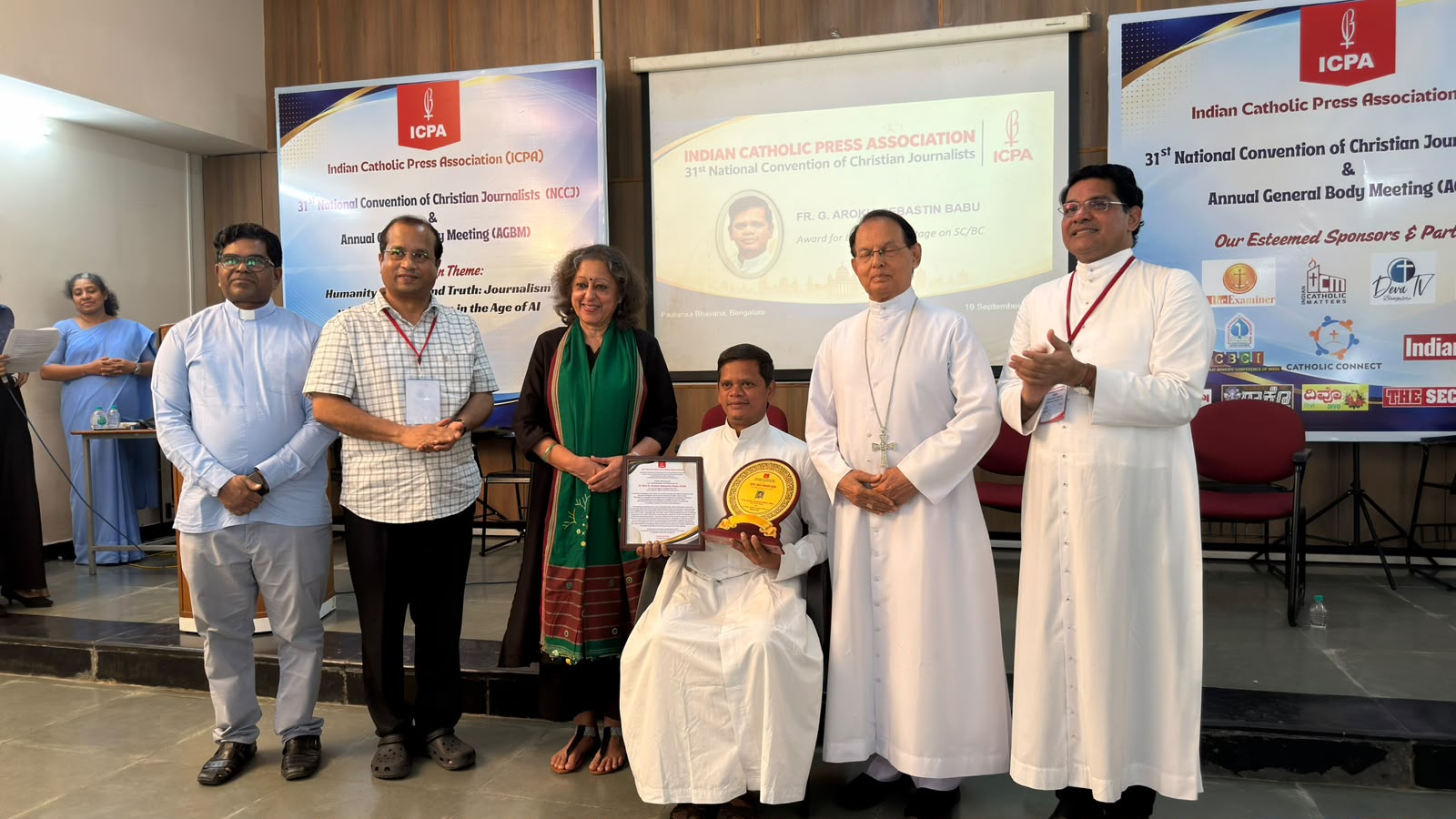 ICPA
ICPA
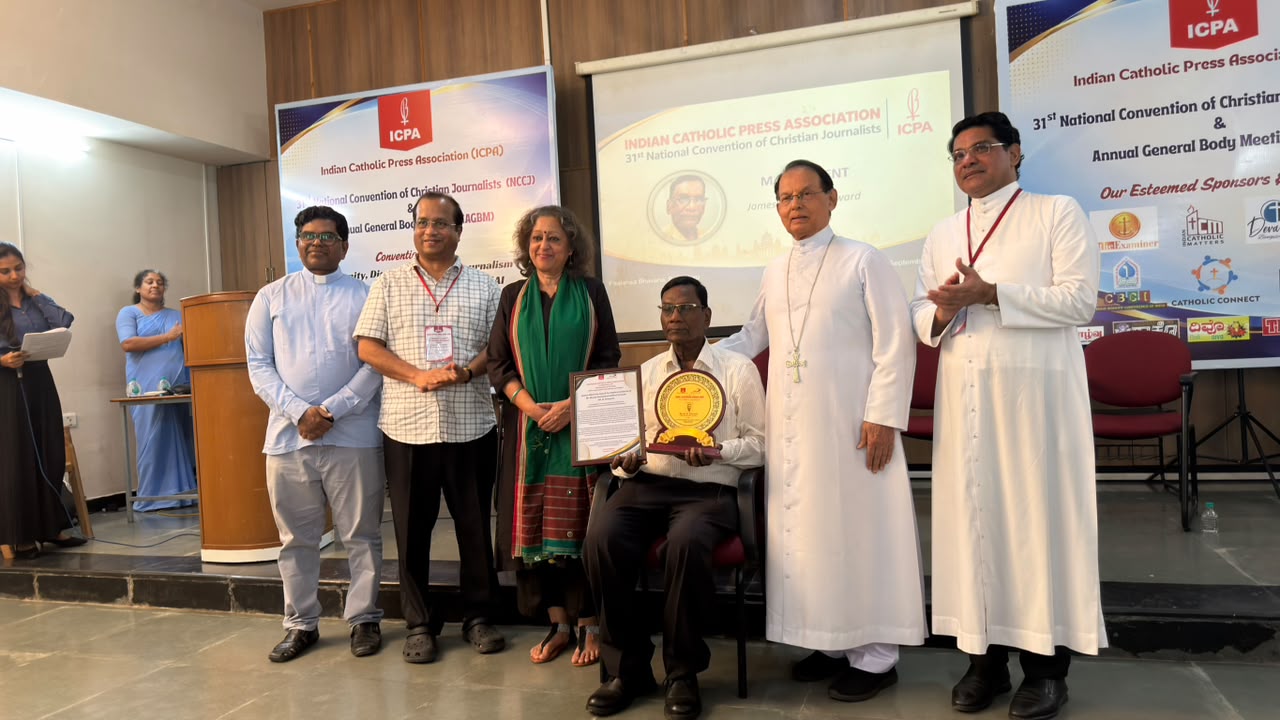 ICPA
ICPA
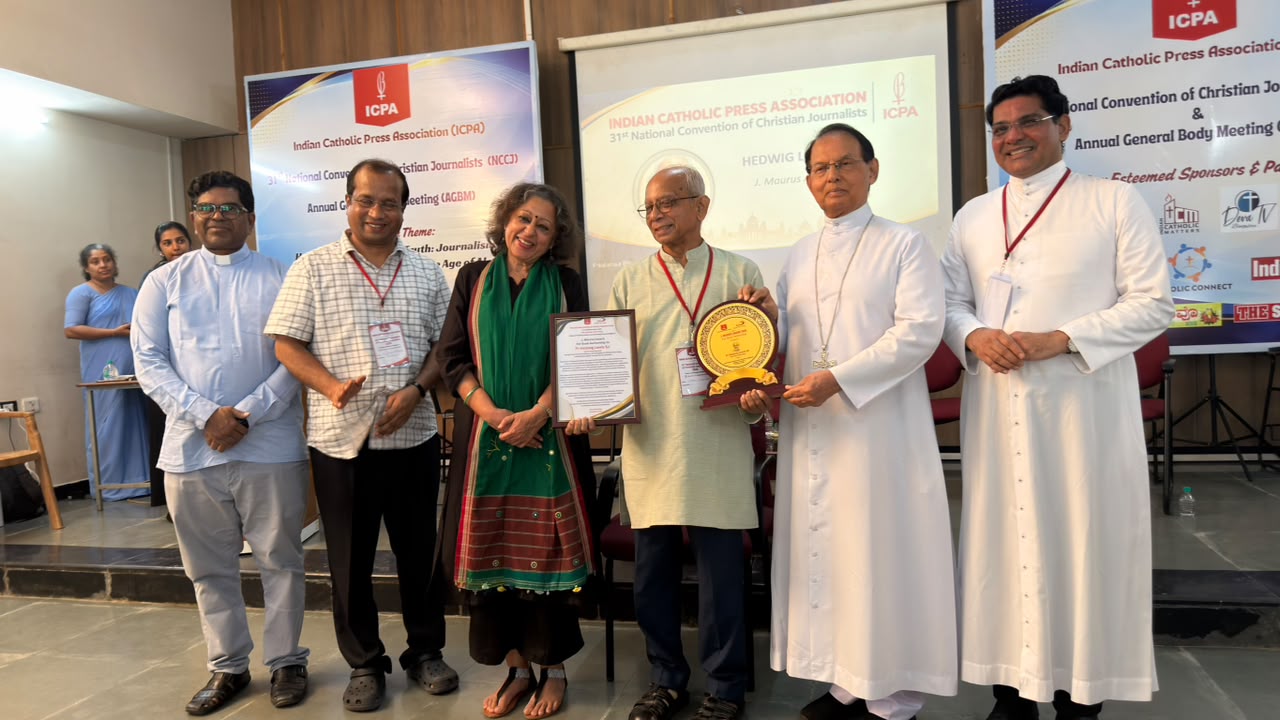 ICPA
ICPA
 ICPA
ICPA
 ICPA
ICPA
.jpg) A. J. Philip
A. J. Philip
.jpg)
.png) Jacob Peenikaparambil
Jacob Peenikaparambil
.jpg)
.png) John Dayal
John Dayal