

.png) Joseph Maliakan
Joseph Maliakan
.jpg)
During the Internal Emergency (1975–77), socialist leader HV Kamath, speaking at the inaugural meeting of the People's Union for Civil Liberties (PUCL), referred to the Forty-second Constitutional Amendment and famously remarked: "They are not amending the Constitution; they are not mending it; they are ending it." His words reflected the widespread apprehension that constitutional amendments could fundamentally alter the democratic character of the Republic rather than merely reform it.
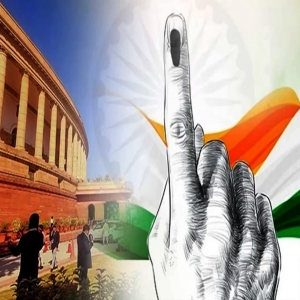
The Constitution (One Hundred and Twenty-ninth Amendment) Bill, 2024, commonly known as the "One Nation, One Election" Bill, was introduced in the Lok Sabha in December 2024 to facilitate simultaneous elections to the Lok Sabha and all State Legislative Assemblies. Besides striking at the very root of the republican and democratic essence of the Indian system of government, the Bill also has the potential to dismantle the Constitution's federal structure. The Bill is presently under examination by a Joint Parliamentary Committee chaired by PP Choudhary, Member of Parliament.
The Bill proposes the insertion of Article 82A, empowering the President of India to notify an "appointed date" to synchronise electoral cycles following a general election to the Lok Sabha. It further provides that if elections to any State Legislative Assembly are held after the appointed date but before the expiry of the Lok Sabha's term, the term of such State Assembly shall nevertheless conclude simultaneously with the Lok Sabha's term.
The Bill also proposes amendments to Article 83, providing that if either the Lok Sabha or a State Legislative Assembly is dissolved prematurely, the newly elected House shall continue only for the remainder of the dissolved House's original term, rather than enjoying a fresh five-year mandate. It similarly seeks to amend Article 172, relating to the duration of State Legislatures, and Article 327, which empowers Parliament to make provisions with respect to elections to State Legislatures.
The Bill further provides that, where the Election Commission of India believes that elections to a particular State Legislative Assembly cannot be conducted simultaneously with the general elections, it may recommend to the President that such elections be deferred. Acting on that recommendation, the President may issue an order directing that elections to the concerned State Assembly be held at a later date. However, even when elections are deferred, the term of that Assembly will still expire simultaneously with the term of the Lok Sabha elected in that cycle of simultaneous elections. It is pertinent to note that the Union Territories Laws (Amendment) Bill does not contain similar provisions.
According to the Statement of Objects and Reasons appended to the Constitution Amendment Bill, elections have become increasingly expensive and time-consuming. It further contends that the Election Commission's frequent imposition of the Model Code of Conduct (MCC) during successive elections disrupts developmental activities and affects public service delivery. Simultaneous elections, according to the Bill, are intended to eliminate these difficulties and ensure greater administrative efficiency.
These justifications, however, appear far less convincing when examined in the light of actual expenditure. According to estimates of the Election Commission of India, the government's expenditure on conducting both Lok Sabha and State Assembly elections in 2015 amounted to approximately ?4,500 crore. This represented barely 0.25 per cent of the Union Government's total Budget of nearly ?17 lakh crore for the financial year 2015–16. In other words, the expenditure was insignificant in comparison with the total public expenditure.
Another estimate furnished by the Election Commission indicated that expenditure on Lok Sabha elections alone ranged between 0.02 per cent and 0.05 per cent of the Gross Domestic Product (GDP) during 2015–16, when India's GDP stood at approximately ?137 lakh crore. The financial burden of elections, therefore, can hardly be regarded as sufficient justification for introducing constitutional changes that fundamentally alter the federal and democratic framework of the Republic.
What is far more disturbing is that the Bill confers excessive, largely unguided discretionary powers on both the President of India and the Election Commission of India. It authorises the President to determine the appointed date for synchronising elections and to defer elections to any State Legislative Assembly on the advice of the Election Commission.
This provision raises serious constitutional concerns because, under the parliamentary system established by the Constitution, the President ordinarily acts on the aid and advice of the Union Council of Ministers. Consequently, these powers effectively shift substantial control over the electoral calendar from the federalist constitutional scheme to the Union Government.
More importantly, the Bill does not specify the circumstances under which elections to State Legislative Assemblies may be deferred. Such broad and undefined discretion creates enormous scope for the arbitrary exercise of power. It is not difficult to foresee a situation in which the ruling party at the Centre could influence the timing of State elections to suit its political interests, thereby seriously undermining the federal structure envisaged by the Constitution.
It is equally significant that the power to defer elections applies only to State Legislative Assemblies, not to Lok Sabha elections. This raises an obvious constitutional anomaly. If circumstances in a particular State are considered unsuitable for conducting elections to its Legislative Assembly, how can the same circumstances simultaneously permit elections to the Lok Sabha in that very State? The Bill offers no satisfactory answer to this fundamental inconsistency.
Granting such wide and virtually unbridled powers to the President and the Election Commission—institutions that many critics believe have, in recent years, increasingly come under the influence of the Union Government—is fraught with the danger of large-scale misuse and abuse of constitutional authority.
The Bill, if enacted, will create a highly anomalous constitutional situation in which the tenure of several State Legislative Assemblies will be substantially curtailed. The next Lok Sabha is expected to hold office from 2029 to 2034. Under the proposed synchronisation of electoral cycles, six State Assemblies whose elections are due in 2033 would be constituted for a term of barely one year, ending in 2034, along with the Lok Sabha. Likewise, five State Assemblies elected in 2032 would effectively have a tenure of only two years, rather than the constitutionally envisaged five years.
Thus, the Bill, if passed and implemented, will have an immediate and adverse impact on governance and democratic accountability—the very objectives the proposed measure claims to strengthen. Governments with drastically shortened tenures are unlikely to undertake long-term policy initiatives or developmental programmes. Instead, they may remain in a perpetual state of political uncertainty, with little incentive to pursue sustained governance or remain accountable to the electorate.
The Bill will consequently have a profound and irreversible impact on fundamental constitutional values such as democracy, federalism, representative government, and accountability. It will inevitably alter the balance of power envisaged by the Constitution by concentrating greater authority in the hands of the Union Government. In such a constitutional arrangement, State Governments risk being reduced to little more than glorified municipal corporations, functioning at the Centre's pleasure rather than as constitutionally autonomous governments within a federal polity.
In this context, it is relevant to note the opinion expressed by former Chief Justice of India Sanjiv Khanna on the proposed legislation. Appearing before the Joint Parliamentary Committee examining the Constitution (One Hundred and Twenty-ninth Amendment) Bill, he reportedly cautioned that the proposed legislation confers "unfettered discretion" upon the Election Commission of India under Clause 5 of the proposed Article 82A. According to him, this provision enables the Election Commission to postpone elections to State Legislative Assemblies even when general elections are scheduled, thereby creating a serious risk of undermining India's federal constitutional structure.
Justice Khanna further warned that such provisions may violate Article 14 of the Constitution, which guarantees equality before the law and equal protection of the laws. He also observed that the proposed framework could indirectly facilitate the imposition of a situation resembling President's Rule without formally invoking the constitutional safeguards contained in Article 356. Such an arrangement would enable the Union Government to exercise effective control over the functioning of State Governments without following the constitutional procedure prescribed for the proclamation of President's Rule.
These observations deserve serious consideration because they come from a former Chief Justice of India with extensive experience in constitutional adjudication. They reinforce the apprehension that the Bill does not merely seek to reform the electoral calendar but has far-reaching implications for the constitutional balance between the Union and the States.
The Indian Constitution consciously adopted a federal framework with a strong Centre while simultaneously guaranteeing constitutional autonomy to the States. Periodic elections to the Union Parliament and the State Legislatures constitute one of the essential features of this democratic arrangement. The proposed legislation fundamentally alters this constitutional equilibrium by subordinating the tenure of State Legislatures to that of the Lok Sabha and by vesting extraordinary discretionary powers in constitutional authorities without laying down adequate safeguards against arbitrary exercise.
The financial savings claimed by the proponents of simultaneous elections are relatively insignificant when weighed against the constitutional costs. Expenditure on elections constitutes only a tiny fraction of the national Budget and Gross Domestic Product. Administrative convenience and marginal financial savings cannot justify amendments that could weaken representative democracy, dilute federalism, and concentrate political power in the Union Government.
The Constitution was designed not merely to facilitate efficient administration but to preserve liberty, democratic accountability, constitutional morality, and the delicate balance of power between the Union and the States. Any constitutional amendment that disturbs these foundational principles must be subjected to the strictest constitutional scrutiny.
The proposed One Nation, One Election Bill, viewed in its entirety, raises serious constitutional concerns. Far from strengthening democracy, it risks weakening the republican character of the Indian State, diminishing the autonomy of State Governments, and undermining the federal structure that forms part of the Constitution's basic structure. Constitutional efficiency can never become a substitute for constitutional freedom, nor can administrative convenience be permitted to override the foundational principles upon which the Republic of India stands.
.jpg)
.png) Cedric Prakash
Cedric Prakash
 ICPA
ICPA
 ICPA
ICPA
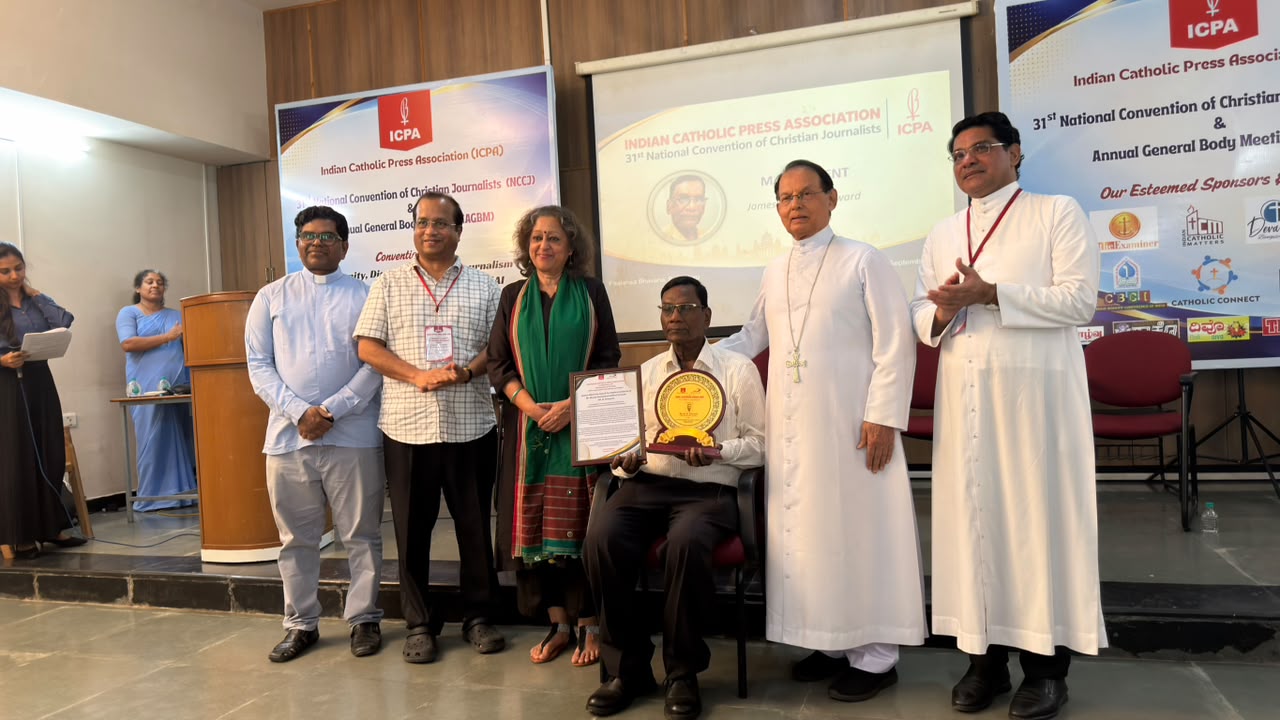 ICPA
ICPA
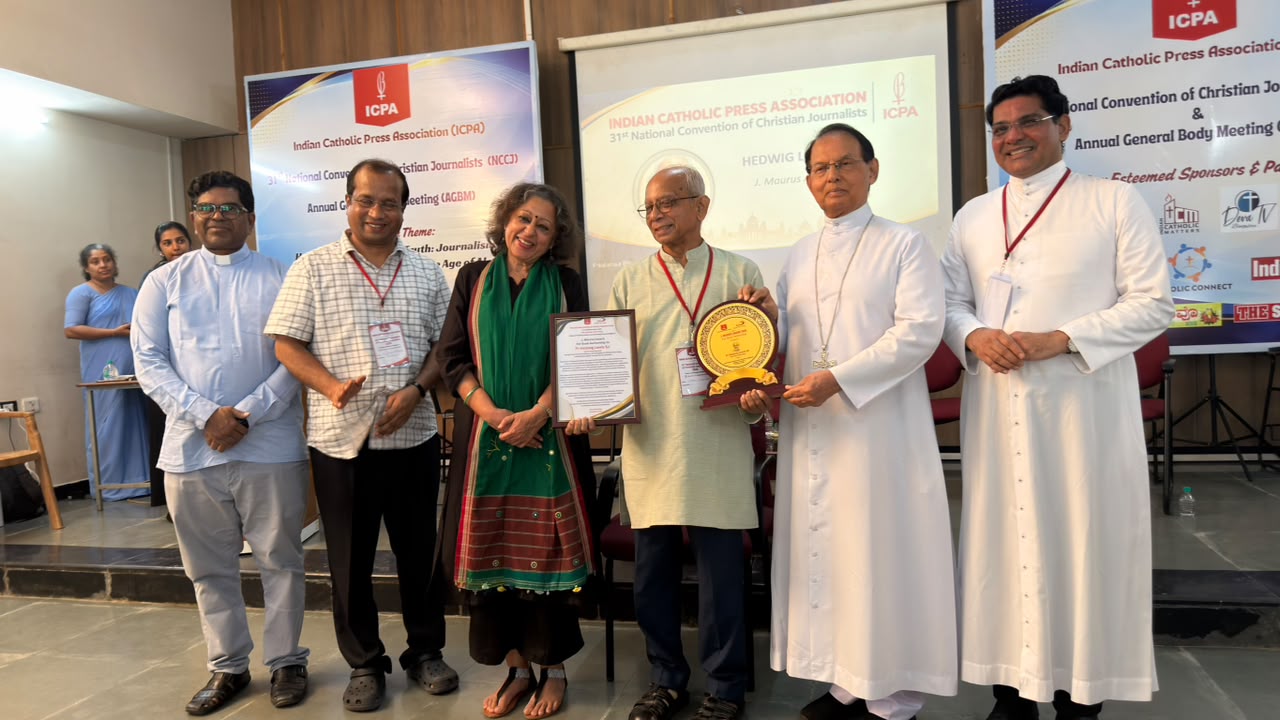 ICPA
ICPA
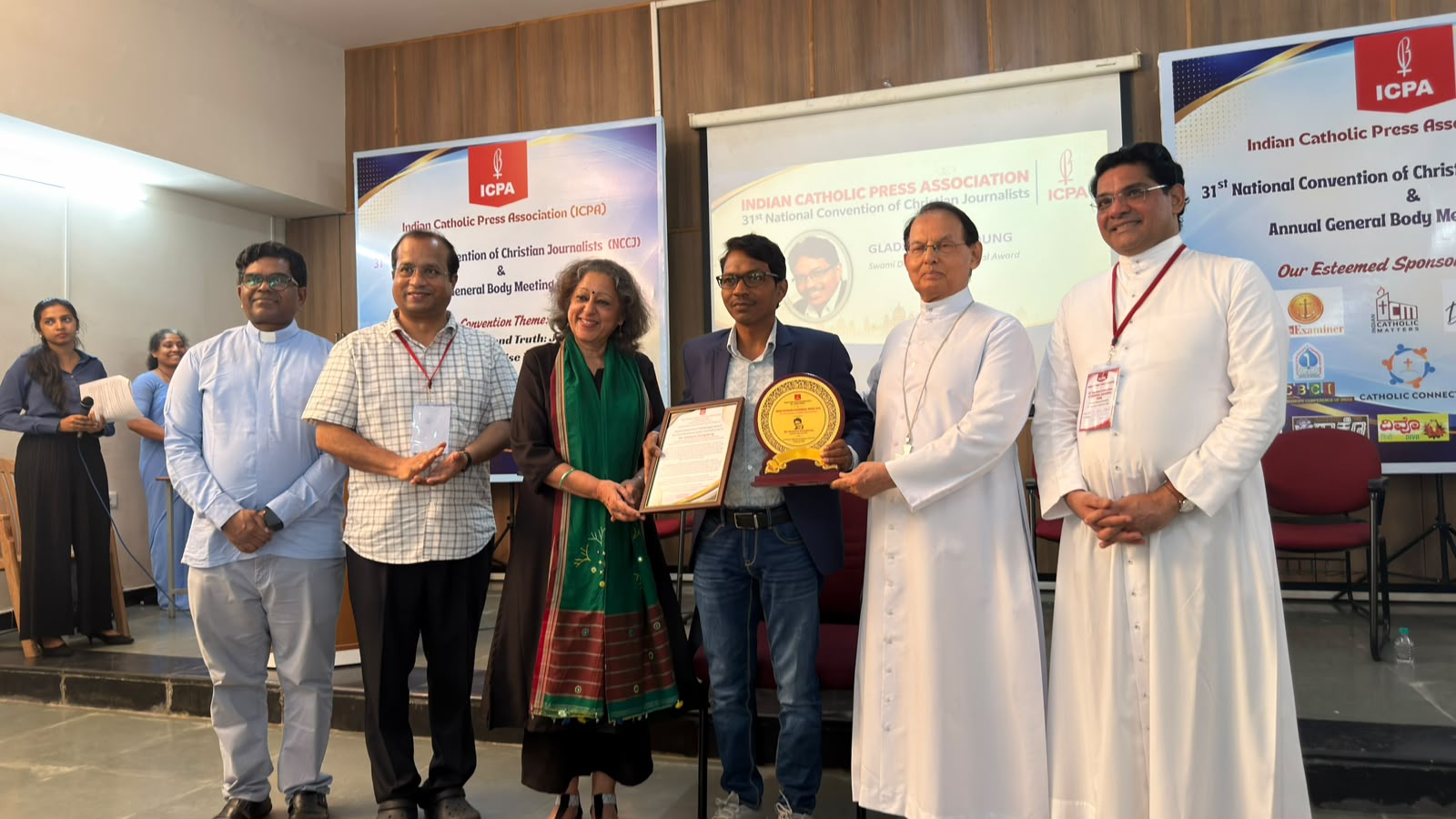 ICPA
ICPA
 ICPA
ICPA
.jpg)
 A. J. Philip
.jpg)
.png) Jacob Peenikaparambil
Jacob Peenikaparambil
.jpg)
.png) John Dayal
John Dayal