

Mumbai is India's financial hub. With an estimated population of 12.5 million, it is home to more billionaires than any other city in Asia. This city is renowned for its Bollywood movies, ambitious spirit, and non
But beneath this surface of wealth and glamour lies a darker reality, a theme often explored by many Bollywood films, even though the industry itself has long been entangled in the very underworld it depicts. It is the reign of crime lords and extortionists who have built a thriving empire by collecting what is locally known as hafta (a Hindi word that simply means "week"), the regular weekly extortion or protection money demanded from businesses.
In this shadowy network, politicians and administrative branches are often involved. Week after week, small shopkeepers, street vendors, taxi drivers, and business owners are forced to hand over cash, not for any genuine services but simply for the "privilege" of operating without harassment or violence.
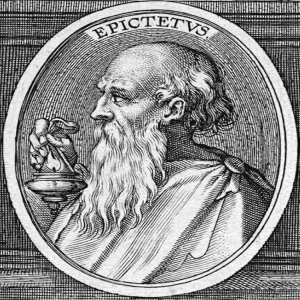
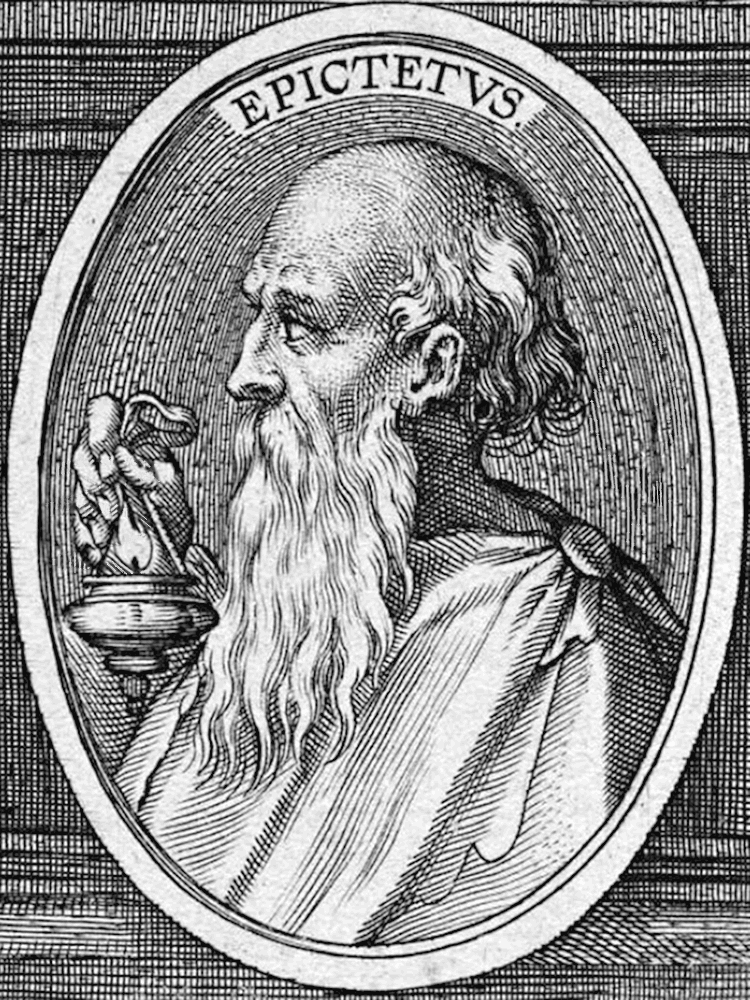
This illegal, corrupt system of extortion is not exclusive to Mumbai or Indian cities. It is a common pattern of human nature that appears throughout history and in many places. Whenever someone—or some group—controls access or safety, a price is demanded. Sometimes, the currency is cash. More often, it is flattery, silence, public loyalty, or small moral compromises that build up. The Stoic philosopher Epictetus, who wrote about tranquillity, fearlessness, and freedom, understood this truth 1900 years ago.
In Enchiridion 25, Epictetus writes:
If someone has been placed ahead of you at a banquet or in a reception line or in being called on as a counsellor, you should be pleased that he has received these things, if they are good. But if they are bad, do not be upset because you did not obtain them. Keep in mind that you cannot expect to enjoy an equal share of the things that are not due to you without doing the same things others have done. If you do not hover around someone's door or go around with him or flatter him, how can you expect to receive the same share of his regard as the person who does these things? If you do not pay the price these things are sold at, and want to enjoy them for free, you are simply unbalanced and greedy.
What is the cost of lettuce? An obol, maybe. If someone pays an obol [a small Greek silver coin, worth one-sixth of a drachma] and in return receives some heads of lettuce, you ought not to suppose that you have less than he. While he now has the lettuce, you have your unspent obol. It is just the same in the case we are considering. Say you were not invited to someone's dinner party. Well, that may be because you did not pay the host the price of the dinner. He sells it for flattery, for attention. Pay the price it is sold for if you think the dinner is worth it. But if you want to be invited without paying up, you are simply selfish and stupid. Do you have something instead of dinner? Of course you do. You are free from having to flatter the man you did not want to flatter or dealing with the crowd at his door.
As we can see, Epictetus does not lash out against the system. Instead, he encourages us to look beyond the surface of these everyday social exchanges and realise that everything—whether good or bad—has a price. One is free to choose whether to pay that price for access to certain privileges. If the price demanded is our integrity, then refusing to pay it allows us to keep the obol of our self-respect and inner freedom. No one is being cheated or treated unfairly. People simply choose to make a different exchange.
The Subtlety of Power
One can almost respect the brutal honesty of the street-level hafta system. The don or his henchman openly demands money for "protection." Pay, and your shop remains undisturbed. Refuse to comply, and they will make your life miserable. The transaction is straightforward, even if unjust and illegal.
The same dynamic occurs, but more subtly, in broader human contexts. In workplaces, political networks, social groups, and religious institutions are no exception—what changes is the 'currency' being exchanged. The principle and pattern stay the same. It may involve publicly supporting a leader's views, staying silent in the face of uncomfortable truths, small and not-so-small acts of superficial loyalty, or performing to win approval—all in exchange for acceptance, belonging, and perhaps much more. The 'don' might wear a business suit, police uniform, religious attire, or simply hold a prestigious title. The threat rarely involves physical violence but often includes ostracism, a loss of status, or damaged relationships.
The Real Cost of Paying and of Refusing
Many people who sacrifice their integrity for safety or a sense of belonging later regret who they become. Once we start surrendering, restoring integrity becomes difficult.
Ultimately, moral compromise leads to the death of the soul. The gradual suffocation begins with small compromises: little acts of obedience build momentum. The first quiet concession (attending a gathering you inwardly oppose, praising what you cannot genuinely appreciate, donating when your conscience objects, remaining silent when you should speak out) weakens the will. Each small act of cowardice makes the next easier.
Let us look at the example of Esau. Returning from the fields, hungry and tired, he sold his entire birthright (the double portion of the inheritance, his status as head of the family, and even the blessing of the covenant) for a meagre bowl of lentil stew. "I am about to die," he said, "of what use is a birthright to me?" (Genesis 25:32). At first glance, it seemed like a simple trade. But the biblical story shows that Esau despised his birthright (Genesis 25:34). A small act of giving in to his hunger under pressure became, for Esau, the first step toward irreversible loss and lifelong regret.
When we pay the hafta demanded by any system, the cost is rarely just a single obol. Each payment diminishes self-respect. Every flattery or silence makes the next demand seem acceptable, or even legitimate. We are training ourselves to cooperate with evil, and over time, we end up strengthening the power that restricts us.
Epictetus understood this well: the person who refuses to give up something is holding onto something valuable. They safeguard their ability to make genuine commitments. They insist that any sacrifices are made on their own terms and in line with their core principles. They honour and preserve their dignity.
Religious communities, including the small Christian communities across India, are meant to be places of truth, love, and justice. Yet they are made up of imperfect human beings, and so they are not immune to the subtle pressures of power. In an increasingly hostile or indifferent environment, there can be a strong temptation to conform, to support certain leaders without question, to remain silent on difficult issues, or to make financial or moral compromises—all in exchange for institutional survival, acceptance, and a measure of security.
As Cardinal Gerhard Müller states, a major problem today is "the desire to compromise with the world; an unwillingness to live with the tension of living the faith in today's highly secularised society." Epictetus and the story of Esau remind us: it is possible to love your faith and value your community while refusing to sacrifice your convictions. The "dinner" is not worth the price if it requires you to forego your birthright.
The Way to Keep Our Obol
We safeguard our obol by consistently returning to a few timeless principles handed down by the ancient philosophers, especially those of Epictetus (see especially Enchiridion 1, 29, and 24).
First, we learn to distinguish between what is within our control and what is not. We focus our energy on our own judgments while recognising that others' approval or protection is never fully within our control.
Second, prepare early. We count the cost before choosing to invest or spend. Jesus called his disciples to count the cost of following him (Luke 14:28–33). By calmly imagining the costs of not investing our resources in social acceptance (cold shoulders, missed opportunities, pointed fingers, or ostracism), we can avoid being caught off guard when pressure arises.
One day, life may separate us from the familiar "squad," not by choice, but by circumstance. We may find ourselves alone, facing rejection with no comforting voices around us. In that moment, there will be only us and our character. Anticipating and preparing for such times in advance strengthens the will.
Third, we believe that preserving a trustworthy and honourable character is more important than any external advantage. Status, comfort, and belonging may be pleasant, but they are never worth trading our souls for (see Enchiridion 24).
Finally, honest daily self-examination is irreplaceable. Each evening, we ask ourselves: "What price was asked of me today? Did I pay it, or did I keep my obol? Is the person I am becoming the one I wish to be?"
Small refusals, repeated over time, build inner strength. When we say 'no' with courage, we might inspire others who are struggling.
The Freedom of Keeping Your Obol
In a world that is never short of literal and metaphorical dons (criminal, institutional, or religious), the most empowering choice is often the quiet, costly decision not to trade away your obol. You might miss out on some nice lettuce. You might miss some dinners. But you preserve something the powerful cannot touch: a clear conscience and the freedom to live without fear, without anything that could enslave your soul. The free man has the capacity to decide for himself what is worth living and dying for.
The shopkeeper who hands over an envelope each week gets temporary peace, to be sure. But the one who refuses, even though he knows the risks, gains something extremely valuable: the ability to look at himself in the mirror and smile.
What price are you asked to pay today? And are you truly able to afford it?
.jpg)
.png) Cedric Prakash
Cedric Prakash
 ICPA
ICPA
 ICPA
ICPA
 ICPA
ICPA
 ICPA
ICPA
 ICPA
ICPA
 ICPA
ICPA
.jpg)
 A. J. Philip
.jpg)
.png) Jacob Peenikaparambil
Jacob Peenikaparambil
.jpg)
.png) John Dayal
John Dayal