

.png) Aarti
Aarti
.jpg)
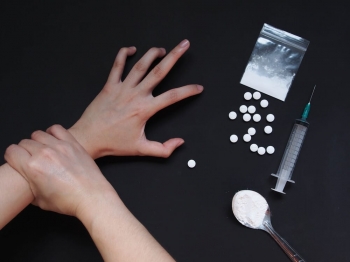
The Kerala High Court’s recent directive to the state government to adopt a method of establishing Campus Police Units in order to check drug abuse inside educational institutions is a commendable step to deal with the social malaise.
According to submissions made in the Court, around 400 institutions in the State are affected by drug abuse and out of the education institutions, 74.12 % are schools, 20.89 % are colleges and professional institutions, and 4.97 % are other institutions viz., ITI, Polytechnics etc”.
Well, Kerala is no exception. That many of our cities are infested with rampant drug abuse is no secret.
The 57 page order, passed by a division bench, was after the court took suo motu cognisance based on a letter submitted by retired IPS officer Mr N Ramachandran in 2019 highlighting various aspects of drug abuse in Kerala.
In terms of the judgement, the State Government and police have to work in tandem in the fight against drug abuse. While the local police shall pay special attention to areas surrounding schools and colleges in their efforts to tackle drug peddlers, schools and colleges are required to look out for peddlers in their vicinity and report them to police. There has to be increased public awareness about the potential harm street peddlers can do to their societies and their children and the need to report peddlers to police and to follow up. NGOs, resident welfare societies, etc., are to be roped in to report peddlers and follow up with police chalk out programmes, to ensure reduction in the incidence of substance abuse among teenagers and youth. Onus has been placed on the Government to provide Universities/Colleges/School authorities with guidelines as a charter of duties and responsibilities, to make the campuses of the educational institutions, drug free.
Many people seem to get addicted to drugs for a variety of reasons. Various studies have concluded that an individual with an addiction behaviour often uses a substance for which the rewarding effects provide a compelling incentive to repeat the activity, despite detrimental consequences. Such addiction may involve the use of a variety of substances such as alcohol, inhalants, opioids, cocaine, nicotine, etc. According to research, there is evidence that addictive behaviours share key neurobiological features. That is, they intensely involve brain pathways of reward and reinforcement, which involve the neurotransmitter dopamine. Thus, over time, pursuit of the pleasurable effects of the substance or behaviour may dominate an individual’s activities. It could be used as a quick fix by some who undergo an emotional suffering caused by the intolerable conditions of life. Largely, individuals who have had adverse childhood experiences, such as physical and sexual abuse, neglect, domestic violence, and family dysfunction may find respite in drugs. An important characteristic of drug addiction is that the individual suffering from it continues to use despite harmful consequences. However, all addictions have the capacity to induce a sense of hopelessness and feelings of failure, as well as shame and guilt.
Media reports indicate that in many states across India, children even as young as 10 years seem to be getting hooked to psychotropic substances. That many of our children who are supposed to be studying, playing and enjoying life are living in a potentially hazardous environment. Vulnerable to peer pressure, innocent minds seem to be oblivious of the fact that such thrills are short-lived which can soon turn into shrill cries. That many of the youth who have fallen prey to the intoxication drop out of school is a cause for serious concern. There have been instances of such drop outs stealing taps, iron rods or other saleable items to fund their daily dose.
Not long ago, a study by two consultants at the State Drug Dependence Treatment Centre in Haryana’s Rohtak found that young kids of well-to-do families are lured into this terrible trap by drug peddlers and addicts even as drugs are easily available. Some synthetic drugs are also said to be sourced over the DarkNet.
In the US, mandatory drug testing in public schools was introduced in the late 1980s in the war on drugs. The primary purpose of random drug testing is not to punish students who use drugs but to prevent drug abuse and to help students already using drugs become drug-free. Originally, high school drug testing was predominantly focused on athletes but more recently the US Supreme Court has upheld a school’s right to perform mandatory drug tests on students voluntarily participating in competitive athletic programs as “drug use by athletes’ risks immediate physical harm to users and those with whom they play.” Such testing usually involves a urine test that looks for drugs like marijuana, cocaine and amphetamines.
In India, under Narcotic Drugs and Psychotropic Substances (NDPS) Act, the punishment for possessing the commercial quantity of banned drugs is higher than possessing a smaller quantity. Last year the Supreme Court, observing that the use of drugs was a crime against society which must be dealt with iron hands, it had ruled that the punishment for drug possession will not depend on the quantity of drug present but even traces of an offending drug in the consignment will be sufficient to declare the entire quantity as an offending drug. That is the amount of neutral substance in the mixture will be included along with the actual weight of the banned substance in order to determine whether it is a small or commercial quantity.
The Kerala High Court’s verdict merits to be implemented in letter and spirit as it will go a long way in stemming the rot.
At the household level, there is an imperative need for parents and guardians to notice any signs of drug addiction amongst their children so as to wean them with treatment before they get hopelessly hooked on the drug.
According to health experts, any change in a kid’s behaviour, be it a decline in interest in studies and other activities, or loss of appetite, increased irritability etc., need to be evaluated as its root could be substance abuse.

.jpg) Stanislaus Alla
Stanislaus Alla
.jpg) Stanislaus Alla
Stanislaus Alla

 Adv. Rev. Dr George Thekkekara
.jpg)
 A. J. Philip
.jpg)
.png) John Dayal
John Dayal
.jpg)
.png) Jacob Peenikaparambil
Jacob Peenikaparambil

.jpg)
 P. A. Chacko
.png)
.png) Robert Clements
Robert Clements