

.png) M L Satyan
M L Satyan
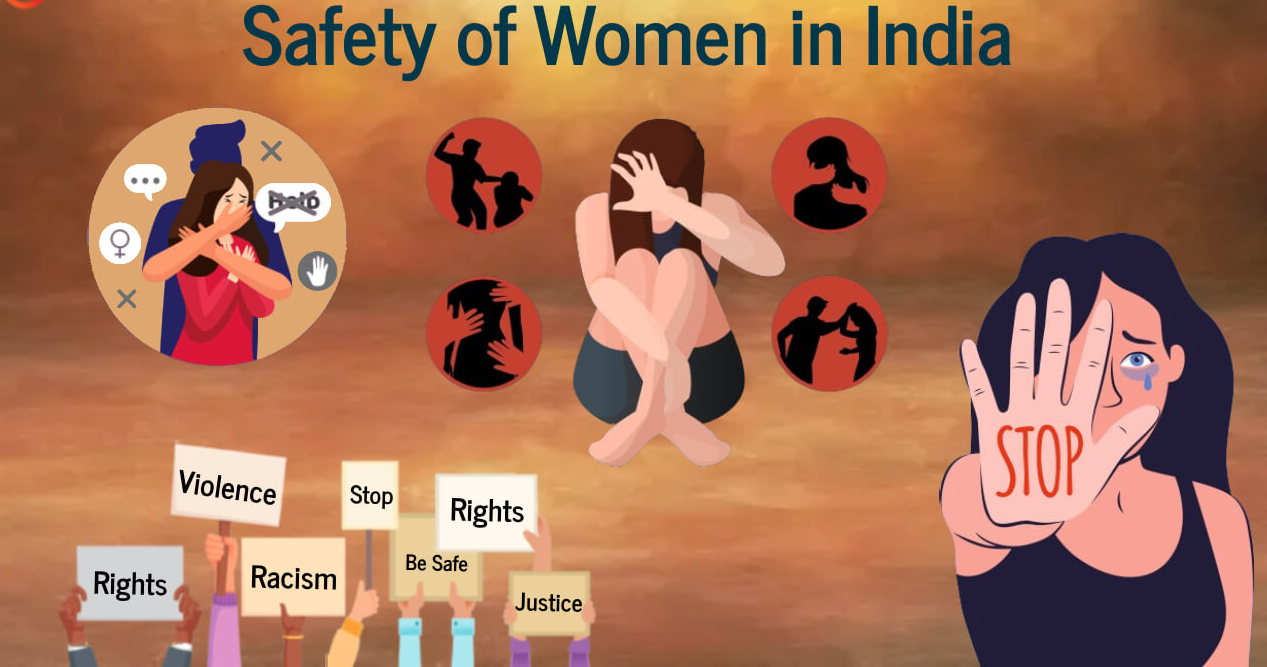
As India is witnessing an upsurge in sexual abuse, we tend to think that we need to protect girls. Continuous advice is given to parents: "Protect your daughters." In fact, this advice is not debated in public spaces. But a spontaneous question arises: "Is it enough to protect our daughters?" At this introspective stage, I received a thought-provoking WhatsApp picture with the caption: "Educate your sons".
Frightening Facts
• An average of nearly 90 rapes a day were reported in India in 2022, according to data from India's National Crime Records Bureau (NCRB).
• Now we are in 2024. The actual figure is likely to be much higher, as many such crimes go unreported due to fear of reprisal, prevailing stigmas around victims and a lack of faith in police investigations.
• In 2023, the Georgetown Institute for Women, Peace and Security ranked India 128th out of 177 countries in its annual index on women's inclusion, justice and security.
• According to the World Bank, 35 per cent of Indian women between the ages of 15 and 49 have experienced physical or sexual violence at the hands of their partners, higher than the world average of 27 per cent.
• Nearly 45,000 rape cases were investigated in 2022, the latest year for which statistics are available from India's NCRB. But among the cases that went to trial, there were convictions in just over 5,000 — a rate of 27.4 per cent, lower than for cases of murder, kidnapping and other violent crimes.
• Many schools lack policies around sexual harassment, teachers often feel ill-prepared to identify or intervene when they witness harassment, and students have little trust that adults will protect them even if they do speak up.
• Too many young people receive confusing and conflicting information about puberty, relationships, love and sex as they make the transition from childhood to adulthood. A growing number of studies show that young people are turning to the digital environment as a key source of information about sexuality.
• Gender-abusive languages, taking the name of a mother or sister, have become routine and accepted among the youth.
Comprehensive Sexuality Education
It is a curriculum-based process of teaching and learning about the cognitive, emotional, physical and social aspects of sexuality. It aims to equip children and young people with knowledge, skills, attitudes and values that empower them to realise their health, well-being and dignity; develop respectful social and sexual relationships; consider how their choices affect their own well-being and that of others; and understand and ensure the protection of their rights throughout their lives.
CSE takes a positive approach to sexuality, emphasising values such as respect, inclusion, non-discrimination, equality, empathy, responsibility, and reciprocity. It reinforces healthy and positive values about bodies, puberty, relationships, sex, and family life.
Applying a learner-centred approach, CSE is adapted to the age and developmental stage of the learner. Learners in lower grades are introduced to simple concepts such as family, respect and kindness, while older learners get to tackle more complex concepts such as gender-based violence, sexual consent, HIV testing, and pregnancy.
Impact of CSE
• Sexuality education has positive effects, including increasing young people's knowledge and improving their attitudes related to sexual and reproductive health and behaviours.
• Sexuality education leads to learners delaying the age of sexual initiation, increasing the use of condoms and other contraceptives when they are sexually active, increasing their knowledge about their bodies and relationships, decreasing their risk-taking, and decreasing the frequency of unprotected sex.
• Programmes that promote abstinence as the only option have been found to be ineffective in delaying sexual initiation, reducing the frequency of sex or reducing the number of sexual partners. To achieve positive change and reduce early or unintended pregnancies, education about sexuality, reproductive health, and contraception must be wide-ranging.
• CSE is five times more likely to be successful in preventing unintended pregnancy and sexually transmitted infections when it pays explicit attention to the topics of gender and power
• Parents and family members are a primary source of information, values formation, care, and support for children. Sexuality education has the most impact when school-based programmes are complemented by the involvement of parents and teachers, training institutes, and youth-friendly services.
UNESCO believes that with CSE, young people learn to treat each other with respect and dignity early and gain skills for better decision-making, communication, and critical analysis. They learn they can talk to an adult they trust when they are confused about their bodies, relationships and values. They learn to think about what is right and safe for them, how to avoid coercion, sexually transmitted infections including HIV, and early and unintended pregnancy, and where to go for help. They learn to identify what violence against children and women looks like, including sexual violence, and to understand injustice based on gender. They learn to uphold universal values of equality, love and kindness.
Today, we live in an era where man-woman relationships are falling apart. Men look at women as an object of pleasure and as a source of satiating their lust. The increasing number of rape cases is the result of this sick mindset. There have been shocking incidents of a father raping his own daughter, a brother raping his own sister, an uncle raping his own niece, a swami/guru raping his own female disciple, a male teacher raping his own girl student, a priest/bishop raping the nuns, female staff or female member of the parish. Hence, an urgent need is to educate boys from a young age. For this, parents have the most significant role to play.
Tips for Parents
• Use appropriate language: Teach children proper names for all body parts, including their genitals. Using other names for body parts may give the impression that they are bad and cannot be talked about.
• Do not force affection: Do not force your children to give hugs or kisses. It is OK for them to tell even grandma or grandpa that they do not want to give them a kiss or a hug goodbye. Teach your child alternate ways to show affection and respect without close physical touch.
• Reinforce that people should respect each other: Discuss about "good touch and bad touch". Tell them how it is never OK for anyone to look at or touch their private parts without their permission. At the same time, they should not look at or touch other people's bodies without their consent.
• Regular Review: Some good times to talk to your children about personal safety are during bath time, bedtime, doctor visits and before any new situation. Giving them tools to recognise and respond to uncomfortable situations is very important.
• Expect questions: You must be open to questions your child asks and give answers appropriate to your child's age and ability to understand. It is always important to tell the truth.
Elder M. Russell Ballard identified seven things that every parent can do to minimise the negative effect media can have on families:
1. Hold family councils and decide what the media standards are going to be.
2. Spend sufficient quality time with the children so that they understand that parents are consistently the primary influence in their lives, not the media or any peer group.
3. Make good media choices and set good examples for the children.
4. Limit the amount of time the children watch TV, play video games, or use the Internet each day.
5. Use 'internet filters' and 'TV program locks' to prevent children from chancing upon things they should not see.
6. Have TVs and computers in a much-used common room in the home, not in a bedroom or a private place.
7. Take time to watch appropriate media with the children and discuss with them how to make choices that will uplift and build rather than degrade and destroy. (Source: LDS Family Services).
Parents can lay the foundation in the family for self-control, proper understanding of sexuality, and healthy emotional development by providing a secure environment in which healthy attitudes will grow. Love, kindness, good communication, and appropriate ex
Let every responsible man introspect and ask himself – "Is it enough to get a Rakhi tied in the hands and make an oral promise to the sisters/women? What concrete measures do I initiate to respect, protect and safeguard this vulnerable group? Who is responsible for the safety of my sisters/women members in my family/society? We need to bear in mind that responsible societies must minimise negative influences that affect young children. It is our responsibility to save our youth, especially the boys, and safeguard them from moving towards disaster.


.png) Cedric Prakash
Cedric Prakash
.JPG)
 A. J. Philip

.png) Jacob Peenikaparambil
Jacob Peenikaparambil
.jpg)
.png) John Dayal
John Dayal
.jpg)
 Pachu Menon
.png)
.png)
.png) Robert Clements
Robert Clements