

.png) Jacob Peenikaparambil
Jacob Peenikaparambil
.jpg)
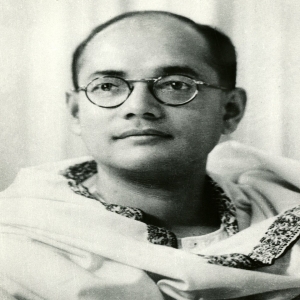
India celebrated its 80th Independence Day on August 15, 2026. Thousands of Indians made innumerable sacrifices in the struggle for independence from British rule. The key term that resonated throughout the freedom struggle was FREEDOM (Swaraj). "Give me blood and I shall give you freedom," declared Netaji Subhas Chandra Bose during a historic rally of Indians in Burma on July 4, 1944.
Pandit Jawaharlal Nehru, in his famous "Tryst with Destiny" speech to the Indian Constituent Assembly shortly before midnight on August 14, 1947, said, "At the stroke of the midnight hour, when the world sleeps, India will awake to life and freedom." He recalled Mahatma Gandhi's vision, stating that the nation's great goal was to "wipe every tear from every eye."
The Constitution of free India guarantees all citizens Fundamental Rights, which include six freedoms: freedom of speech and ex
Lakhs of Indians whose names have been deleted from the voters' lists by the Election Commission through an extraordinary and vaguely defined process called SIR (Special Intensive Revision) live in fear of being declared infiltrators (ghuspaithiya) and being sent out of the country. Many of them in Bihar and West Bengal have reportedly been denied access to government-sponsored welfare programmes.
The Ministry of External Affairs has stated that a passport is not proof of citizenship. If an Aadhaar card, ration card, birth certificate and other such documents are also not proof of citizenship, how can the people of India enjoy their freedom? We have reached a situation in which the citizenship of an Indian appears to be decided by the government of the day. The very foundation of all freedoms and rights—citizenship—is thus being called into question.
Thousands of young people who peacefully protested against the leakage of examination question papers and demanded accountability from the minister concerned were beaten mercilessly, subjected to tear gas, and, in some cases, shot with pellets. During a mentioning session before the Supreme Court on July 22, 2026, the Chief Justice of India, Justice Surya Kant, reportedly refused an oral request for an urgent hearing regarding alleged police violence against student protesters.
When advocate Narendra Mishra stated that he had videographic evidence showing police brutality, the CJI cut him short, reportedly saying, "Don't waste our time, and don't waste your time." He further stated, "We are not interested in videos; we don't have time to watch." In this context, can the people of India truly claim to enjoy freedom of ex
On October 12, 2025, two students of the Tata Institute of Social Sciences (TISS) were accused of raising slogans on campus demanding the release of jailed activists Umar Khalid and Sharjeel Imam during a gathering. According to media reports, a case was filed against them. Another allegation was that they possessed literature related to communist and Maoist ideologies on their electronic devices. Judge VB Bohra, Additional Sessions Judge, denied anticipatory bail to the two students, observing that, as scholars, they were expected to respect the law of the land.
Reacting to the judgment, renowned lawyer Dushyant Dave, former president of the Supreme Court Lawyers' Association, said in an interview with Karan Thapar on The Wire that raising slogans did not constitute a valid legal ground to deny a citizen his or her liberty, stating that there was "no basis in law for this whatsoever." He further said that the judge had "betrayed and undermined the very concept and ideal of justice and liberty." He stated that denying bail to a single citizen unlawfully amounted to a "black dot on the entire judiciary," and warned that judges were repeatedly failing to protect personal freedoms.
The denial of bail to activists such as Umar Khalid and Sharjeel Imam has been viewed by critics and legal scholars as a severe curtailment of personal liberty and fundamental rights, particularly because it has resulted in prolonged incarceration of more than five or six years without the commencement of trial. Continued detention without trial effectively turns pre-trial custody into punishment before any formal conviction of guilt has been established. Civil rights groups argue that the prolonged detention of prominent student leaders and dissenting voices creates fear and discourages free speech and public protest.
The case of former Delhi University professor Dr GN Saibaba is frequently cited by legal scholars and human rights defenders as a critical failure of the criminal justice system to protect basic freedoms and the fundamental right to life under Article 21 of the Indian Constitution. Dr Saibaba, who had a 90 per cent locomotor disability caused by childhood polio, spent nearly a decade in prison under the stringent Unlawful Activities (Prevention) Act (UAPA) before being fully acquitted. Tragically, he died in October 2024 from medical complications, just seven months after his release.
In October 2022, the Bombay High Court acquitted him, finding that the requisite legal sanctions for conducting a UAPA trial were absent. Unfortunately, the very next day, in an extraordinarily rare move on a weekend, a special bench of the Supreme Court stayed his release, sending him back to prison. In March 2024, the Bombay High Court acquitted him for a second time, observing that the prosecution had failed to establish any credible evidence of conspiracy. Therefore, critics argue that the judiciary failed miserably to protect his fundamental rights.
Not only the government but also extremist groups affiliated with the ruling party have taken the law into their own hands and violated the basic freedoms of individuals and communities, while the police have remained mute spectators. Prominent examples include the killing of Mohammad Akhlaq in Dadri, Uttar Pradesh, in 2015 and the lynching of Pehlu Khan in Alwar, Rajasthan, in 2017, by cow vigilantes. In 2016, self-appointed cow-protection vigilantes publicly stripped, tied to a car and brutally beat four Dalit men in Una, Gujarat, alleging that they had harmed a cow. The victims, however, stated that they had been skinning a dead animal.
The freedom to profess, practise and propagate religion has also been grossly violated by right-wing groups affiliated with the Sangh Parivar through attacks on Christian prayer groups and accusations of involvement in religious conversion. According to data cited by the United Christian Forum (UCF), 834 incidents of violence against Christians were recorded in 2024, averaging nearly 70 incidents per month.
Critics, human rights groups and legal experts have identified several laws and amendments passed under BJP governments as undermining fundamental freedoms, civic liberties and the secular principles enshrined in the Indian Constitution. Some of them are:
1. Vaguely defined and stringent anti-conversion laws, which are alleged to be liberally used by BJP governments against Muslims and Christians, thereby violating their freedom of religion;
2. The Citizenship (Amendment) Act (CAA), which critics argue discriminates against Muslims;
3. Amendments to the Unlawful Activities (Prevention) Act (UAPA), which empowered the central government to designate individuals directly as "terrorists" without a trial or formal conviction;
4. The Bharatiya Nyaya Sanhita (BNS), 2023, which replaced the colonial-era Indian Penal Code (IPC), contains provisions that expand police powers and introduce broad definitions of acts considered dangerous to state security, thereby creating the risk of criminalising dissent and peaceful protest;
5. Amendments to the Foreign Contribution Regulation Act (FCRA), which critics argue are intended to choke the flow of funds to Non-Governmental Organisations and civil society organisations engaged in empowering underprivileged groups and advocating for human rights and environmental protection.
As India celebrates its 80th Independence Day, many Indians live with the fear that their freedom could be taken away at any time because of arbitrary laws passed by the BJP government in the name of national security. Many are being incarcerated under these laws and falsely accused of crimes against the nation.
According to government figures based on National Crime Records Bureau data, arrests under the UAPA have risen sharply. Between 2018 and 2020, more than 4,690 people were arrested under the UAPA. With the acquittal or discharge rate crossing 94 per cent, the overwhelming majority of these detainees were ultimately found not guilty or discharged, yet many remained in jail for years while awaiting trial. The case of Professor GN Saibaba is a prominent example.
Against this backdrop, India needs a second freedom struggle—a struggle to reclaim, protect and deepen the freedoms guaranteed by the Constitution and to ensure that Swaraj becomes a lived reality for every Indian.
.jpg)
.png) Cedric Prakash
Cedric Prakash
 ICPA
ICPA
 ICPA
ICPA
 ICPA
ICPA
 ICPA
ICPA
 ICPA
ICPA
 ICPA
ICPA
.jpg)
 A. J. Philip
.jpg) Jacob Peenikaparambil
Jacob Peenikaparambil
.jpg)
.png) John Dayal
John Dayal