

.png) Frank Krishner
Frank Krishner
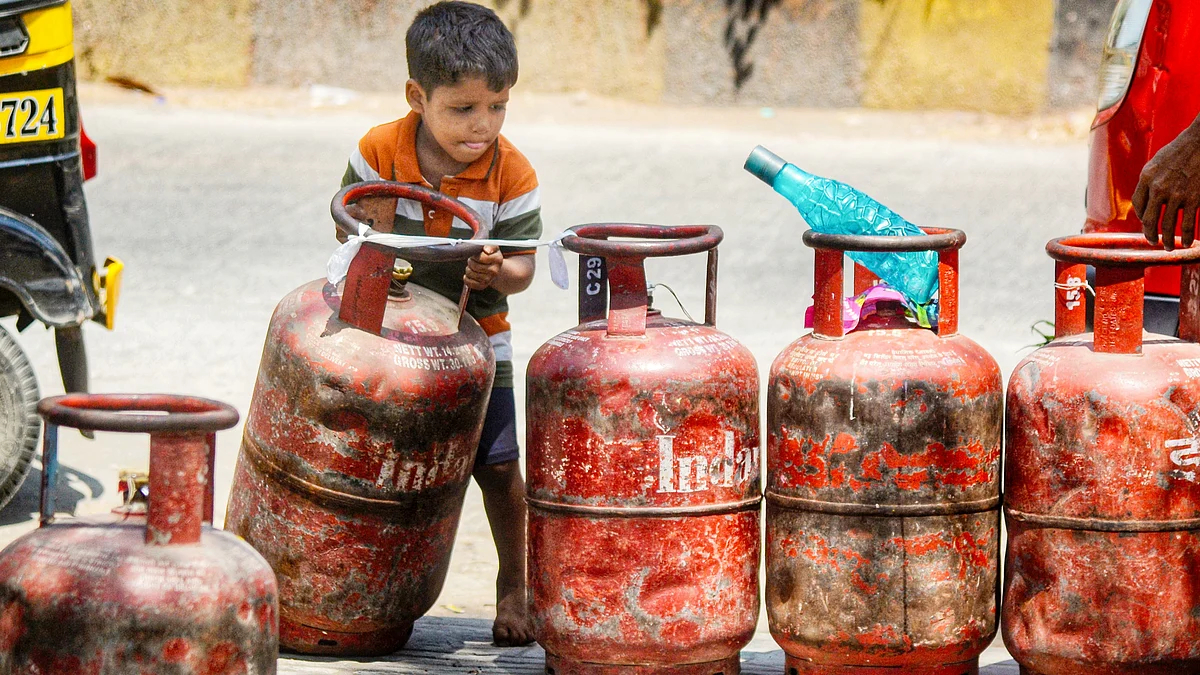
With the war in Iran grinding into its second month, kitchens in India are sputtering on the vapid vapours of media spin and fumes of fakery. The Economic Times calls the cooking-gas shortage "serious" and warns it could permanently reshape energy habits in the world's most populous nation. Yet the Modi-fied media machine churns out an endless loop of "All is well," complete with soothing graphics and official soundbites, while on the ground, reality bites the commoner (and woman) yet again.
The big cities are quietly shedding their unorganised workforce again, a silent lockdown playing out in reverse migration. YouTubers capture the grim procession: migrant workers trudging toward Delhi's Anand Vihar station, their meagre belongings slung over their shoulders, faces etched with the familiar cocktail of defeat, dejection, and raw desperation.
The Central and Delhi governments insist there's no crisis; mainstream channels parrot tales of fuel abundance. But hundreds of blue-collar hands—construction workers, handymen, domestic help, semi-skilled labourers in small factories—are packing up and heading home. The reason is brutally simple: hunger born of hopelessness. No cooking fuel means no hot meals, and empty stomachs don't pay rent.
At a nursing home in Asola Mehrauli, 42 residents over 85 were reduced to bread and fruit when the kitchen ran dry. The owner, Pravesh Jain, posted on X about agents demanding ?3,200 for a cylinder on the black market. One supplier's tone-deaf reply? Jain should have applied under the "institutionally exempted" category. Helpful, truly compassionate - much-needed bureaucratic finger-wagging while elders go hungry.
In Mumbai, dealers have started doling out 5kg cylinders to migrant workers after ID checks and signed declarations—20-30 cylinders every couple of days, a small mercy in a sea of scarcity.
Meanwhile, the Union government, on the eve of the new financial year, solemnly declared domestic supplies "stable and sufficient," with "100% availability" for households and CNG. Joint Secretary (Marketing and Oil Refinery) at the Ministry of Petroleum and Natural Gas, Sujata Sharma, highlighted that nearly 95% of LPG bookings were made online recently, and the nation's fuel reserves are adequate to meet current demand.
Then there is the price hike slipped into the fine print: commercial 19kg LPG cylinders up ?195 to ?2,255, and aviation turbine fuel raised by a "calibrated" 8.5%—carefully moderated so airlines don't pass on the full pain (which would have more than doubled fares).
Pondicherry University, citing the same LPG crunch, has yanked exams forward from May 6 to April 21 and ordered students out of hostels by May 1. The Students' Federation of India, Pondicherry University unit, condemned the arbitrary decision.
In Patna, a friend waits four days for a legally booked cylinder. Bihar Chief Secretary Pratyaya Amrit has chaired the 'first high-level meeting' of the Crisis Management Group (CMG).
Local newspapers reported that officials were directed to ensure an uninterrupted supply of essential commodities and services across Bihar. They were asked to take 'strict action against hoarding and black marketing of LPG,' and to 'safeguard the interests of migrant workers.' A detailed review of the backlog in LPG cylinder supply showed higher backlogs in West Champaran, Bhojpur, Gaya, Darbhanga, Nalanda, Rohtas, Muzaffarpur, Saran, Vaishali, Begusarai, Bhagalpur, East Champaran, Jehanabad and Jamui.
The new narrative being test-marketed across BJP-ruled states is deliciously convenient: it's the middle class's fault for stubbornly clinging to LPG instead of embracing the government's long-touted piped natural gas (PNG) connections. If only you'd switched earlier, the spin goes, there'd be no shortage. Never mind that pipelines have reached households in Bihar, but "end-point connections" lag, and actual users remain a fraction of the target.
Bihar Chief Secretary Pratyaya Amrit expressed 'strong displeasure' over zero progress in 14 districts and directed the concerned district magistrates and superintendents of police to coordinate with the food and consumer protection department and prepare an 'immediate action plan.'
Bihar has set a target of 3,68,783 household PNG connections. Over the past three years, the pipelines have reached some 2,30,939 households, but without the 'end-point connections.' Another 31,458 households are 'ready for charging,' but supply hasn't begun yet. Only 96,474 households are actually using PNG in Bihar.
The irony is as thick as unlit smoke. A distant war in the Strait of Hormuz has exposed the fragility of import dependence. Yet, the response is less urgent diversification and more masterful deflection—blame the consumer, nudge toward PNG, and keep the cameras focused on reassuring press releases.
In the end, this isn't just about cylinders running empty; it's about trust evaporating faster than LPG in a leaky valve.
A nation that can't reliably keep its stoves lit may soon discover that no amount of polished messaging can mask the chill in its kitchens—or the quiet anger simmering on the streets.
.jpg)
.jpg)
.png) Jacob Peenikaparambil
Jacob Peenikaparambil

.png) John Dayal
John Dayal
.jpeg)
.png) Joseph Maliakan
Joseph Maliakan

.png) Dr Arnald Mahesh SDB
Dr Arnald Mahesh SDB

.jpg) Jose Vattakuzhy
Jose Vattakuzhy
.png)

.jpg) Isaac Gomes
Isaac Gomes
.png)
.png) Robert Clements
Robert Clements