

In India, strikes hold considerable historical, legal, and socio-economic significance. They serve as a fundamental tool for democratic ex
The right to form associations and to protest peacefully is a fundamental right under Article 19(1)(c) of the Indian Constitution. However, the right to strike is not recognised as a fundamental right. Strikes and peaceful protests play a crucial role in Indian democracy. They are powerful instruments for compelling the government to act and address the needs of the people.
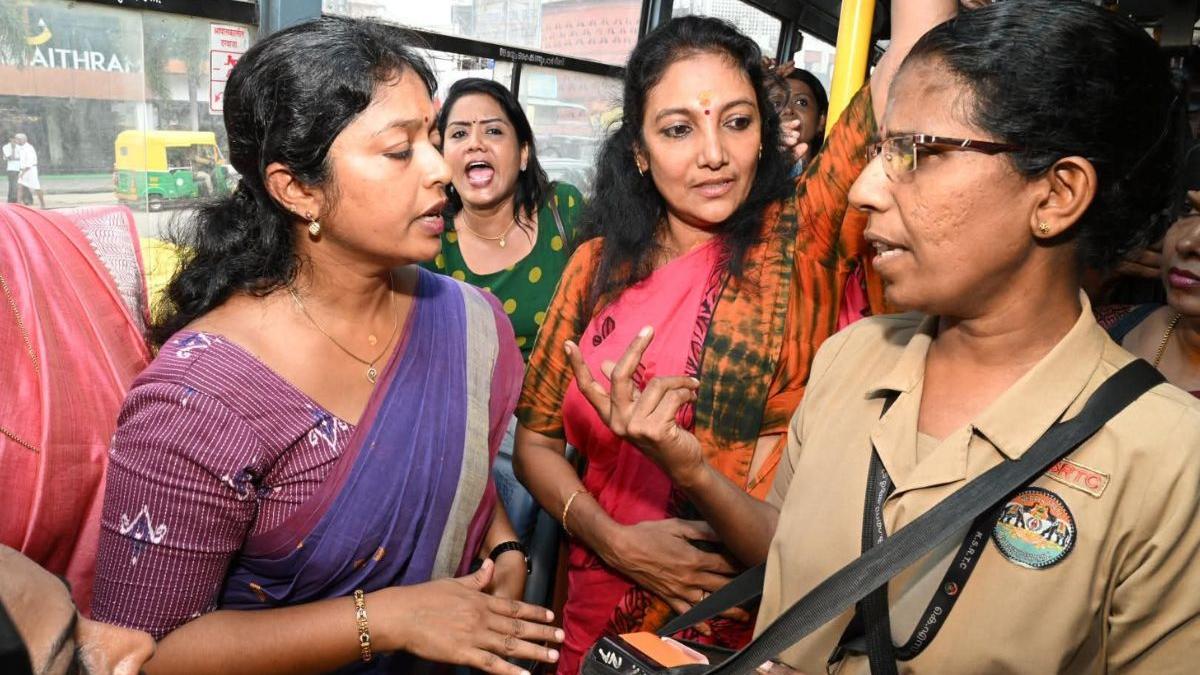
On May 15, 2026, we witnessed protests across various parts of Kerala, organised by the Mahila Morcha (the BJP's women's wing), calling for free KSRTC bus tickets for women. The UDF (United Democratic Front) had promised in its election manifesto that free tickets would be provided to women on KSRTC buses starting from May 15 if it formed the government. Chief Minister VD Satheesan and his 20-member cabinet were sworn in on May 18, 2026, and the government was officially established. Before forming the government, the winning party cannot act as the government.
The Mahila Morcha could have heeded the counsel of experts, conducted thorough research, or familiarised itself with fundamental laws before engaging in protest. This protest appeared to be either impulsive, lacking factual verification, or aimed at gaining cheap popularity.
The legal maxim "Ignorantia Juris Non Excusat" translates to the notion that 'Ignorance of the law excuses no one.' Every citizen is obliged to be aware of the laws governing the land. Voters must understand that no government is legally bound to fulfil the promises and declarations made in its election manifesto and during its electoral campaign.
On numerous occasions, citizens have sought judicial intervention to hold political parties accountable for their unfulfilled promises. However, the courts have consistently dismissed these requests on the grounds of established legal principles.
In contract law, the principle of promissory estoppel prevents a party from reneging on a promise if the other party has reasonably relied on it, even in the absence of a formal contract. In Mithilesh Kumar Pandey v. Election Commission of India 2024, the Delhi High Court held that an election manifesto does not constitute promissory estoppel.
A manifesto published by a political party to garner votes should not be regarded as an absolute truth. It should not be viewed as a binding agreement that is signed, sealed, and delivered. Such documents may include, and frequently do include, promises or proposals that are impractical or unattainable.
In the case of Subramaniam Balaji v State of Tamil Nadu 2023, the issue at hand was to ascertain whether the enticing promises of freebies such as TVs, Mixers, and laptops in the manifesto constitute a corrupt practice or bribery as defined under section 123 of the Representation of the People's Act 1951. The Supreme Court determined that promises made in a manifesto cannot be interpreted as a corrupt practice. Section 123 of the People's Representation Act pertains to individuals and candidates making specific offers, rather than to the general policies of a political party.
Under the current legal framework in India, a political party is permitted to make any promises in its election manifesto, and there is no legislation to penalise them for failing to fulfil those promises. A ruling party may face unforeseen economic crises, security threats, or pandemic situations that could necessitate a shift in financial priorities. Therefore, no law can compel the government to honour pre-election commitments.
When you approach the polling booths to cast your votes, do not assume that all promises made in the manifesto will be realised. Once a party assumes power, its priorities may change at any time. Thus, it is both imprudent and uninformed to protest against a government that has not yet taken office.
Even if a political party secures a majority of seats, it holds no authority in the governance of the state until the ministers have taken the oath as stipulated under Article 164 of the Indian Constitution. The precise moment the chief minister completes the reading and signing of the oath of office, the victorious party officially assumes office.
The protest by the Mahila Morcha of Kerala on KSRTC buses on May 15 was indeed a misstep, leading to them becoming a subject of public ridicule. We mustn't diminish the significance of strikes and peaceful protests through such trivial displays and the pursuit of fleeting popularity.
Free public transport tickets are also not required for all women in Kerala. The majority can afford the fare for their journeys. The new government must identify those who genuinely require free public transport tickets in Kerala, regardless of gender.
The state should not provide everything at no cost. However, the state needs to empower everyone to be self-sufficient. If the state perceives women in Kerala as weak, rather than offering free provisions, it should enable them to become self-reliant.
.jpg)
.jpg)
.png) Jacob Peenikaparambil
Jacob Peenikaparambil

.png) John Dayal
John Dayal
.jpeg)
.png) Joseph Maliakan
Joseph Maliakan

.png) Dr Arnald Mahesh SDB
Dr Arnald Mahesh SDB

.jpg) Jose Vattakuzhy
Jose Vattakuzhy
.png)

.jpg) Isaac Gomes
Isaac Gomes
.png)
.png) Robert Clements
Robert Clements