

 P. A. Chacko
.jpg)
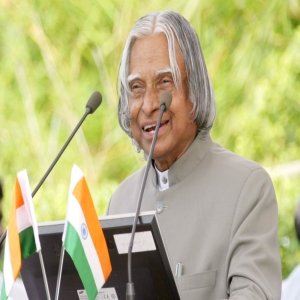
Visionary that he was, Dr APJ Abdul Kalam's ardent proposal for a National Prosperity Index to replace the National Poverty Index was an effective socio-economic mantra as a holistic formula. This perspective represents a profound shift in the mindset that says you cannot build a prosperous nation by focusing exclusively on deficits.
Kalam asks: Are we to reduce human life to bare survival and cold numbers by measuring progress primarily through a "Poverty Index" or solely by Gross Domestic Product (GDP)? His compass was of a different make. His holistic formula said: "Instead of just tracking how many people are poor, see how many people are thriving."
Our politicians, who want to hoodwink people by reducing them to statistical numbers, create a perfect environment for political paternalism. They speak of poverty alleviation as the panacea for poverty. Hence, they have no qualms in treating human beings as passive objects of state charity rather than active participants in the economy.
Tell me, which politician or political party has an ideology on poverty eradication? If they believe in such an ideology, they will be the losers. They will not have blind devotees just satisfied with doles or freebies. Perpetuation of poverty through poverty alleviation programmes is an agenda-based policy of all parties. It is a national curse!
Let us understand why this "foolery" persists. Look at the contrasting incentives of the politician versus the citizen:
Poverty Alleviation: Keep the patients on life support just long enough to secure their vote in the next election cycle. The goal is dependency. The citizen remains poor but grateful for the basic survival kit (free rations, cash transfers, subsidised utilities).
Poverty Elimination: Cure the patients by giving them the infrastructure, education, and tools to generate their own wealth. The goal is independence. The citizen becomes self-reliant and no longer owes their survival to any political party.
By focusing solely on alleviation, politicians turn the poor into a permanent, predictable captive vote bloc. If a government actually eliminates poverty, it loses its leverage. A self-sufficient, educated citizen starts asking tough questions about economic policy, inflation, and accountability, rather than being satisfied with a monthly handout.
Dr Kalam's stand is different. His shift to a National Prosperity Index directly challenges this. He proposed a pivotal shift from "welfare as charity" to "equitable distribution as an investment." If this happens, the entire nature of how a government interacts with its citizens changes. That is where "Partners in Prosperity" will negate "Welfare Objects."
Will the politicians be honest enough to stop treating the poor as political pawns and see them as partners in a prosperous nation? That is the challenge.
While serving as the President of India, Kalam observed that even as Gross Domestic Product (GDP) growth climbed towards 9%, wealth was not reflected in the daily lives of millions, particularly in rural communities. To bridge this gap, he proposed a more holistic and inclusive metric called the National Prosperity Index (NPI). True development requires a balance of wealth, health, and ethics.
To Kalam, human prosperity meant a quality of life characterised by progressive improvement in the standard of living, aiming to reduce poverty towards zero and to adopt ethical values derived from a nation's historic heritage.
He never dismissed economic growth; he knew it was the engine that powered everything else. A strong, rising GDP is necessary to fund large-scale national infrastructure, defence, and development programmes. He stressed that, alongside the true indicator of a "developed India," the need is to see smiles on its citizens' faces. He defined the quality of life component through a specific set of essential metrics:
1. Basic Amenities: Availability of quality housing, clean drinking water, proper sanitation, and reliable energy.
2. Human Development: Access to affordable, high-quality healthcare and equal educational opportunities.
3. Economic Security: Creation of robust employment potential so every citizen can earn a dignified livelihood.
Kalam's view essentially differed from Western economic models. He argued that material wealth without values leads to societal decay. He believed that a prosperous nation must actively preserve its civilisational heritage by promoting the joint family system and strong community safety nets; cultivating a spirit of working together for collective success rather than pure individualism; and inspiring individuals to lead a righteous way of life to eliminate corruption and conflict.
"The important elements that constitute a nation are: being disease-free, wealth, high productivity, harmonious living, and strong defence. We have to find how we can provide all these elements to all the citizens of the nation on an equitable basis." (Dr APJ Abdul Kalam).
Kalam's model aimed to transform India into an empowered, knowledge-driven, and enlightened society. In India, what we face is a cynical alliance between crony capitalism and extractive governance. When public resources are channelled to a "handpicked few," and the wealth gap turns into a canyon, standard economic models fail because the game itself is rigged.
Dr Kalam was acutely aware of this danger of systemic corruption and cronyism, which completely paralyses the National Prosperity Index (NPI). In a skewed system, in which resources are "channelled upward," equitable distribution becomes a mirage. He proposed a major shift from a manipulative "distribution" of wealth to the democratisation of opportunity.
He proposed decentralisation of infrastructure. When wealth is centralised in mega-projects or heavily regulated urban sectors, it becomes incredibly easy for bureaucrats and political elites to allocate resources to a handpicked few. When you build local grids, regional cold storage, and localised processing units, the wealth generated by the land stays with the people who work it. It bypasses the metropolitan "middlemen" and corporate monopolies.
He proposed a major shift from "Crony Favours" to Digital Transparency. To stop the looting of national resources (such as minerals, spectrum, land, and public contracts), the human element of discretionary power must be minimised.
Open Auctions and Public Ledgers
Public assets must be allocated through absolute, transparent, and untamperable digital systems.
The need is to create a "Direct-to-Citizen Infrastructure" rather than routing developmental funds through layers of administrative channels—where up to 85% used to vanish into thin air—technology must be used to provide direct access to infrastructure (like credit, digital marketplaces, and crop insurance) straight to the producer.
Kalam's knowledge perspective is important. If a child from an impoverished background receives world-class vocational, technological, or analytical training, the earning potential instantly breaks through the systemic barriers built by the elite.
He believed that knowledge is the only resource that cannot be locked in a corporate vault or stolen by a corrupt politician. True equity is achieved when the son of a migrant labourer and the daughter of a billionaire have access to the same quality of foundational knowledge.
He also calls for "streamlining the financial pipeline." A major reason the cleavage widens is that the "haves" have easy access to cheap capital (loans) to grow their empires. At the same time, the "have-nots" are trapped by predatory local moneylenders or denied credit by traditional banks.
Achieving equitable distribution requires turning the financial system on its head:
1. Massive scaling of micro-venture capital to fund small-town entrepreneurs.
2. Cooperative banks need to be run by local communities for local communities, ensuring that public savings are reinvested locally rather than flowing into the stock market to inflate the valuations of elite corporations.
Will the system that benefits a handpicked few allow these changes?
"The hardest part of this equation is political will." This is why Kalam always emphasised the "Value System." He argued that structural changes are useless without a cultural shift that treats corruption as a societal disease rather than an accepted norm.
Eliminating poverty is not about taking money from the rich and handing it to the poor. It is about building a fortress of transparency and local infrastructure that prevents the powerful from stealing the ladder before the poor even get a chance to climb it.
"India may need a second independence movement. The first, led by Gandhi, sought political freedom. The second should seek freedom from Andh Bhakti—the habit of surrendering critical thinking to leaders, ideologies, and institutions. A nation truly becomes free when its people learn to question, think, and hold power accountable." — Sabeer Bhatia, Co-founder of Hotmail.
.jpg)
.png) Cedric Prakash
Cedric Prakash
 ICPA
ICPA
 ICPA
ICPA
 ICPA
ICPA
 ICPA
ICPA
 ICPA
ICPA
 ICPA
ICPA
.jpg)
 A. J. Philip
.jpg)
.png) Jacob Peenikaparambil
Jacob Peenikaparambil
.jpg)
.png) John Dayal
John Dayal