

.png) Jacob Peenikaparambil
Jacob Peenikaparambil
Politics without principles is among the "seven deadly social sins" identified by Mahatma Gandhi in Young India on October 22, 1925. Gandhi believed that politics should be guided by moral and ethical principles that serve the greater good rather than merely pursuing power or personal gain. Politicians who ignore these principles risk misusing power for personal benefit, often leading to large-scale corruption. Using unethical and immoral tactics to gain and maintain power exemplifies politics without principle.
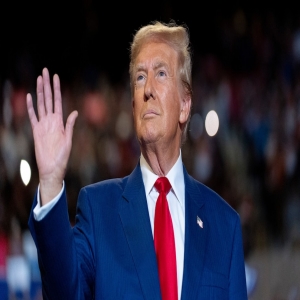
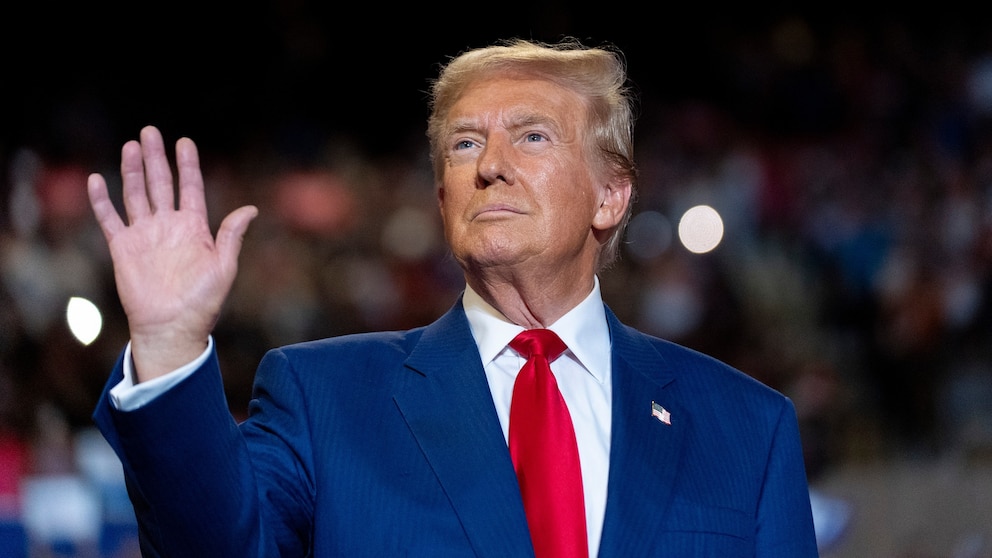
Across the world, especially within right-wing political circles, unethical and even illegal methods are sometimes used to capture or retain power. Recently, for instance, former US President Donald Trump—a convicted felon—won the presidential election despite facing charges of sexual abuse, falsifying business records, mishandling classified documents, and even allegedly inciting a revolt against his government. Reports in American and global media documented Trump's campaign, marred by visceral misogyny, vulgar remarks at Democratic candidates Kamala Harris and Clinton, and his regressive views on reproductive freedom for women. In contrast, Kamala Harris's campaign focused on women's rights, constitutional values, fairness, racial equality, and compassion. Nonetheless, a majority of Americans chose Trump.
According to NDTV on November 12, following Trump's re-election, sexist and abusive comments directed at women surged on social media. Analysis by the Institute for Strategic Dialogue reported a significant rise in phrases like "your body, my choice," "get back to the kitchen," and "repeal the 19th," referring to women's voting rights. The phrase "your body, my choice" is a twisted reference to "my body, my choice," a slogan widely used by women advocating for reproductive rights.
The political scene in India exhibits similar patterns. During election campaigns in Jharkhand and Maharashtra, politicians have employed polarising tactics, such as hate speech targeting Muslims. For example, Yogi Adityanath used the slogan "batenge toh katenge" ("if we are divided, we will be slaughtered"). At the same time, Prime Minister Modi added, "ek hain toh safe hai" ("if united, we will be safe"), appealing to Hindus to unite against Muslims. Modi also accused the Congress party of attempting to divide social unity by dividing the Scheduled Castes, Scheduled Tribes, and OBCs. He urged them all to come together to defeat the Congress.
Deputy Chief Minister of Maharashtra Devendra Fadnavis used the term "Vote Jihad' in some of his election rallies to describe the so-called strategic voting that happened by the minority community during the recent Lok Sabha polls.
In Jharkhand, BJP leaders, including Yogi Adityanath, Amit Shah, and the PM, have used the unfounded claim of illegal infiltration from Bangladesh as a campaign issue. The BJP leaders are spreading the story that Bangladeshi Muslim infiltrators are marrying tribal girls and encroaching on their land, and in this process, tribals will become a minority. However, there is no evidence of significant immigration from Bangladesh into Jharkhand. The BJP leaders have been relentless in their criticism of Hemant Soren, the chief minister, for allegedly allowing unchecked infiltration from Bangladesh. It is the responsibility of the Home Ministry of India to prevent the infiltration of foreigners into India and not of the Jharkhand chief minister.
Amit Shah, at a campaign rally in Jharkhand, promised a new law to recover tribal lands allegedly encroached by these so-called infiltrators if the BJP comes to power. The former BJP chief minister Raghuvir Das, who ruled the state for five years, and Champai Soren, who was the chief minister of Jharkhand when Hemant Soren was in Jail, did not raise the issue of Bangladeshi infiltration. All of a sudden, the BJP could invent a divisive and polarising issue.
To create confusion among the tribals and turn them against the Jharkhand Mukti Morcha led by Hemant Soren, the BJP is using the unfounded theory of infiltration by Bangladeshi Muslims. Some political observers believe that the BJP is copying Donald Trump's strategy and making it the main template of its election campaign in Jharkhand. One of the main issues flagged by Trump in his election campaign was immigration and the threat it posed to the Christian population of the United States.
In Maharashtra, Deputy Chief Minister Devendra Fadnavis recently accused Congress leader Rahul Gandhi of courting "urban Naxals and anarchists" because Gandhi often holds a red-covered copy of the Indian Constitution during speeches. Congress President Mallikarjun Kharge countered, noting that PM Modi presented a similar copy to former President Ram Nath Kovind in 2017.
According to a recent article by Anant Teltumbde in The Wire on November 11, 2024, anti-Muslim rhetoric has been a primary tool for the Sangh Parivar to consolidate Hindu votes. The "urban Naxal" label has added another layer to eliminate dissent and strengthen the party's hold on power.
Surprisingly, the Election Commission of India (ECI) has not taken action against individuals engaging in overtly communal rhetoric during this election season. It seems the ECI is turning a blind eye to those violating the Model Code of Conduct. It is worth noting that the ECI also failed to act on the Prime Minister during the recent Lok Sabha elections when he made Islamophobic remarks in several speeches. Unfortunately, the communalisation of elections is occurring under the ECI's watch.
The communally divisive strategy deployed by the BJP during the Lok Sabha election 2024 is being replicated in Jharkhand and Maharashtra. The BJP has nothing to showcase as its achievement against the backdrop of increasing unemployment and rising prices. Therefore, it reverts to its tried and proven method of polarisation of Hindus, depicting the political parties of the INDIA alliance as enemies of Hindus and supporters of Muslims.
The hate speeches by PM Modi and other BJP leaders during the last Lok Sabha election were widely reported in the media. Human Rights Watch (HRW), in its new report, says that it analysed 173 of Modi's campaign speeches after the election code of conduct started on March 16. The report says that in at least 110 speeches, Modi made Islamophobic comments aimed at discrediting his political opponents and inciting fear among the majority Hindu community through disinformation.
The PM had alleged that the Congress manifesto proposed assessing the gold owned by women, gathering information about it, and redistributing this property, including "mangal sutras," to "infiltrators" and "those with more children," which he suggested was a reference to Muslims.
The HRW report said the Modi government's actions have "violated" India's obligations under international human rights law and that the government is obligated to protect religious and other minority populations and to fully and fairly prosecute those responsible for discrimination and violence against them.
The immoral pursuit of power is also evident in the BJP's strategy of undermining opposition-led state governments, often through a "carrot and stick" approach. Cases against opposition leaders, such as NCP leader Ajit Pawar, were shelved after they shifted allegiances. This tactic undermines democracy and contributes to the degradation of political ethics.
The moral decline among political leaders reflects a broader societal decline. Citizens who elect politicians who use unethical means are equally responsible. Unfortunately, many capable individuals avoid politics, perceiving it as inherently "dirty." However, it's not politics that is corrupt; it is those who misuse it.
To improve this scenario, citizens must encourage and support individuals with integrity and competence to enter politics, regardless of their political affiliation. Educating youth on the importance of ethical politics is also crucial. For example, hundreds of students attend leadership training each year at USM, Indore, where only a few express interest in politics. This indicates a need to make political education, including the principles of secular democracy and the Indian Constitution, part of school curricula. This would inspire upright and competent young people to pursue politics, thereby helping to realise the vision of India's Constitution.
.jpg)
.jpg) Stanislaus Alla
Stanislaus Alla

 Adv. Rev. Dr George Thekkekara
.jpg)
 A. J. Philip
.jpg)
.png) John Dayal
John Dayal
.jpg) Jacob Peenikaparambil
Jacob Peenikaparambil

.jpg)
 P. A. Chacko
.png)
.png) Robert Clements
Robert Clements