

.jpg) Dr. John Singarayar
Dr. John Singarayar
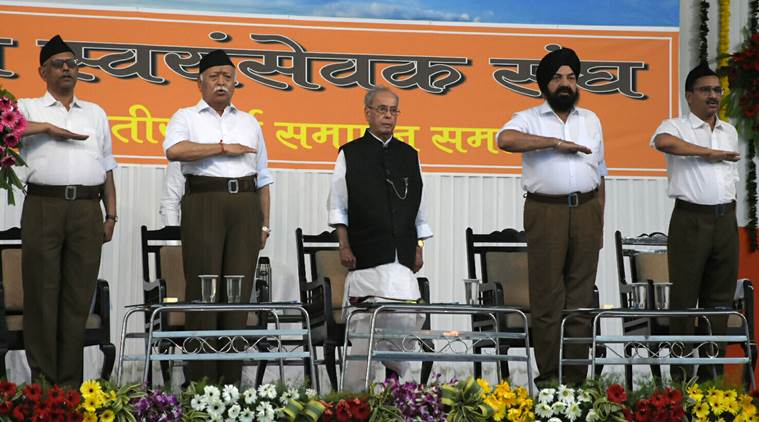
In a development that has sent shockwaves through India's religious and political landscape, Rashtriya Swayamsevak Sangh (RSS) Chief Mohan Bhagwat's recent statements about 'ghar wapsi' (reconversion) of Adivasi communities have sparked a nationwide controversy. Speaking in Indore on January 13, 2025, Bhagwat made the extraordinary claim of revealing private conversations with former President Pranab Mukherjee, triggering an immediate and fierce backlash from various religious and civil society organisations.
At the heart of this escalating controversy lies Bhagwat's assertion that the late former President had endorsed the RSS's controversial reconversion program. According to Bhagwat, Mukherjee allegedly stated that without the Sangh's efforts, "a section of Adivasis would have turned anti-national." This explosive claim has not only raised questions about its veracity but has also reignited debates about religious freedom and constitutional values in the world's largest democracy.
The timing of these revelations has drawn particular scrutiny. Pranab Mukherjee, who served as President from 2012 to 2017 and passed away in 2020, can no longer verify or dispute these claimed private conversations. Critics have been quick to point out that throughout his tenure as India's Constitutional Head, Mukherjee never once publicly addressed or endorsed the 'ghar wapsi' program despite having ample constitutional authority to do so. The delayed disclosure of these alleged private conversations, coming years after Mukherjee's death, has been met with widespread scepticism and criticism.
"The timing and nature of these claims raise serious questions about their authenticity," says Dr Rajesh Kumar, a constitutional law expert at Delhi University. "It's particularly concerning when such controversial statements are attributed to a deceased former President who can no longer clarify his position."
The controversy has thrust several critical constitutional and social issues into the spotlight. Religious organisations and civil society groups have articulated multiple concerns that demand careful consideration. Primary among these is what many term a fundamental mischaracterisation of Adivasi religious identity. Indigenous communities in India have historically maintained distinct religious practices, predominantly centred around animistic beliefs and nature worship. The suggestion that these communities need to "return" to Hinduism through 'ghar wapsi' has been criticised as reflecting a deeply problematic understanding of religious identity and cultural autonomy.
Article 25 of the Indian Constitution is a crucial reference point in this debate. This fundamental right, guaranteeing citizens the freedom to preach, practice, and propagate their faith, is further reinforced by Article 25 of the Universal Declaration of Human Rights. Opposition to Bhagwat's statements stems from concerns that such rhetoric damages these basic constitutional guarantees.
Perhaps the most controversial aspect of the situation is the implied equation of Christianity with anti-national sentiment. This association has raised alarm bells among religious minorities and civil rights activists. "Such rhetoric not only violates India's secular and democratic principles but also potentially contributes to the marginalisation of religious minorities," states Professor Sarah Matthews, a sociologist specialising in religious minorities at Jawaharlal Nehru University.
The broader implications of this controversy extend well beyond religious freedom. Critics argue that such inflammatory rhetoric serves as a smokescreen, deflecting attention from pressing national issues, including corruption, economic inequality, and what they describe as "crony capitalism." This perspective suggests that religious controversies might be being deployed as tools to divert public attention from more fundamental challenges facing the nation.
The sociological implications of the 'ghar wapsi' campaign have come under intense scrutiny following these developments. The movement's focus on Adivasi communities has raised significant questions about power dynamics and cultural hegemony in Indian society. Social scientists argue that the assertion that Indigenous peoples need to be "brought back" to any particular religious fold reflects a paternalistic approach that undermines their cultural autonomy and right to self-determination.
Legal experts point to the complex framework surrounding religious conversion in India. While several states maintain anti-conversion laws, their implementation and impact on religious freedom remain highly contested. Religious and civil society organisations emphasise the potential conflict between such initiatives and the constitutional guarantee of religious freedom.
The political dimensions of this controversy take on added significance as India marks the 76th year of its Constitution. Growing calls for preserving India's pluralistic, secular, and democratic fabric reflect mounting concerns about the trajectory of religious and cultural politics in contemporary India. Demands for an immediate cessation of "hate and violent rhetoric" against Christians and other minorities point to anxieties about religious polarisation.
The media has covered this controversy extensively, with various outlets providing platforms for diverse perspectives. The widespread reporting of Bhagwat's speech and subsequent responses has contributed to a national conversation about religious freedom, cultural identity, and minority rights.
Looking ahead, several key challenges require urgent attention. First, there is a pressing need for a more nuanced understanding and respect for indigenous religious practices and cultural identities. Second, the legal and constitutional framework protecting religious freedom must be strengthened and consistently enforced. Third, greater focus must be placed on addressing the socio-economic challenges facing marginalised communities rather than engaging in divisive religious rhetoric.
Civil society organisations, including religious bodies, play a crucial role in maintaining democratic checks and balances. Their ability to challenge potentially discriminatory narratives and defend constitutional values serves as an essential counterweight to majoritarian tendencies.
Educational institutions and media organisations bear significant responsibility in promoting religious understanding and constitutional literacy. Experts emphasise the need for greater awareness about India's diverse religious traditions and the legal protections available to religious minorities.
The controversy highlights the urgent need for more transparent and respectful dialogue between different religious communities and organisations. Rather than making claims about private conversations with deceased public figures, religious and cultural leaders are being urged to engage in open, constructive discussions about religious freedom and national unity.
The economic dimensions of religious conversion and anti-conversion movements cannot be overlooked. There is a pressing need to address fundamental economic challenges facing the nation, including poverty, inequality, and corruption. These issues frequently intersect with questions of religious identity and conversion.
Dr Amrita Singh, an economist at the Indian Institute of Management, Bangalore, notes, "Religious tensions often mask deeper socio-economic disparities. Addressing these fundamental issues should take precedence over divisive religious rhetoric."
As this controversy continues to unfold, it represents far more than a simple disagreement about religious conversion. It reflects deeper tensions within Indian society regarding religious freedom, cultural identity, and constitutional values. Experts suggest that the way forward lies in promoting dialogue, understanding, and respect for diverse religious and cultural traditions while upholding constitutional values and protecting minority rights.
Moving forward, everyone must engage in constructive dialogue that respects both constitutional principles and cultural diversity. The focus needs to shift toward building bridges of understanding while addressing the real socio-economic challenges facing all communities, particularly marginalised sections of society. Only through such a balanced and inclusive approach can India hope to maintain its rich tradition of pluralism while ensuring the rights and dignity of all its citizens.
The resolution of these tensions will be crucial for maintaining social harmony and strengthening democratic values in an increasingly diverse and complex society. As India grapples with these challenges, the response to this controversy may well set important precedents for how the nation addresses similar issues in the future.
.jpg)
 A. J. Philip
.png) Cedric Prakash
Cedric Prakash
.jpg)
 P. A. Chacko
.jpg)
.jpg)
.jpg) Thomas Menamparampil
Thomas Menamparampil
.png)
.png)
.png) Robert Clements
Robert Clements
.jpg)
.png)
.png) Chhotebhai
Chhotebhai