

.jpg) Lancy Lobo
Lancy Lobo
Several states in India have brought anti-conversion laws, euphemistically known as "freedom of religion" laws and bills to discourage conversions from one religion to another through allurements, appeasement, force, coercion, and so on. However, state after state, the centre uses allurements, appeasement, force, coercion and so on to convert people into vote banks, especially during elections. Many schemes in the name of welfare are let loose during elections to lure voters. The entire media is targeting the minds of people. Polarisation based on religion, caste, class, gender, language, region, etc, is indulged in unabashedly. Change from one party to another is rampant.
Parivarvad (dynastic rule) is the norm for all parties. It raises the question of how politicians do not see the contradiction in this rampant phenomenon of alluring, appeasing, forcing, and coercing activities, especially during elections. However, they feel comfortable targeting Christians and Muslims to allure Hindus for conversions. Anti-conversion laws have been enacted, but there are hardly any conviction cases for such cases.
Conversions by allurements, appeasement and coercion
The Hindutva brigade uses conversion as a stick to beat minorities, especially Christians, just as cow slaughter is used against Muslims. The Anti-Conversion Act in Uttarakhand provides freedom of religion by prohibiting conversion from one religion to another by misrepresentation, force, undue influence, coercion, allurement, or any fraudulent means or by marriage and for matters incidental to it—prohibition of Unlawful Conversion of Religion Act, 2018.
The Chhattisgarh Religion Freedom (Amendment) Act, 2006, legalised three years' imprisonment and a penalty of up to Rs 20,000 or both for offenders. The Haryana Prevention of Unlawful Conversion of Religion Act, 2022, provides a penalty of one to five years imprisonment and a fine of one lakh rupees. The Jharkhand Freedom of Religion Act, 2017, imposes a maximum prison term of three years and a fine of Rs 50,000 or both. The penalty is higher for the conversion of a minor, woman or member of an SC or ST, and the fine is upped to one lakh rupees. The Orissa Freedom of Religion Act, 1967, imposes one year's imprisonment and a fine of Rs 5,000, or both.
According to the United States Commission on International Religious Freedom (USCIRF) reports of 2016 and 2018, there are very few arrests or prosecutions under these laws, but they "create a hostile, and on occasion violent, environment for religious minority communities because they do not require any evidence to support accusations of wrongdoing."
Leaders of various Christian denominations gathered for a mass protest in New Delhi, the national capital, on October 26, objecting to what they describe as a mounting pattern of harassment, persecution and violence directed at the country's Christian minority. Organisers said the rally was intended to draw attention to a widespread rash of attacks on church leaders, pastors, nuns, school principals and teachers, doctors and nurses, as well as other members of the community.
Addressing a press conference at the Press Club of India on October 24, two days before the protest, community leaders and activists laid out what they described as a real and rising threat. According to the data collected by the United Christian Forum (UCF), "585 incidents targeting Christians were recorded so far this year till September," stated Michael William, the president of the group.
A few days ago, Citizens for Justice and Peace (CJP), a human rights organisation, compiled reports of five distinct incidents between October 13 and 20 alone, scattered across various states, of persecution of Christians in India.
On October 13, for example, an incident unfolded in Sultanpur, Uttar Pradesh, where police disrupted a Christian prayer meeting after Sarvesh Singh, the president of a Hindu nationalist movement, filed a complaint.
Singh, who is also associated with a group notorious for its vigilante actions under the pretext of "cow protection," accused the Christians in the gathering of engaging in conversions. In response, the police arrested a couple and detained several attendees. Observers stated that the police showed a bias towards the complainant's accusations without any prior investigation.
Articles 25 to 28 of the Indian Constitution provide the fundamental right to freedom of religion, so religious conversion is legal in India. Article 25 of the Indian Constitution guarantees citizens the "freedom of conscience and free profession, practice and propagation of religion. Subject to public order, morality and health and the other provisions of this Part, all persons are equally entitled to freedom of conscience and the right to profess, practice and propagate religion." The Constitution also grants all religious groups the right to control their religious affairs. However, some states influenced by Hindu nationalist ideology have enacted anti-conversion laws and the judiciary often sides with it. Thankfully, the Supreme Court expunged the Allahabad High Court's remark that the country's majority population will become the minority one day if religious congregations where conversions occur are not stopped.
Government welfare schemes and elections
A look at the government portal shows that different age and social categories have the following number of welfare schemes: women (42), students (32), youth (7), aged (6), farmers (7), poor (5), rural development (19), urban development (19), minorities (4) and so on. One can notice a common pattern observing these: Populist schemes are floated just before elections to win polls irrespective of Parties.
What does this array of schemes suggest? On the face of it, the government is reaching out to engage with its citizens across different demographics. However, governments in the past and now declare new schemes that run for a while, especially just before elections, or are poorly implemented. Most of these schemes are fiscally unfeasible, as the recent controversy in Karnataka over free bus rides to women has shown.
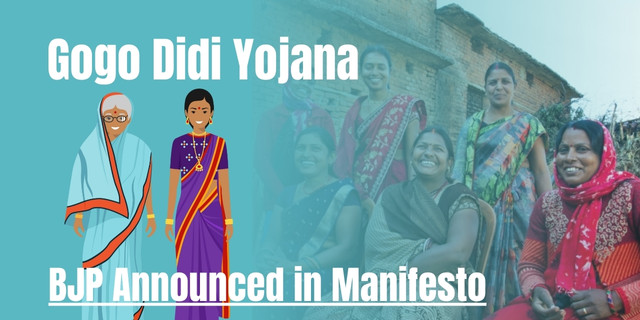
These so-called schemes are freebies to convert votes for one party. Every party indulges in it at the expense of the taxpayer. They criticise each other's freebies. It was Modi who began a debate on freebies in 2022 when he mocked the 'revdi' culture, triggering a war of words with the opposition. Congress made ten promises in the Himachal Pradesh elections, among which one was a monthly allowance to women and unemployed youth. But Modi amplified his schemes in Jharkhand, such as the 'Gogo Didi' scheme for women and 'Yuva Sathi Bhatta' for youth. He said gas cylinders would be available for Rs 500, with two free cylinders provided during festivals. Modi's guarantee has been flaunted in the 2024 elections.
On the other hand, the government reports on the growth of the economy and GDP and claims that growth is essential for the country. But the benefits of growth go only to a handful of countrymen. This raises the question of the widening gap between rich and poor and the contradiction between growth and equity. Why is equitable distribution not seen in this growth?
It is said that when there is a high tide, all boats rise. If there is growth, all Indians should benefit and rise. This is not the case, as the promised upliftment for all citizens is glaringly absent despite the rhetoric of "sab ka saath, sab ka vikas, and sab ka prayas."
But these hundreds of schemes show a false picture of bluffing people into thinking the government cares, and very few benefit from them. Why do the poverty, hunger, and developmental indices keep sliding despite many schemes? Why are 800 million Indians getting 5 kilogrammes of rations for survival?
The BJP government is keen on producing a uniform new India: one nation, one language, one religion, and one legal code, but one hardly sees any keenness to have one income and one caste in this country. On the one hand, instead of respecting unity in diversity, the politicians are promoting polarisation based on religion, thereby giving rise to discriminatory behaviour toward minorities, the poor and the disadvantaged sections of the society.
How is it that the government and politicians do not see the contradiction between their enthusiasm in implementing anti-conversion laws for conversions through allurement, appeasement, and coercion but not the same indulged in by them for winning elections? Can they bring in a similar law against abuses in the name of welfare, which are vote-catching and winning election stratagems for politicians?
.jpg)
.png) Cedric Prakash
Cedric Prakash
 ICPA
ICPA
 ICPA
ICPA
 ICPA
ICPA
 ICPA
ICPA
 ICPA
ICPA
 ICPA
ICPA
.jpg)
 A. J. Philip
.jpg)
.png) Jacob Peenikaparambil
Jacob Peenikaparambil
.jpg)
.png) John Dayal
John Dayal