

.jpg) Jessy Kurian
Jessy Kurian
"Marriage is a sacrament that acts as a partnership of equals, rather than a master-servant relationship, necessitating mutual respect and shared responsibilities," said the Supreme Court of India.
The Supreme Court affirmed that a wife's inability or refusal to perform domestic chores does not constitute "mental cruelty." The Court emphasised that in modern times, household duties are not solely the wife's responsibility and that shared partnership is essential.
On March 20, 2026, a Bench comprising Justice Vikram Nath and Justice Sandeep Mehta held that "wife is not a maid, wife is a life partner."
The fact of the case is that the husband filed a petition for divorce in the Family Court on the ground that the wife was not cooking, cleaning, washing, or taking care of household chores, which amounted to cruelty to him.
The family court, upholding those grounds as cruelty, granted him a divorce. The wife challenged the family court's order before the High Court. The High Court set aside the family court's order, finding that those activities do not amount to cruelty.
The husband, aggrieved by the High Court Order, challenged it before the Supreme Court of India. The Court in its own wisdom said, "You have not cooked food, you have not cleaned the house, you have not washed, you have not done mopping. The High Court is right. This cannot be a ground for cruelty. Husband must participate equally in cooking, cleaning, and washing, etc. Today's times are different. You are not marrying a maid. You are marrying a life partner."
It is indisputable that Indian society holds that cooking, cleaning, washing, mopping, and other household chores are the sole duties of women/wives. In matrimonial cases, many husbands' grievance is that the wife does no chores and only "sits and eats," whereas in fact she solely takes care of the household.
The ruling strengthens the position that refusal to do chores does not automatically establish grounds for divorce. This observation reinforces gender equality and challenges the notion that domestic work is solely the wife's responsibility.
This ruling has changed society's attitude and mindset by bringing this issue to discussion in the Indian context. Only the judiciary can bring about such changes quickly and effectively.
In 2021, in 'Kirti vs Oriental Insurance Company Pvt Ltd,' Justice Ramana, then Chief Justice of India, stated that the term "housewife" should be deprecated in favour of "homemaker." It is because of her hard work, commitment, and dedication to household chores that the family, including her husband, enjoys a comfortable life. Despite her best efforts day and night, she remains unpaid and unrecognised. Further, the Court emphasised, "Wife's work in the family is equal to her husband's work outside." It is a landmark judgment upholding equality.
It is pertinent to note that in a 2018 judgement (Joseph Shine vs Union of India), the Supreme Court had held "Wife is not a chattel, wife is not the property of the husband; wife is an individual being." The Court emphasised, "equality should be ensured in all spheres of life, including marriage."
The spirit of the ruling is not that the husband, who works outside from morning to evening and returns home fully sweating and tired, must do all the household chores, but rather that it calls for a change in attitude and mindset towards women. As the Court rightly said, time has changed.
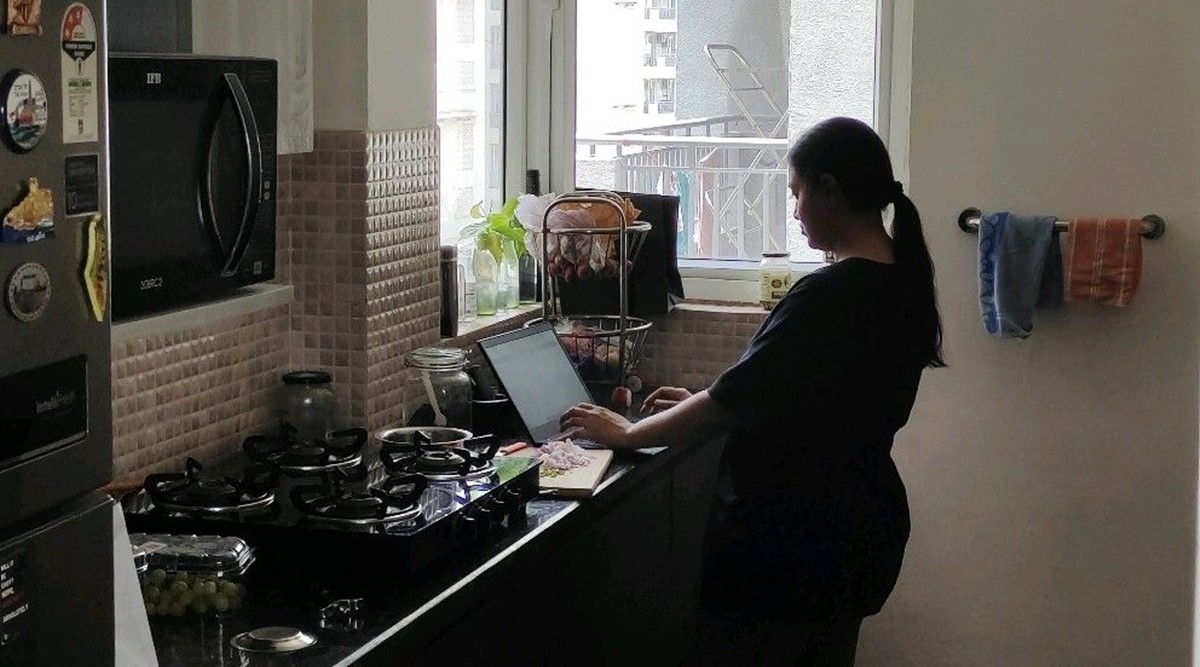
Today, in many houses, husbands and wives are employed outside. When it comes to household chores, again, the attitude is that the work has to be completed by the wife before going to work and after returning from work. In such a situation, the wife must juggle the roles of homemaker and employee, while the husband is free to focus on his personal activities.
According to the Ministry of Statistics and Programme Implementation, early data for January-February 2026 indicates that the overall Female Labour Force Participation Rate in India is approximately 35.1%. Male participation remains significantly higher, with a notable rural rate of 40% and an urban rate of 25.5%, and overall worker population ratios hover above 70% in urban areas.
This ruling reflects a modern approach to marriage, focusing on shared responsibilities and equality in domestic life. In India, the courts have recognised that the wife's contribution to the household is invaluable and cannot be quantified in monetary terms.
In 'Sunita v Vinod Singh' (2025), the Court held that the gratuitous services rendered by the wife with true love and affection to the children and her husband and managing the household affairs cannot be equated with the services rendered by others. A wife/mother works around the clock. She is constantly in attendance with the family throughout the day and night, unless she is employed and required to attend the employer's work for a particular number of hours. She takes care of all the husband's and children's needs, including cooking, washing clothes, etc. She teaches young children and provides invaluable guidance for their future. A housekeeper or maidservant can do household work, such as cooking, washing clothes and utensils, and keeping the house clean. Still, she can never be a substitute for a wife/mother who renders selfless service to her husband and children.
In conclusion, only by upholding the human dignity and equality of each other and by recognising each other as 'life partners,' can the serenity and sacredness of family life be maintained.
.jpeg)
 A. J. Philip
.jpg)
.png) Jacob Peenikaparambil
Jacob Peenikaparambil
.jpg)
.png) John Dayal
John Dayal
.jpg)
 Pachu Menon
.jpg)

.png)

.png)
.png) Robert Clements
Robert Clements
.jpg)