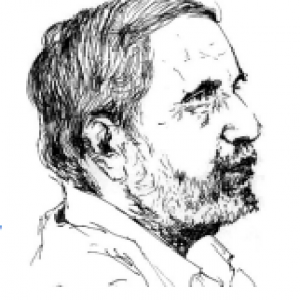


.png) John Dayal
John Dayal
I was his collaborator in three of his successful initiatives and a few of his unsuccessful ventures. But to me, Capuchin friar Fr Xavier Vadekekkara was, first, a friend who knew I would understand his half-articulated dream and cooperate wholeheartedly in bringing it to fruition.
The simple man who brought me my family's first Christmas cake every year and seldom waited to have a cup of coffee, also went back with a pledge of my support for the Indian Currents, in which I took a paternal pride, in the publishing project known as Media House, and in Jyoti Printers, the industrial unit in Noida. He trusted me with the initial management of these in their incubation periods and has now made me feel at home in all three.
Indian Currents brought us together. The Catholic newsmagazine, now gloriously venturing into its second quarter of a century, was born on a drawing board and a laptop in my sitting room in New Delhi as my old friend and mentor, the Catholic Bishop Conference of India's charismatic secretary Fr John Vallamattam, with a PhD from Germany on Rabindranath Tagore, discussed with me his vision of a magazine that would be a two-sided mirror – letting the secular world see the Catholic Church, while giving the Church and community a view of the politics and economics of the country, its government and governance.
We published the first edition from Bahadur Shah Zafar Marg, the nation's Fleet Street, with great hope. The magazine thrived, but sustaining it was a different kettle of fish. Very few in the Church were willing to put their money where their mouths were. Fr John begged and cajoled but was never assured of the corpus he needed to ensure it a long life as an independent magazine that would not have the bishop's photograph on Page One and on many of the other pages.
Left to itself, Indian Currents would have been buried. The Capuchins gave it a second life, entrusting Xavier Vadekekkara to see if he could run it. They banked as much on his Philippines PhD in Mass communication as on his infectious zeal and guarantee of hard work. The rest is publishing history. Indian Currents is today a magazine the secular world trusts on issues of the Church, even if the hierarchy is anxious about whether every new issue will publish some home truth that will embarrass them.
Xavier gave the magazine trusted editorial leadership, nurturing his successors - Dr Sureh Mathew was the second and long-serving Editor in Chief after Fr Kani, and now Fr Gaurav Nair – and keeping a loyal band of editorial advisors from the Laity apart from a band of writers, including some brilliant women.
Publishers Media House will always be able to hold its head high in its category. It published historian and political activist Professor Shamshul Islam's searing exposes of communalism, and it published the much-quoted "Gujarat 2002: Untold and Retold Stories," which was published in the traumatic year of the shameful targeted violence amounting to genocide. In the recent past, it published another forensic expose of Hindutva's running away with school and college education in its New Education Policy. The publishing list contains serious theology as much as general titles.
It was a matter of time before the publishers thought of having a printing group of their own. Jyoti Printers, too, has made a name for itself, helping many authors in their own publishing dreams.
I will not speak of the failed projects. They were all ahead of their time and could not muster human and material resources when they were most needed. To an extent, I, too, failed Fr Xavier, though he would have refused to have me admit any responsibility for failures. Such was the man.
Xavier Vadekekkara does not deserve an oily hagiography.
His work and his humility make for his epitaph.
.jpg) Stanislaus Alla
Stanislaus Alla
.jpg)
.png) Cedric Prakash
Cedric Prakash
.jpg) Elsa Lycias Joel
Elsa Lycias Joel
.jpg)
 A. J. Philip
.png) Jacob Peenikaparambil
Jacob Peenikaparambil
.jpg) John Dayal
John Dayal
.jpg)
.jpg)
.png) Joseph Maliakan
Joseph Maliakan
.png)
.png) Robert Clements
Robert Clements
.jpg) Cedric Prakash
Cedric Prakash