

.jpg) IC Correspondent
IC Correspondent
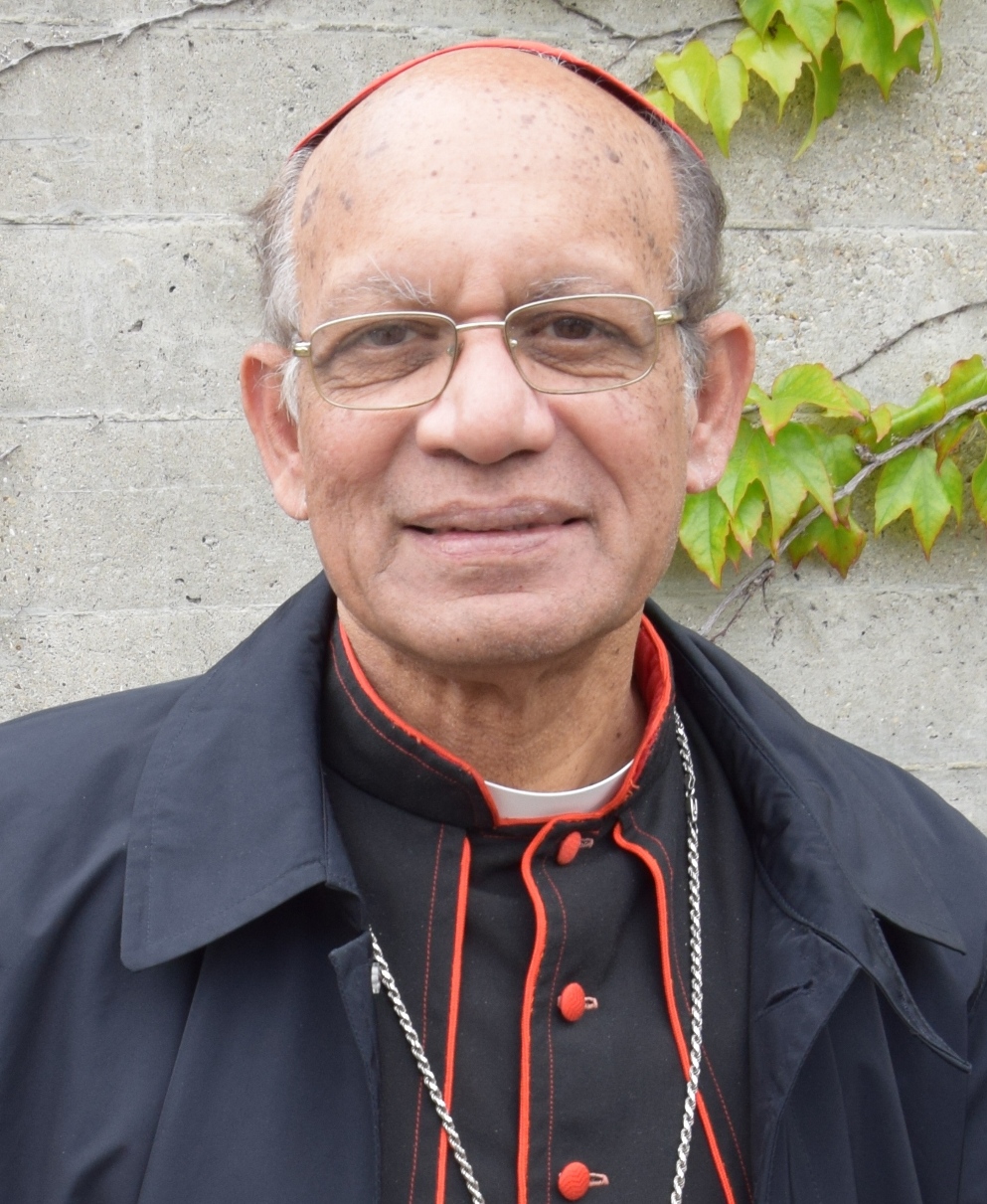
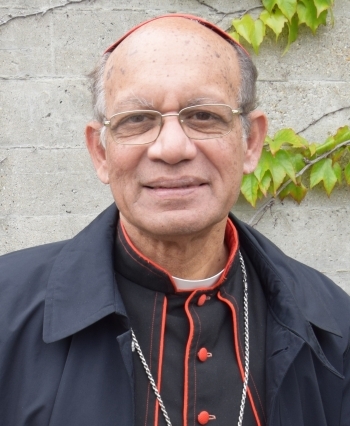
The following is the text of the interview with Cardinal Oswald Gracias of Bombay, a member of the Council of Cardinals (C9) since it was created by Pope Francis at the beginning of his pontificate.
IC: What are your comments on Predicate Evangelium?
Cardinal Oswald Gracias: Predicate Evangelium is a Document of Pope Francis. The Holy Father was present for the discussions of our Council, and was aware of all the drafts and even after our final draft, he personally studied the Document, reflected on it and did some fine-tuning.
The Reform of the Curia was the first major programme the Holy Father started exactly one month after his Papacy was inaugurated. On April 13, 2013 he appointed his Council of Cardinals to advise him in the Reform of the Curia and the governance of the universal Church. The reason why the Holy Father took up the Reform of the Roman Curia as a priority was because during the pre-Conclave meetings of Cardinals, when reflecting and discussing about the Church, a Reform of the Curia was suggested by many Cardinals.
Pope Francis responded to this expressed need by appointing a Council of Advisors to assist him.
The Holy Father based himself on Pastor Bonus. The Reform needs a change of mental attitude: an attitude of Service is needed on the part of all members of the Curia. A key principle is that the Curia should not be a body between the Holy Father and Bishops of the world, but be at the service of both the Holy Father and the local Churches. This was sought to be worked out in the entire Document. The title of the Document “Preach the Gospel” indicates the primary purpose of the Church, every Dicastery, and every member of the Curia. This is also reflected in the great importance given to the Dicastery for the Evangelization of Peoples. All of us need to study this Document, imbibe its spirit and make it operative in our own dioceses.
IC: How long would it take for this Apostolic Constitution to actually Reform the Roman Curia?
Cardinal Oswald Gracias: The process of the Reform has already begun. As we know, the Holy Father has already changed the structure and personnel in some Dicasteries. For change to take place effectively the mental attitude must change. I see it already happening. The “Francis Effect” is already evident, naturally at a different pace in the different Dicasteries, depending on the nature of the Dicastery and the personnel in the Dicastery. The Reform has begun. I don’t think there is an end point for this Reform. It needs to continue, not only during this Papacy but even beyond. I called it the “Francis Effect” but one sees in faith that the Holy Father is taking the Church in the direction that the Holy Spirit wants. And hence, this Reform must always continue.
IC: Are the provisions in the communique to be compulsorily implemented or is the implementation optional?
Cardinal Oswald Gracias: Predicate Evangelium is an Apostolic Constitution. It is promulgated by the Pope. Hence, it is the law of the Church and has to be implemented by all concerned. It is in no way optional. But as I said earlier, because of circumstances the pace of implementation will vary.
IC: Do you feel that the hierarchy and clergy in India will readily accept these reforms, particularly the enhanced role of the laity in the Church?
Cardinal Oswald Gracias: Yes, I think the hierarchy in India is well-formed, a united body with a common vision and I have no doubt that these Reforms will be readily accepted by the hierarchy and also the clergy in India. At our next CBCI Plenary Assembly, we will study Predicate Evangelium and examine its implications for the Church in India. You have asked about the role of laity. We have a committed, active and well-formed laity. I see great possibilities for an enhanced role for the laity in the Church.
IC: Can we expect such reforms in the Indian Church, for example, appointment of laity, especially women, as chancellors of the dioceses like in the US?
Cardinal Oswald Gracias: I think the appointment of laity in our diocesan Curias would take time. It will not come immediately. This is also because of our system. You have mentioned about the appointment of laity as Curia Officials, like in the USA. The role of the Curia Official in the US and in India is the same in Canon Law but the praxis has developed differently. For example, in India, the Chancellor is generally also a member of the Matrimonial Tribunal, and often also either Diocesan Secretary or Financial Administrator. Some of these responsibilities might need a priest or someone qualified in a particular branch of theology. This creates practical difficulties as you will immediately see. Ours is not a multinational corporate office but the Church meant for the spread of the Gospel. Unless there is this vision and spirituality, the ethos and effectiveness of the Curia would be affected.
You asked about women: I see great possibilities for the role of women in the Church. They are dedicated, generous and probably would fit into our ecclesial system rather easily. But I know that there will be initial hesitation and I think that for effectiveness we have to move strategically. I know that Pope Francis is very much for an enhanced role for women in the Church and I concur with him fully. However, one must keep the good of the Church in mind and see that the steps we take do not cause more dissension than good.
IC: Do you think that instead of making the proposals universally applicable, regional cultures and sentiments are to be factored into while implementing them?
Cardinal Oswald Gracias: The Church is universal and these norms have to be universally applicable. Naturally regional cultures and sentiments need to be factored into while implementing norms. Technically, Predicate Evangelium is meant specifically for the Roman Curia but the spirit of Predicate Evangelium should influence every Diocesan Curia. That is the direction in which the Holy Spirit is leading the Church. Regional cultures and sentiments will affect the speed and the depth of the implementation of this Apostolic Constitution. But there will be a gradual change. Of this I am confident.
.jpg)
.jpg) Stanislaus Alla
Stanislaus Alla

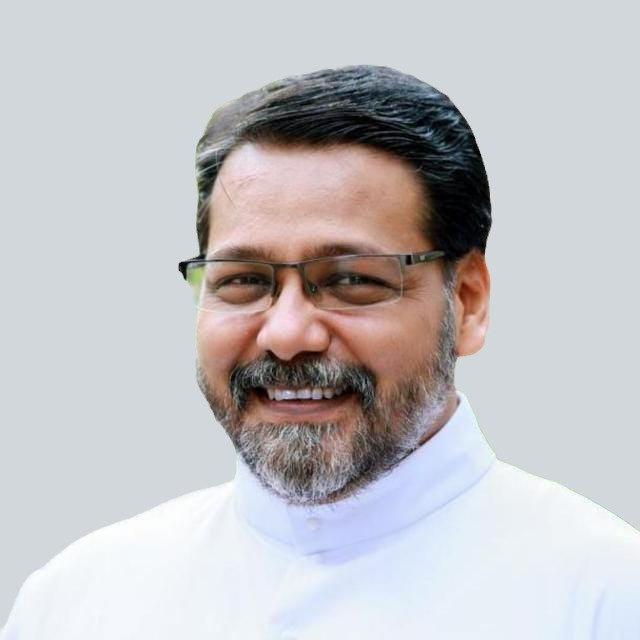 Adv. Rev. Dr George Thekkekara
.jpg)
 A. J. Philip
.jpg)
.png) John Dayal
John Dayal
.jpg)
.png) Jacob Peenikaparambil
Jacob Peenikaparambil
.jpg)
 P. A. Chacko
.png)
.png) Robert Clements
Robert Clements