

.jpg) Dr. G. Ramachandram
Dr. G. Ramachandram
The National Emergency of 1975 has been a subject of debate. I was in an MA Part I Political Science class at the University of Bombay when the Emergency was declared. The issue was debated in the class, and students were sharply divided for and against the Emergency. I spoke in favour of the Emergency, justifying it under the volatile and explosive political situation that prevailed in India.
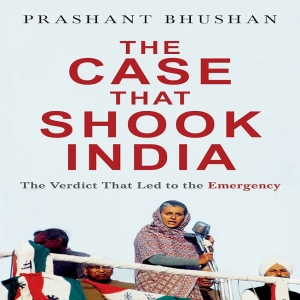
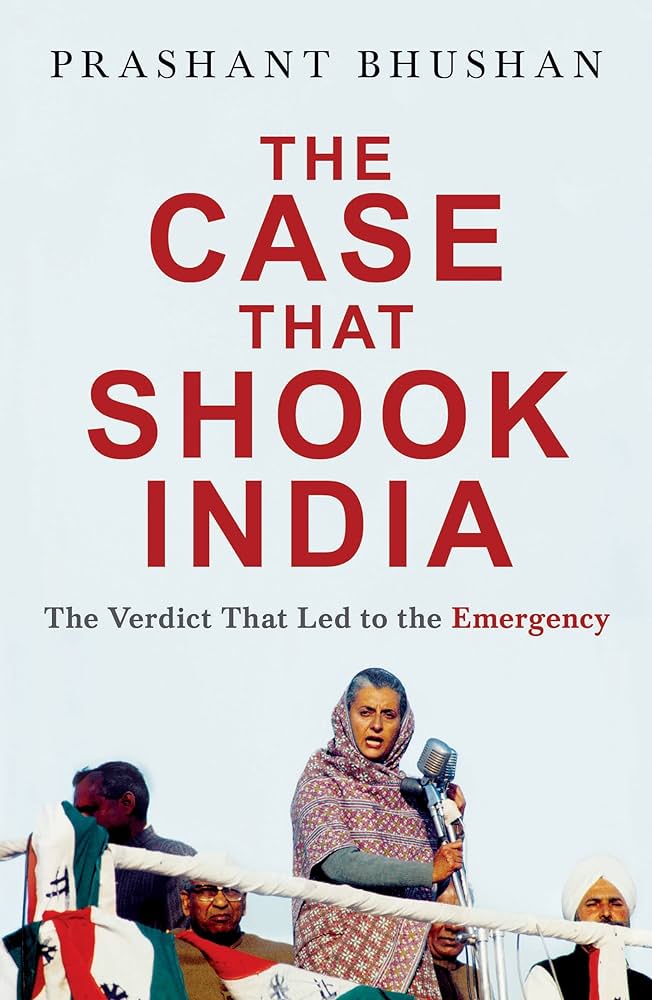
Prashant Bhushan's book The Case That Shook India (Penguin Books, 2018) gives a detailed account of the Emergency based on his notes of the court hearings. This write-up is based on his book and attempts to put the Emergency in the proper perspective.
The General Election to Lok Sabha was held in March 1971. Indira Gandhi won the seat from the Rae Bareli constituency, defeating Raj Narain, the opposition alliance candidate, by a margin of more than 1,10,000 votes, and Raj Narain secured only 71,499 votes. However, he subsequently filed a petition in Allahabad High Court in April, challenging Mrs Gandhi's election, and engaged Shanti Bhushan to argue his case. The charges against her, inter alia, included:
1. Mrs Gandhi had procured the help of Yashpal Kapoor for her election while he was still a gazetted officer in the government;
2. Mrs Gandhi had procured the assistance of a number of government-gazetted officers and members of the police forces to further her election prospects by erecting barricades for her visits and constructing rostrums for her speeches.
3. She had procured the services of members of the armed forces for the furtherance of her election prospects;
4. The symbol of a cow and calf used by Mrs Gandhi was religious.
Mrs Gandhi, in a written statement filed in the Court on August 5, denied that Yashpal Kapoor did any election work for her before resigning. He resigned on January 14, 1971. She said that she travelled in Air Force planes based on the Government of India's standing instructions regarding the Prime Minister's travel arrangements and that the construction of barricades and rostrums was not for furthering the election prospects but for law-and-order purposes. Incidentally, it may be recalled that these arrangements were made by an opposition Chief Minister, Charan Singh, who was heading the BLD government in Uttar Pradesh, as a matter of protocol and for the security of the Prime Minister. Mrs Gandhi denied that the cow and calf symbol was religious as it was allotted to her party by the Election Commission.
Justice Jag Mohan Lal Sinha heard the petition. On June 12 1975, he delivered the verdict. He held Mrs Gandhi guilty of corrupt practices on the following two grounds and declared her election to the Lok Sabha void, granting her 21 days stay on the Order:
(a) "It is true that according to the gazette notification, the resignation of Shri Yashpal Kapoor has been accepted with effect from January 14 1971. It cannot, however, be ignored that the Order accepting the resignation was passed on January 25 1971. Till that Order was passed, the status of Yashpal Kapoor continued to remain that of a government servant despite the fact that the Order was given retrospective effect as to be valid from January 14 1971." The judge held that Kapoor's resignation became effective only on January 25; therefore, Mrs Gandhi obtained Kapoor's assistance to further her election prospects before January 25. What strange logic and absurd ground to hold the Prime Minister guilty of a corrupt practice.
(b) The Judge held that the rostrums constructed by state government officers enabled Mrs Gandhi to address her meetings from a dominating position. "I do not think it was indispensable for the state government for the maintenance of law and Order or security that its officers should have taken upon themselves to get rostrums constructed for the meetings of Respondent No. 1 and to take arrangements for the supply of power for the functioning of the loudspeakers at the meetings. Both these things could have been left to be arranged by the political party concerned." The judge held Mrs Gandhi guilty of a corrupt practice on this issue. He had no objection to the party using these facilities but objected to the state government arranging them. He seemed to have lost sight of the fact that the Respondent was the Prime Minister and, therefore, it was incumbent on the part of the state government to take care of the arrangements to provide security for her.
Gandhi's election was declared void on flimsy grounds. She was acquitted of all other charges. It was the first time the prime minister's election was set aside, and there was no parallel in the history of any democracy in the world. Her legal advisers, party leaders, and the cabinet advised her against resigning since the court had granted the stay. She preferred the appeal in the Supreme Court, and Nani Palkhivala, otherwise a vocal critic of Mrs Gandhi, accepted her brief.
The Opposition parties were preparing for nationwide agitation to force Mrs Gandhi out of office. Their strategy was to mobilise public opinion against her continuing in office. They organised a massive rally at the Ramlila Grounds on June 22. They asked the people to organise themselves and prepare for a non-violent agitation to force Mrs Gandhi out of office. They did not give a final call for the agitation that day. They were waiting for the outcome of the Supreme Court hearing on Mrs Gandhi's stay application.
The appeal came up before Justice Krishna Iyer while the court observed the vacation. The appeal was listed for hearing on June 23. As this happened in the Supreme Court, Mrs Gandhi addressed a massive rally on the Boat Club grounds. It was estimated that about five lakh people attended the meeting. Opening his argument, Palkhivala contended that the Allahabad High Court trial judge had made 'manifest errors' in holding Mrs Gandhi guilty of two corrupt practices.
Commenting on the assistance of government servants, he said that they were only following the state government's instructions and performing their duty as part of the routine security drill undertaken for the Prime Minister. If the election was set aside on this ground, it would have alarming consequences. Today, it might be set aside for the construction of rostrums, but tomorrow, it would be set aside for barricading and then for police arrangements. There can be no elections in these circumstances."
The whole country had followed the arguments in the Supreme Court through the newspapers with great interest. Justice Iyer delivered the judgment on June 24 around 4.00 pm. He granted a conditional stay. He said: "There will be a limitation regarding the appellant's participation in the proceedings of the Lok Sabha in her capacity as member thereof, but independently of the membership, a minister and a fortiori, the Prime Minister, has the right to address both Houses of Parliament, without right to vote though, and has other functions to fulfil…There will thus be no legal embargo on her holding the office of Prime Minister."
Union Law Minister Gokhale said that there was no resignation issue now. The Congress leaders appealed to the Opposition to end their satyagraha. However, the Opposition parties interpreted the conditional stay as vindicating their stand. They were bent on going ahead with their plans to hold a massive rally at the Ramlila grounds on June 25.
At the Opposition rally, Jayaprakash Narayan (JP) appealed to the Chief Justice of the Supreme Court, AN Ray, not to be a member of the Bench, which heard Mrs Gandhi's appeal. He also "deliberately reiterated his appeal to the police and armed forces not to obey illegal orders of the government. He challenged the home minister Brahmananda Reddy to try him in court for high treason for this statement."
The same night, June 25, the National Emergency was declared. Within eight hours of his speech, JP was detained. The police swooped down on almost all Opposition leaders the same night across the country. While Morarji Desai, Charan Singh, Raj Narain, Piloo Mody and Ashok Mehta were detained in Delhi, LK Advani, Atal Behari Vajpayee, Shyam Nanan Mishra, Madhu Dandavate and others were detained in Bangalore.
The next morning, Mrs Gandhi came on air to inform the nation that the President had declared an Emergency 'to thwart the Opposition move to imperil the country's security.' The Emergency was declared under Article 352(1) of the Constitution for internal disturbance. The rest, as they say, is history.
On November 7, 1975, the five-member constitution bench of the Supreme Court, comprising Chief Justice AN Ray and Justices HR Khanna, KK Mathew, MH Beg and YV Chandrachud, accepted the appeal of Indira Gandhi. In a unanimous verdict, they upheld her election and reversed the Allahabad High Court judgment.
Had JP and the Opposition shown some restraint and not given open calls to police and armed forces to revolt against the government and instead waited for the outcome of her appeal in the Supreme Court, the nation could have been saved from the Emergency and its aftermath. It is the ill-conceived verdict that led to the Emergency.
Narendra Modi raised the issue of Emergency, which was declared in 1975 under Article 352 of the Constitution, on June 24, the first day of the new parliament, even before the elected members took the oath. On June 26, Om Birla, after being elected the Speaker, went out of his way and read out a resolution condemning the Emergency, thus ruining the atmosphere of a bonhomie. On June 27, President Droupadi Murmu, addressing the new parliament's first joint session, told the nation a lie that the Emergency was unconstitutional and a direct attack on the Constitution. There is a pattern in all this.
What is the relevance of bringing up the Emergency now after 50 years? Evidently, the new Modi government refused to accept the change and instead adopted a confrontational approach. This is a diversion to cover up the muzzling of democracy and the Constitution by the Modi government during the past 10 years and to deviate from the main issues.
.jpg) Stanislaus Alla
Stanislaus Alla
.jpg) Stanislaus Alla
Stanislaus Alla

 Adv. Rev. Dr George Thekkekara
.jpg)
 A. J. Philip
.jpg)
.png) John Dayal
John Dayal
.jpg)
.png) Jacob Peenikaparambil
Jacob Peenikaparambil
.jpg)
 P. A. Chacko
.png)
.png) Robert Clements
Robert Clements