

.png) John Dayal
John Dayal
Christians are persecuted in every one of the eight countries in South Asia, but even prominent religious groups, Hindus and Muslims, and smaller groups of Sikhs and Buddhists, also find themselves targets of hate and violence elsewhere as religious freedom moves from being a contested principle to an increasingly fragile right.
No government, no major community, comes out innocent, with blood splattered on its banner somewhere or the other where it exercises legal or illicit power.
In Afghanistan, Pakistan, India, Bangladesh, Sri Lanka, Nepal, Bhutan and Myanmar, the year 2025 has confirmed that belief, identity, and citizenship are being reordered through the lens of majoritarian power, enforced religion, or militant exclusion.
The result is measured in imprisonment, forced displacement, loss of citizenship, destroyed homes, and lives lived under fear.
The patterns include ethno-religious nationalism in India and Myanmar, blasphemy and anti-conversion laws in Pakistan and Nepal, authoritarian control in Afghanistan and the Maldives, and state-enforced displacement in Myanmar and Bangladesh, both currently on the boil.
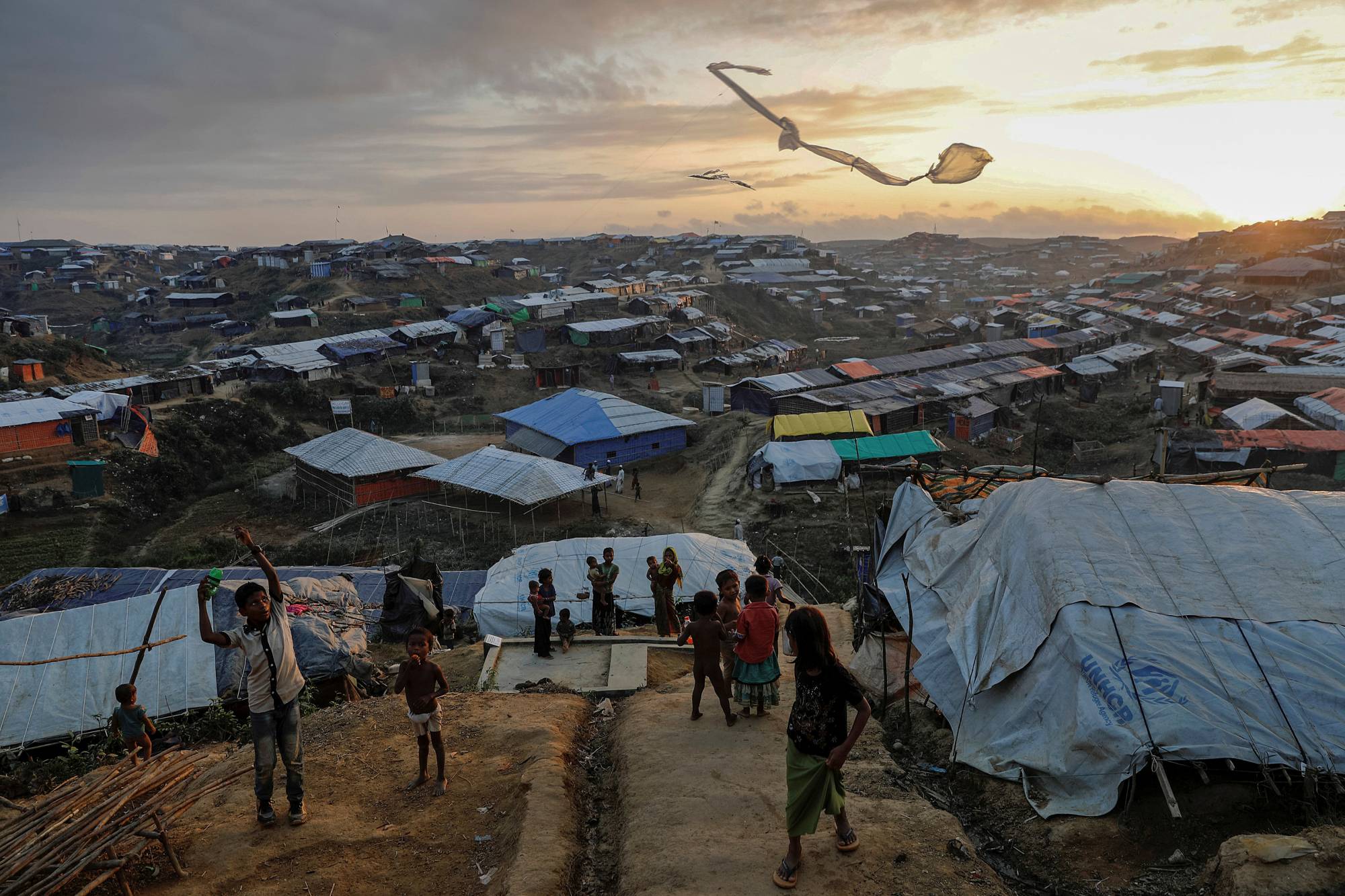
The UNHCR, the global agency for refugees, estimates 29 lakh refugees needing resettlement in 2025, with Afghans (558,000) and Rohingya (226,000), both Muslim and a small group of Christians, many fleeing faith persecution.
Projections for 2026 say that, unless urgently checked, violence will escalate, displacement will surge, and pluralism will erode further as religious nationalism is normalised, and the state fails to protect minorities. The crisis is regional, with shared characteristics but distinct national ex
Afghanistan remains the most extreme case. Under the Taliban's second Islamic Emirate, religious freedom is not restricted; it has been effectively erased. USCIRF's 2025 report states that freedom of religion or belief "no longer exists" in any meaningful sense. The Taliban's enforcement of a rigid interpretation of Sunni Islam criminalises dissent, difference, and conversion.
Conversion from Islam is treated as apostasy, punishable by death. Afghanistan's small Christian population—almost entirely converts—survives underground, with no public worship, no legal protection, and no recourse to the state. Discovery brings near-certain execution for men and forced marriage or disappearance for women.
Historic Sikh and Hindu communities, once numbering in the hundreds of thousands, have been reduced to a few hundred people, most awaiting evacuation. Their gurdwaras and temples have been seized or abandoned, public worship curtailed, and property confiscated. Taliban assurances of "protection" have not translated into rights or safety.
Pakistan presents a different but equally entrenched crisis. Its constitution guarantees freedom of religion, yet its blasphemy laws—particularly sections 295-B and 295-C of the Penal Code—have hollowed out those guarantees. In 2025, USCIRF again recommended Pakistan be designated a Country of Particular Concern, marking over a decade of uninterrupted concern.
Blasphemy accusations are routinely used to settle personal disputes, seize land, or mobilise mobs. Forced conversions and marriages of minority girls—particularly Christian and Hindu—continue with near-total impunity. Investigations by Human Rights Watch and Pakistani civil society organisations show police frequently record these cases as "voluntary," ignoring evidence of coercion. The state has refused to dismantle the bigoted laws and practices.
India's crisis is more subtle, but no less consequential. Religious identity increasingly determines access to rights, protection, and belonging. USCIRF's 2025 report again recommended that India be designated a Country of Particular Concern, citing systematic and ongoing violations against Muslims and Christians.
At the centre of concern is the consolidation of Hindutva ideology into governance. The Citizenship Amendment Act, implemented through rules notified in 2024–25, introduces religious criteria into citizenship by fast-tracking non-Muslim migrants from neighbouring countries while excluding Muslims.
When paired with proposals for a nationwide National Register of Citizens and the ongoing Special Intensive Revision, critics argue this creates a pathway to mass disenfranchisement.
"Anti-conversion" and so-called "love jihad" laws have expanded to at least a dozen states. These laws criminalise interfaith relationships and religious conversion under vague standards of "allurement" or "coercion."
Violence against minorities—lynchings, cow vigilantism, and targeted property demolitions—has increasingly occurred alongside police inaction or complicity. Victims have been charged rather than perpetrators.
The freezing of NGO accounts, restrictions on foreign funding, and legal action against journalists and researchers have weakened independent reporting on religious violence.
Bangladesh is currently on fire, after Sheikh Hasina, the long-time prime minister, was deposed by angry students and youth and fled to India. Their constitution proclaims secularism, even as Islam remains the state religion.
Religious minorities—particularly Hindus—have suddenly become extremely vulnerable, with three lynched in recent days. The Indian government has condemned the lynchings, but Dhaka has dismissed them as a local issue. The Indian government uses the very same argument when other governments criticise the situation of Muslims and Hindus.
The country, now under an interim government and facing elections later in the year, remains vulnerable to political violence, especially during periods of electoral instability.
Following the contested 2024 elections, 2025 saw renewed attacks on Hindu neighbourhoods, often triggered by rumours or online accusations. Prosecutions remain rare, reinforcing a sense of impunity.
Digital vigilantism has compounded the problem. Bangladesh's Digital Security Act, criticised for suppressing dissent, has also been used in cases involving alleged religious offence, resulting in arbitrary detention.
Bangladesh also hosts nearly one million Rohingya refugees, themselves victims of religious and ethnic persecution in Myanmar. Confined to camps in Cox's Bazar, denied citizenship, and facing growing insecurity from armed groups, their situation represents one of the world's most protracted refugee crises.
In Sri Lanka, the post-war environment has again seen the rapid rise of Sinhala-Buddhist nationalism, with groups such as Bodu Bala Sena framing minorities as threats to national identity. While large-scale violence has subsided since the Easter 2019 bombings of Churches in Colombo and other cities, Muslim communities continue to face surveillance, profiling, and administrative discrimination under counter-terrorism frameworks.
Forced cremations of Muslim COVID-19 victims during the pandemic remain a stark example of state-imposed religious violation, the effects of which continue to shape mistrust. In 2025, rights groups reported ongoing monitoring of mosques and Muslim businesses.
Evangelical Christians, particularly those worshipping in house churches, face regular harassment from local officials and Buddhist monks using zoning laws and noise regulations.
Nepal and Bhutan illustrate how religious freedom can be curtailed without overt violence. Nepal's 2015 Constitution declared the country secular, yet its criminal code prohibits conversion and proselytisation. In 2025, several Christians were arrested under these provisions, particularly those engaged in social work. While incidents are fewer than in neighbouring countries, the legal chill is real.
Bhutan, with its so-called Happiness Quotient, maintains strict control over religious ex
Myanmar remains the region's most catastrophic case after Afghanistan. Since the 2021 military coup, the collapse of religious freedom has been inseparable from civil war. The Rohingya, already subjected to genocide in 2017, continue to live under apartheid-like conditions in Rakhine State, while those remaining face violence from both the military and armed groups.
Christian-majority regions such as Chin, Kachin, and Karen states have been subjected to aerial bombardment, village burnings, and the destruction of churches. Human Rights Watch and international media have documented repeated war crimes.
The military's alliance with Buddhist nationalist rhetoric has framed the conflict as a defence of race and religion, deepening ethno-religious divisions.
Such unholy alliances seem a South Asian signature.
.jpg)
.png) Cedric Prakash
Cedric Prakash
 ICPA
ICPA
 ICPA
ICPA
 ICPA
ICPA
 ICPA
ICPA
 ICPA
ICPA
 ICPA
ICPA
.jpg)
 A. J. Philip
.jpg)
.png) Jacob Peenikaparambil
Jacob Peenikaparambil
.jpg) John Dayal
John Dayal