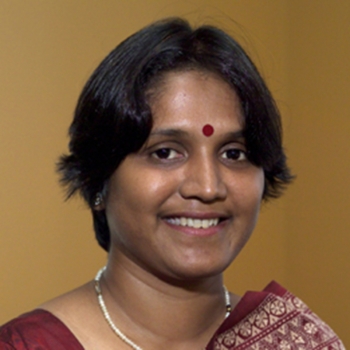


.jpg) F. M. Britto
F. M. Britto
.jpg)
The tribal villagers approached the lady ‘sahib’ to assist them to get released their kin. Police had arrested the Jharkari tribal man from Chitki village of Sindewahi Block just for a petty quarrel with his brother.
The Jail Visitor then discovered that the police had not even filed a FIR against him. Refusing to release him, the police justified that he was taken in preventive detention due to the election code of conduct.
Paromita Goswami went and questioned the Chandrapur Collector, “How come, a poor illiterate tribal under the ambit of the election code?” The collector immediately ordered him to be released.
That night on August 25, 1999, Paromita was wondering the plight of the illiterate tribal villagers and the gullible prisoners having no access to legal aid. And the Maoist affected Gadchiroli district did not have a criminal justice system. She had left Thane district in 1999 to work for these villagers in the Maoist affected Gadchiroli and Chandrapur districts in the same Maharashtra state.
After graduating in English Literature from St. Xavier’s College, the Kolkata born Paromita studied in Mumbai’s Tata Institute of Social Sciences. The army man’s daughter then became a Fellow at Yale and then did her doctorate in Jawaharlal Nehru University. Holding a Law degree, she joined the UNICEF as a Project Coordinator in Chandrapur. When the National Human Rights Commission was formed in 1993, she was appointed a Jail Visitor.
Realizing the fate of illiterate villagers and prisoners, Paromita formed Shramik Elgar (The Worker’s Push). This grassroots movement helps the rural poor to become aware of their legal rights and duties, to acquire their land titles and to receive fair pay. It also takes up people’s problems like land disputes, pension claims, to avail their ration cards and gas cylinders etc. More than 20,000 villagers are its members.
Paromita was joined by her husband Kalyan. After studying History in Jawaharlal Nehru University, Kalyan had obtained a doctorate in Trade Unionism. When he and Paromita were fellows in Yale, they decided to get married. The couple has a daughter Ruchika. Having done Law at Chandrapur, he deals with Elgar’s legal cases.
To receive donations and do social work, they also founded Elgar Prathistan (The Push Foundation) in 2000 as a public trust. It is a network of young volunteers from rural middle class who help the needy poor. It also helps in the economic and educational development of rural communities, to form dairy cooperatives, makes them aware of the government welfare schemes like the NREGA.
Building the Chitegaon campus training centre for rural community organizers in Mul Taluk, they are animating the elected self-governance representatives, organizing women against violence and implementing social justice legislation. At times they also resort to agitations to highlight their issues. They are respected as top labour organizations in the area.
“It is hard to find trained and motivated people, willing to serve, to risk all,” says her husband Kalyan.
“Dream the impossible; Seek the unknown; Achieve greatness.”
.jpg)
.png) Cedric Prakash
Cedric Prakash
 ICPA
ICPA
 ICPA
ICPA
 ICPA
ICPA
 ICPA
ICPA
 ICPA
ICPA
 ICPA
ICPA
.jpg)
 A. J. Philip
.jpg)
.png) Jacob Peenikaparambil
Jacob Peenikaparambil
.jpg)
.png) John Dayal
John Dayal