

.jpg) Lancy Lobo
Lancy Lobo
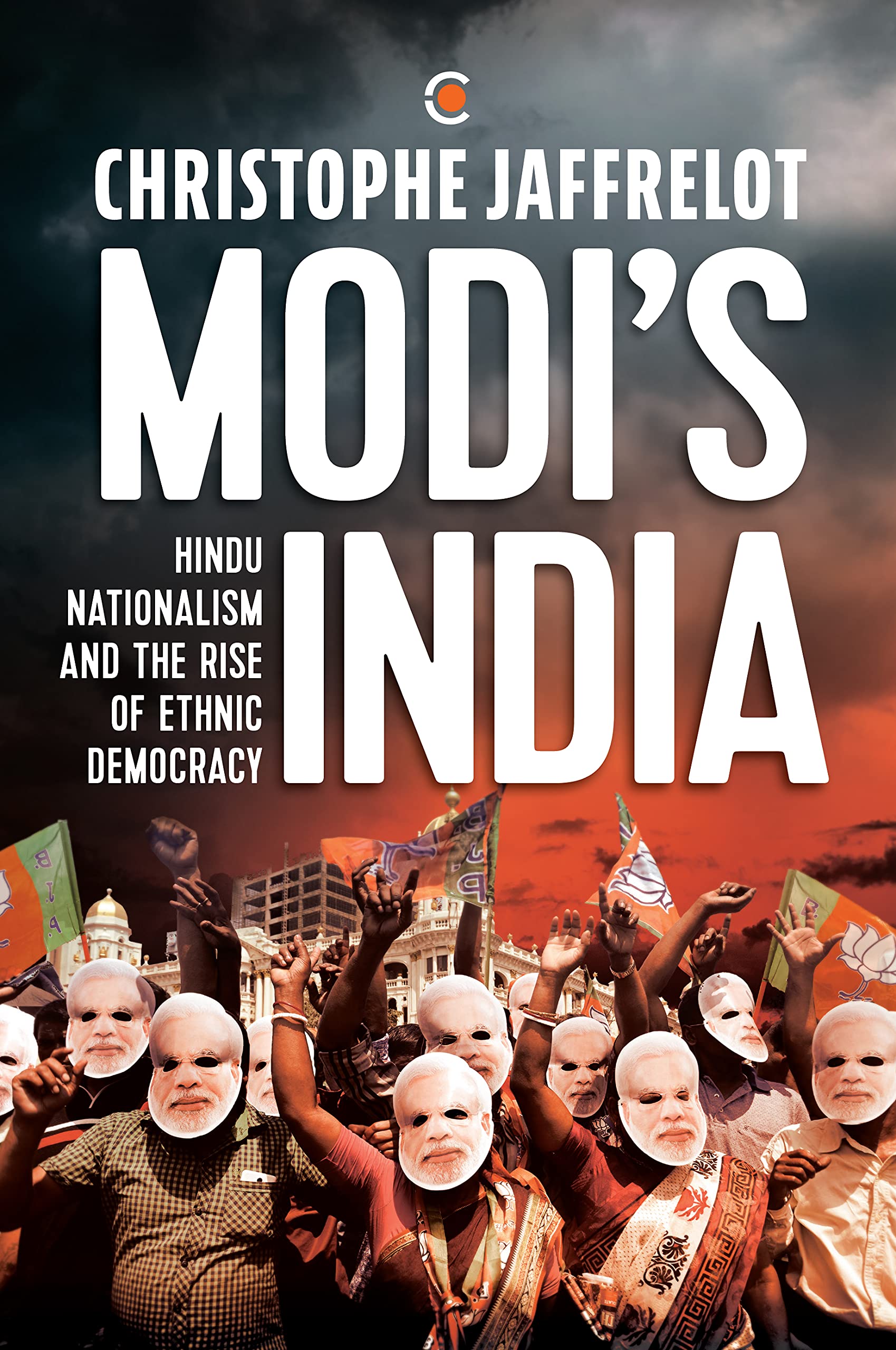
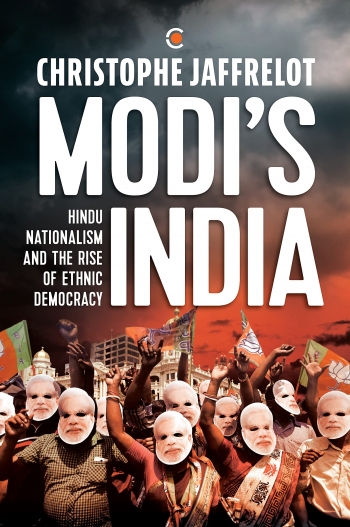
Christope Jaffrelot is director of research at CERI Sciences, Paris, professor of Indian politics and sociology at King’s College London, and often writes insightful articles on Indian politics in India dailies. He is one of the top political commentators today, along with Pratap Bhanu Mehta, Aakar Patel, Shashi Tharoor and a few others.
While liberal democracy remains an ideal form, many ‘hybrids’ such as ‘people’s democracy’, ‘guided democracy’, ‘illiberal democracy’, ‘guided democracy’, ‘authoritarian democracy’, ‘flawed democracy’, and ‘conservative democracy’, are visible in the landscape of democracy. Coming to Indian democracy of our times Jaffrelot calls it ‘Ethnic democracy’. While France and USA have a ‘universalist’ democracy, India has ‘ethnic democracy’ even though the Indian constitution does not support it.
What is ethnic democracy? Simply put it is based on majoritarianism based on religion in India’s case, relegating the minorities to second class citizens. Jafferelot enunciates this in the following manner:
‘The ethnicisation of India’s democracy that took place during Narendra Modi’s first term lies particularly in the government’s active promotion of Hinduism at the expense of secularism. This took place in the following ways: First, new laws were passed and new rules were applied, both at the national and state level, to protect Hinduism and its symbols as for instance, the cow. Second, the Modi government made decisions affecting secularists, including the appointments of Vice Chancellors in Universities (JNU) and FCRA laws against NGOs. Third, Modi government legitimised the RSS in the public sphere (appointment chief of Doordarshan) and opened up the state apparatus to the RSS. Fourth, the government and the Sangh Parivar jointly reshaped aspects of the education system, including the teaching of history by re-writing textbooks. Finally, the public sphere was restructured by building nexus between state actors (police, etc.) with non-state actors (the offshoots of Sangh Parivar) to impose their own cultural policing in public space. Ministers and vigilantes joined hands to delegitimise ‘anti-nationals who did not sing ‘Vande Mataram’ (p.186).
The fountain head of ‘ethnic democracy’ is the RSS and its affiliates, but Narendra Modi as Prime Minister, has embodied this concept by propagating and promoting it on an unprecedented scale not only in India but also abroad. As a champion of Hinduism he has visited holy places all dressed in saffron, in India, Nepal, and elsewhere. Promotion of Hinduism internationally is one of his priorities. He wanted the Hindu civilisation recognised globally- International Yoga Day, Yoga as the gift of India to the world.
Modi took the majoritarian discourse to its logical conclusion through words and actions and at the same time prepared the ground for the next elections by further polarising society along religious lines, as was evident by his treatment of minorities, Muslims and Christians.
Indian state in its constitution not only does not recognise any official religion, but it guarantees freedom of conscience and worship. Article 15 prohibits any discrimination on religious grounds, and Article 25 stipulates ‘subject to public order, morality and health… all persons are equally entitled ...freely to profess, practice and propagate religion’.
It must be said that Indian secularism is rooted in a civilisation in which a wide variety of religions have cohabited on Indian soil. Some political leaders, Ashoka, Akbar and Mahatma Gandhi have written excellent chapters on the story of this civilisation of universal values: inclusion, equality, tolerance, and peace. Gandhi deeply desired that the conception of Indian nation excludes any sort of identification with any particular religion but recognised all religions on par. Jaffrelot quotes from Hind Swaraj, “If the Hindus believe that India should be peopled only by Hindus, they are living in a dreamland. The Hindus, the Mahomedans, the Parsis, and the Christians who have made India their country are fellow countrymen and they will have to live in unity, if only for their own interest.”
There has been a paradigm shift in the idea of India from the leading architects of independent India, viz., Gandhi, Nehru, Patel etc. to Modi. This is diametrically opposed to that of Gandhi, Nehru and Patel. How this has been achieved is what Jaffrelot details in this book. He distinguishes Hinduism as a religious philosophy and Hindutva as a political philosophy. Hindutva is a mere ploy of religious cover for capturing political power.
Hindutva more than anything is structured in opposition to Islam and Christianity which are projected as foreign religions posing a threat to Hinduism. Islam and Christianity are the ‘Other’ who should be hated, eliminated, or reconverted (Ghar Wapsi) and at best remains as second class citizens. Christian missionaries are targeted fearing the Hindu demographic decline which is 80 per cent even though in decennial census Muslims have fractional rise and Christians are declining in number.
Hate speeches are meant for “Hindu awakening’’ to downplay the caste cleavages within Hindu society and promote Hindu unity and identity to capture political power. However, one notices that the state power rests with upper castes in parliament, bureaucracy, judiciary and lower castes are muted. The ladder of caste that was vertical in Hindu society prior to Independence was put horizontal after Independence through the ‘one man, one vote’ system. This has irked the upper castes as it has lost its privileges through reservations. They have devised the Hindutva ideology to regain power and privileges. All the efforts go into winning elections by hook or crook, apart from buying MLAs and MPs from opposition. In effect Hindu nationalism in nothing but to put the horizontal ladder of caste to its traditional vertical position where caste, class and power remain with dominant and upper castes.
The book has three parts: first, Hindu nationalist power quest: Hindutva and populism; second the world’s largest de facto ethnic democracy; and the third, Indian version of competitive authoritarianism. The book is highly readable, excellent construction of case studies and examples of the events since 2014. There is a chapter on Christians and another on Muslims detailing the manner in which they have been dealt with, by laying bare the strategies employed by Sangh Parivar and spearheaded by Narendra Modi. India has become de facto Hindu Rashtra, to be converted into de jure soon. The forthcoming electoral successes may decide the fate one way or another.
.jpg) Stanislaus Alla
Stanislaus Alla
.jpg) Stanislaus Alla
Stanislaus Alla

 Adv. Rev. Dr George Thekkekara
.jpg)
 A. J. Philip
.jpg)
.png) John Dayal
John Dayal
.jpg)
.png) Jacob Peenikaparambil
Jacob Peenikaparambil
.jpg)
 P. A. Chacko
.png)
.png) Robert Clements
Robert Clements