.jpg)


.png) Dr Suresh Mathew
Dr Suresh Mathew
.jpg)
Lawlessness doesn’t mean only the absence of law; it also means faulty interpretation and wrong execution of law. The result is the same. Ordinary mortals will be put to untold miseries and absurd agonies. The country is going through such a situation wherein law enforcement agencies are going after people left, right and centre. Voices of dissent, messages of criticism, ex
The number of ‘anti-nationals’ and ‘seditionists’, in the eye of the government, is phenomenally growing in the country. Ever since the JNU protests of 2016 and the arrest of student-leader Kanhaiya Kumar and others, the two terms have been consistently coming up in the lexicon of the government and its agencies. Later, another vicious term, ‘urban Naxals’, was added to the list. During the anti-CAA protests, there was a spurt of arrests of protesters under stringent laws. Now, the farmers’ agitation has put such arrests in top gear. The arrest of Disha Ravi, a 22-year-old environmental activist, charging her with sedition and conspiracy, over a ‘toolkit’ on farmers’ stir, has made the government’s intentions clear. Adding fuel to fire, the police had issued non-bailable arrest warrants against two persons, but luckily both of them have been granted anticipatory bail. Reports suggest that the police are planning to file FIRs against more people in this regard.
Anyone daring to question the government or support those critical of the government are threatened with arrest and prison life. The laws are made to turn on their head as it happened in the case of Stan Swamy and many other rights activists and intellectuals. In some cases, the investigating agencies, confirming their dubious record of manipulating evidences and witnesses, seem to have tampered with computers, as reported in the case of Rona Wilson, to strengthen the case. The inhuman face of the administration and the police stands out glaringly in the way arrests are executed. In the case of Disha, there are doubts about the police bulldozing and taking her to Delhi after arrest without following the procedure prescribed by the Supreme Court.
While the State is taking recourse to high-handed response to democratic protests and campaigns, those who incite people for violence are going around scot-free. The long arm of the law does not reach anywhere near them. Instead, a protective arm of the government throws a safety net around them. The government’s actions betray both arrogance and nervousness. The latest developments could attract international embarrassment and criticism. The image of India as the world’s largest democracy could take a hit if law-abiding citizens are treated with iron hand. Expressing dissent and articulating disagreement is proof of a thriving democracy. Trying to put a lid on such activities and going all-out to snuff them out is the opposite of the rule of the people, by the people and for the people.
.jpg)
.jpg) Stanislaus Alla
Stanislaus Alla

 Adv. Rev. Dr George Thekkekara
.jpg)
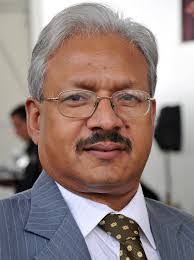 A. J. Philip
.jpg)
.png) John Dayal
John Dayal
.jpg)
.png) Jacob Peenikaparambil
Jacob Peenikaparambil

.jpg)
 P. A. Chacko
.png)
.png) Robert Clements
Robert Clements