

In a contemporary democratic system, the opposition party is the runner-up in an election, waiting for an opportunity to defeat the winners and seize executive power. In India, the world's largest democracy, all political parties share a single primary objective: to capture, consolidate, and retain state power. Politicians switch parties not because of moral decadence in the party, but because they crave power.
Political parties have one ultimate priority: winning elections; they forget that they are instruments of public stewardship, watchdogs of democracy, and defenders of citizens' fundamental rights. In India today, it is worth asking whether the opposition effectively defends the Constitution's values and corrects the government and its policies.
In every society and era, when a system fails, a movement emerges and can correct it. No traditional political party can correct the government and restore democratic accountability.
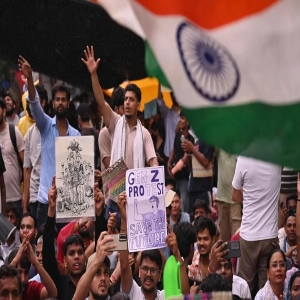
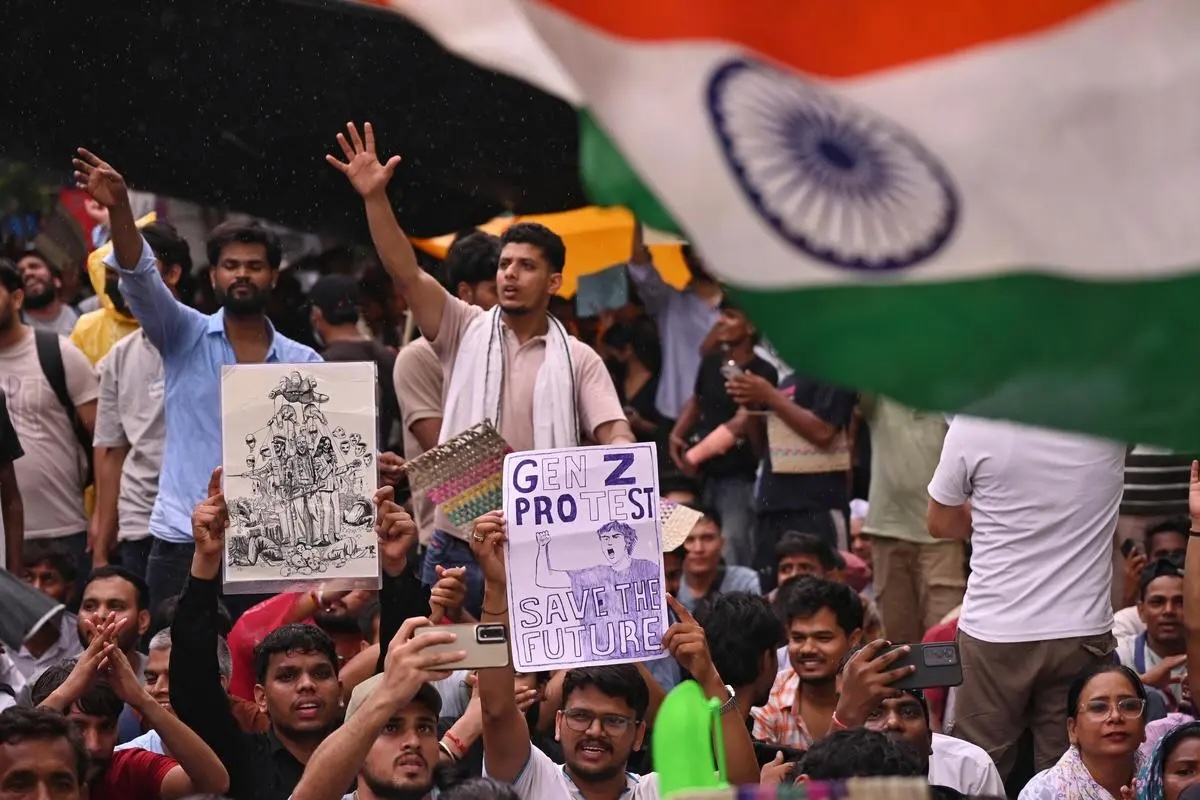
Generation Z must not simply aim to join or form conventional political parties; instead, Gen Z must institutionalise itself as India's permanent opposition, a decentralised, vigilant force that remains outside the corridors of state power to hold whoever is in power accountable to the public.
In India, an opposition party promises systemic reform, civil liberties, transparency, and economic equity. But the moment that same party assumes power, its priorities inevitably shift from reform to self-preservation.
Institutional mechanisms such as investigative agencies, regulatory bodies, and public broadcasting are often weaponised to neutralise dissent, and economic policy shifts to satisfy campaign financiers rather than the public.
Because every political party's primary objective is power, no party can authentically guard the public interest. When a political party takes a public issue, it makes electoral calculations.
Here is why Gen Z taking an opposition role to the government matters. Gen Z inherently understand how to organise outside traditional political hierarchies. Unlike previous generations, whose political mobilisation relied on party cadres, trade unions, or formal leadership structures, Gen Z influence decentralised networks. This decentralised nature makes followers resilient to the traditional strategies state power uses to neutralise opposition.
Gen Z's political consciousness is overwhelmingly issue-based. Whether demanding accountability over paper leaks in competitive examinations, raising concerns over voter list integrity, highlighting urban infrastructure failures, or fighting for climate justice and fair employment, Gen Z evaluates governance through outcome-oriented metrics rather than party rhetoric.
Roughly 27.6 per cent of India's population is Gen Z. This weightage means any ruling coalition cannot ignore a mobilised, non-aligned Gen Z, regardless of its parliamentary majority.
Serving as a "permanent opposition" does not mean adopting perpetual scepticism or refusing to participate in the democratic process. Rather, it requires a conscious refusal to settle into political loyalty. The previous generation strongly identified with a specific political party, covering up its mistakes and flaws while criticising even other parties' good deeds. However, Gen Z should remain independent of any political party, able to appreciate the good and criticise the wrongs in every party.
A political party's ultimate aim is to win elections, and politicians crave ministerial posts. Gen Z can preserve the moral authority of those in power. Gen Z's power lies not in holding office, but in setting the boundaries of what those in office should and should not do.
Mainstream media and oversight institutions fail under political pressure. Networks of student unions, independent digital journalists, and researchers can fill the void. If Gen Z can expose the government's failures and question its unfulfilled promises, the government would become accountable and transparent to the public.
Gen Z must maintain strict institutional distance from established political party machinery. Youth activists must treat all political parties with equal scepticism, applying the same rigorous accountability standard to today's ruling party as to tomorrow's potential ruling party.
Parties will come and go; coalitions will form and dissolve; politicians will promise to capture office and break those promises to keep it. If the ultimate goal of political parties is power, the citizen's ultimate duty must be vigilance. Gen Z must keep citizens vigilant.
By choosing to remain India's permanent opposition, Generation Z can fundamentally redefine our country's future. Don't wait for a political saviour or put faith in empty campaign promises. The youth are the future of our nation, and you decide what India's future will be.
The youth can serve as the ultimate check on state power, ensuring that whichever party sits in government remains a servant of the Constitution, a watchdog of democracy, and a servant of the people. Never ever allow the government to become the master.
.jpg)
 Jacob Peenikaparambil
.jpg)
 John Dayal
.jpg)
 A. J. Philip
 Monsignor Susai Sebastian
.jpg)
 Joseph Maliakan

.jpg) Dr Mudita Menona Sodder
.png)
 Robert Clements

.jpg) Stanislaus Alla
.jpg)
 Cedric Prakash