

.png) Jaswant Kaur
Jaswant Kaur
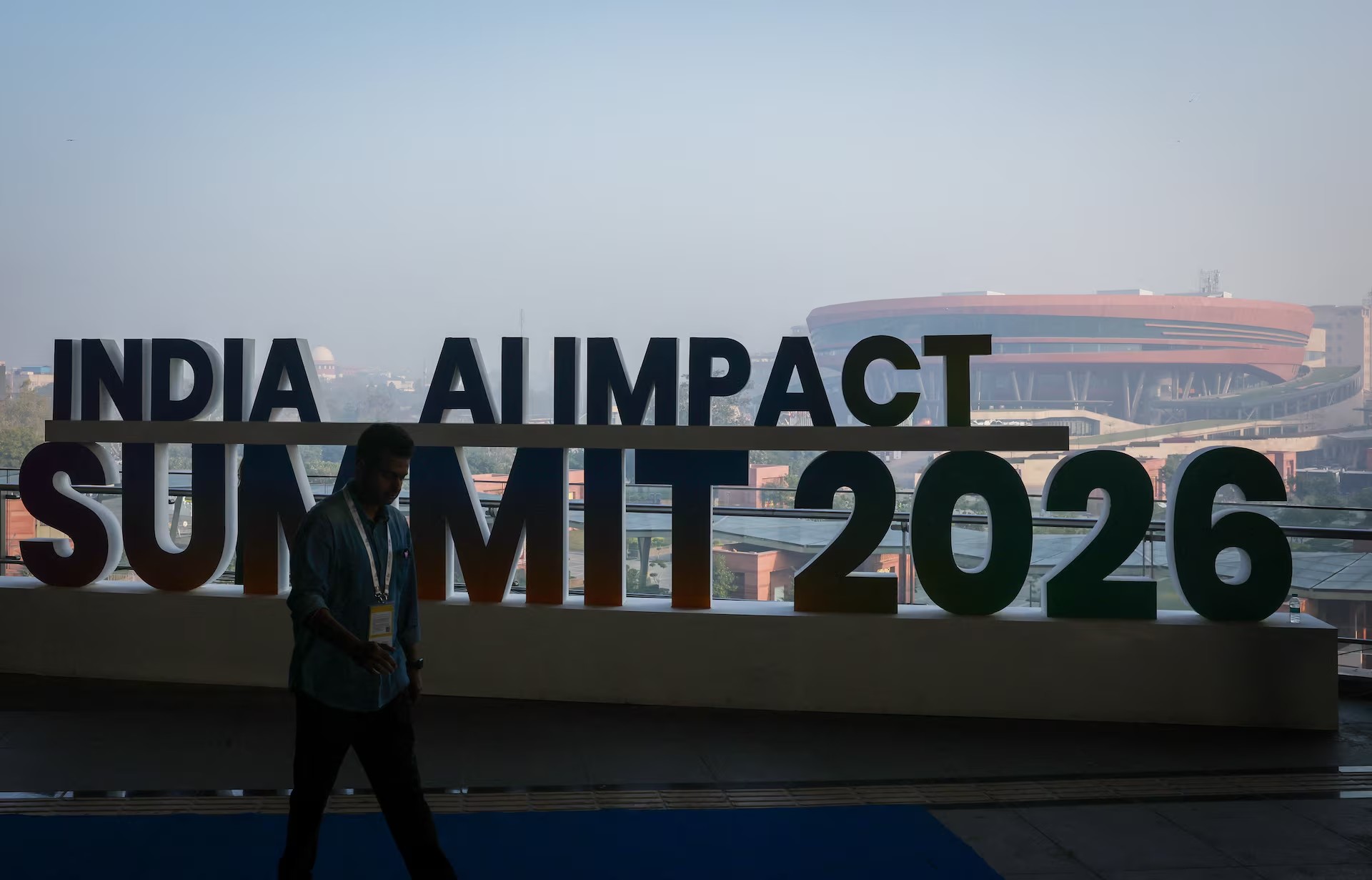
AI has been the buzzword for the last few years. In fact, such has been the craze that it has created a new level of competition at the individual, organisational, and global levels. Everyone wants to score a brownie point over the other, jeopardising real research, something that became visible at the recently organised AI Summit.
Projected as a landmark platform to showcase India's technological ambitions and advancements, the summit was marked by visible chaos. From the incomplete agenda on the official website to the last-minute opacity in programming and controversies around institutional showcases, everything spoke of performance rather than actual innovation.
For an event billed as a serious convergence of academia, industry, and policymakers, the absence of a clearly structured, publicly accessible academic agenda until very late in the process is a revealing indicator of a deeper institutional culture that prioritises speed, optics and announcements over intellectual preparedness.
The haste itself raises a few fundamental questions. Why was there such an urgency to organise a summit of this scale without ensuring academic clarity and authenticity? Why did an event meant to showcase India's AI ecosystem appear administratively rushed and structurally under-curated? And more importantly, what does this tell us about the current state of higher education and research in the country?
From as basic an issue as securing entry to the summit to accessing basic necessities like food, and from risking theft to sharing shocking accounts of varied experiences, social media is full of stories. As if this was not enough, barely a day into the summit, a huge controversy broke out around the robodog, which was named Orion by a private university, TJ by an IT giant, and referred to as "Bharat's sovereign models" by the Union IT minister on the platform "X."
The post on "X" went viral when users identified the robodog as a Chinese-made Unitree Go2 model (costing around $2,800). Immediately thereafter, the post was deleted. The university was asked to stop the exhibition. The university also issued a statement saying that the professor managing the stall was not fully informed about the robotic dog's origin and was not authorised to speak to the media.
The AI summit not only cost us our reputation but also raised several questions about how we project ourselves to the world. The incident should not be viewed as a single institutional lapse but must be examined in the larger context of how our higher education system is shaping up, with an expectation to demonstrate innovation rather than produce it substantively.
With over 1,100 universities and more than 45,000 colleges (as per recent data from the All India Survey on Higher Education (AISHE)), India has one of the largest higher education systems in the world. Over the past decade, the gross enrolment ratio has expanded significantly, with a focus on harnessing our demographic dividend, which underpins our digital ambitions, research and innovation.
With increased demand, we have seen tremendous growth in private universities showcasing their global rankings, foreign collaborations and "state-of-the-art" futuristic labs, attracting students from both far-off and nearby places. Despite the infrastructure these universities boast of, the intensity and integrity of our research remain comparatively weak.
Globally, we rank fourth, with around 1.3 million research papers according to Scopus (a scientific abstract and citation database) data. But when we look at our average citation impact, our contribution is dwarfed by major economies like the US, China, and the UK, speaking volumes about the quality and depth of our research.
Our gross expenditure on Research and Development (R&D) has consistently hovered around 0.6 to 0.7 per cent of GDP, which is substantially lower than what countries like the United States (nearly 3 per cent), China (over 2 per cent) and Israel (over 4 per cent) spend.
Within this modest R&D spending, universities receive only a fraction, with the bulk directed towards government research laboratories and strategic sectors. The private universities, of course, have to find resources for R&D, either from student fees or from external investors.
This structural imbalance has direct implications for academic innovation. When universities operate with constrained research funding, limited doctoral support and growing administrative expectations, the pressure to showcase visible innovation often exceeds the capacity to produce original research. The result is a widening gap between infrastructure display and intellectual output, something that becomes starkly visible during high-profile summits such as the AI Impact Summit.
Simultaneously, reports indicate that the summit involved large investment narratives and ambitious declarations about India's AI future. Such narratives, however politically and economically significant they may sound, cannot replace the need for a sustained academic infrastructure for research and development.
Another critical dimension often ignored in public discourse is the steady outflow of Indian students pursuing higher education abroad. Government data in recent years indicates that more than 750,000 Indian students are enrolled in foreign universities, with annual overseas education spending estimated in billions of dollars. This trend is not merely aspirational mobility; it reflects structural perceptions about research quality, academic freedom, mentorship and institutional credibility.
When a country simultaneously hosts events like the AI Summit while witnessing a growing migration of students for advanced research and higher education, the contradiction becomes difficult to ignore.
Equally concerning is the pattern of reduced real-term growth in research and higher education grants to keep pace with the increased enrolment and institutional growth. Faculty at many institutions continue to face heavy teaching loads and compliance pressures, with limited access to grants, leaving little room for high-impact research.
Technology summits, innovation conclaves and knowledge forums are often positioned as markers of national progress. There is no harm in projecting yourself as a global power, but it should be backed by real research and innovation rather than a tokenistic presence. Such an environment risks transforming higher education into a stage show, an academic spectacle rather than a space for intellectual inquiry.
The politicisation of education has added another layer of complexity with increased focus on ideological debates and regulatory scrutiny, shifting the focus to narrative-driven priorities rather than academic authenticity.
Meanwhile, countries leading in AI innovation invest heavily in university research ecosystems. The United States channels billions of dollars annually into federally funded academic research through agencies such as the National Science Foundation and DARPA. China has significantly increased funding for university AI labs, doctoral scholarships and research-industry collaboration pipelines. These models emphasise long-term academic investment rather than event-centric visibility.
The timing and execution gaps surrounding the summit also highlight an administrative culture that often equates urgency with effectiveness, knowing fully that intellectual curiosity and innovation cannot be fast-tracked through compressed timelines. Academic credibility requires peer review, research validation, and transparent academic planning, which require more time, patience, and freedom.
The larger concern is not the embarrassment of a single event, but the policy trajectory it reflects. If research budgets remain modest, academic agendas remain secondary to event optics, and universities continue to operate under pressure to symbolically demonstrate innovation, the long-term consequences will be significant.
The chaos around the AI Summit should therefore be read not as an isolated administrative lapse, but as a diagnostic moment for Indian higher education policy. A summit on artificial intelligence without clear intellectual structuring mirrors a larger policy paradox.
In a knowledge-driven global economy, credibility is not built through hurried summits, incomplete agendas, or symbolic showcases. It is built through sustained investment in universities, transparent academic planning, independent research culture and long-term intellectual infrastructure. Without these foundations, even the most ambitious technological narratives risk remaining performative rather than transformative.
The chaos at the summit should force the government to introspect, reflect, and devise strategies to course-correct. Otherwise, the robotic dog will keep reappearing in different forms as borrowed innovation, inflated claims, hurried summits and hollow showcases that prioritise spectacle over substance.
.jpg)
.png) Cedric Prakash
Cedric Prakash

 ICPA
ICPA
 ICPA
ICPA
 ICPA
ICPA
 ICPA
ICPA
 ICPA
ICPA
 ICPA
ICPA
.jpg)
 A. J. Philip
.jpg)
.png) Jacob Peenikaparambil
Jacob Peenikaparambil
.jpg)
.png) John Dayal
John Dayal