

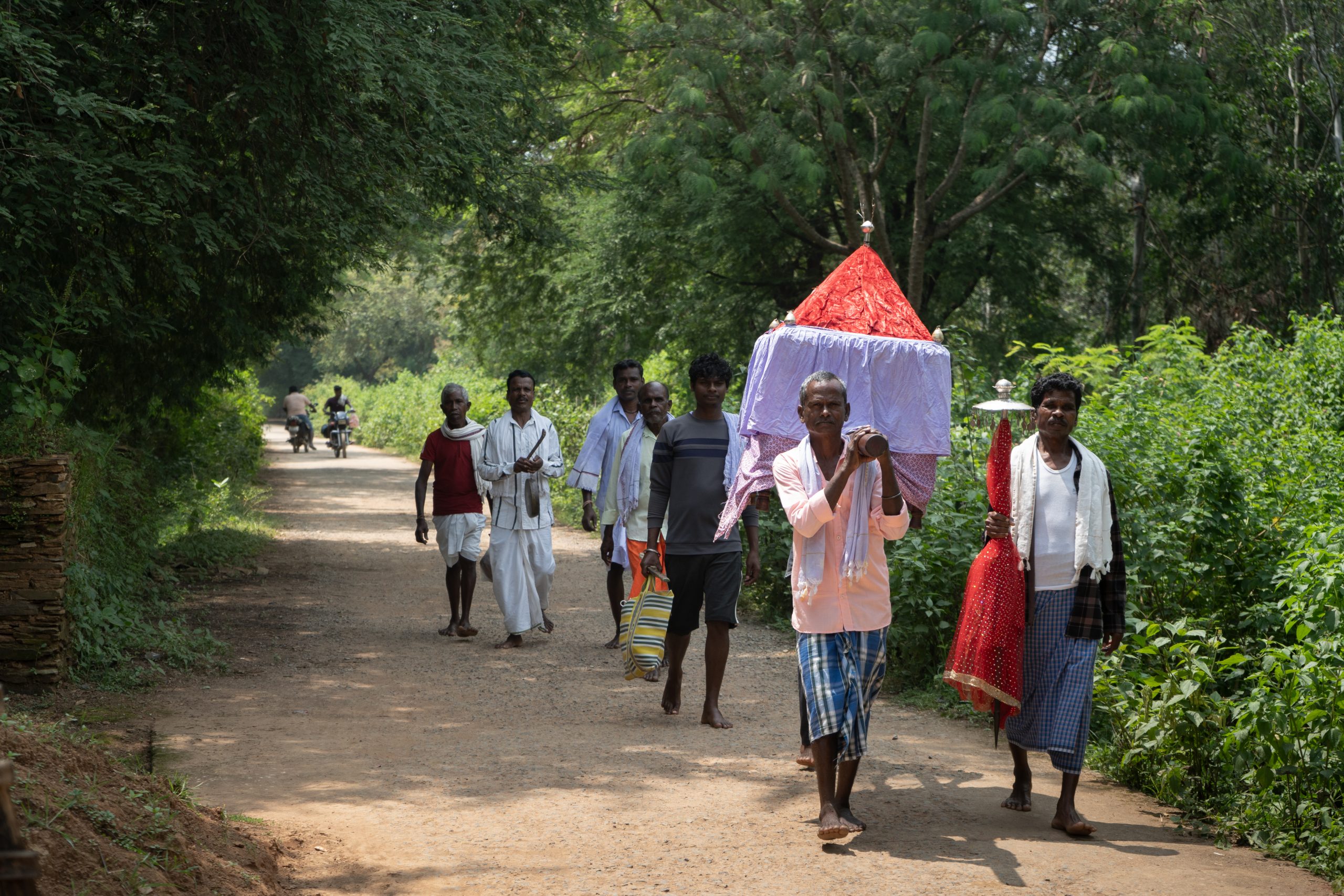
The moral strength of a democracy is not measured only by how it protects its living citizens; it is also evaluated by how it treats the dead. In recent years, reports have emerged from certain Indian states that members of the Christian community have faced local opposition when attempting to conduct burials in public cemeteries. These disputes have largely arisen in contexts marked by social tensions over religious conversion, mistrust in majority–minority relations, and informal village-level systems of social control.
Such incidents cannot be dismissed as merely local social problems. They raise fundamental questions concerning posthumous human dignity and the scope of constitutional rights. Are the fundamental rights guaranteed by the Constitution of India limited only to the living? Or does human dignity require legal protection even beyond death? These conflicts compel us to re-examine our constitutional commitments.
Recent Incidents
In February 2026, reports emerged from Kapena village in Nabarangpur district, Odisha, that the burial of a 13-year-old Christian boy in the village's public burial ground was obstructed. Due to opposition from certain sections of the village, the burial was eventually conducted on private land after considerable delay. Reports also indicated that conditions were imposed, prohibiting the display of religious symbols on the grave.
Earlier, in January 2026, in Balasore district, the burial of an elderly Christian man was reportedly delayed for several days. Some villagers allegedly demanded that local traditional rites be followed instead of Christian burial practices.
Between October 2024 and April 2025, human rights organisations documented instances in districts such as Koraput and Malkangiri where Christian families were denied access to public burial grounds. In 2025, allegations also surfaced that graves were opened and bodies exhumed in certain areas. Such actions amount to serious offences, including desecration of corpses and obstruction of burial rites.
In similar incidents in Chhattisgarh, the Supreme Court intervened on February 18, 2026. In Chhattisgarh Association for Justice and Equality & Ors. v. State of Chhattisgarh, the Court issued an interim order against the exhumation of Christian Adivasi bodies from village burial sites and their relocation to distant "designated" cemeteries without family consent. The petition alleged violations of Articles 14 (equality before law), 15 (prohibition of discrimination on grounds of religion), 21 (life and dignity), and 25 (freedom of religion) of the Constitution. The Court issued notice to the State Government and temporarily restrained the forced exhumations.
The Supreme Court had earlier affirmed in Ashray Adhikar Abhiyan v. Union of India (2002) that the right to dignity extends even after death. The Court held that the bodies of homeless persons must be treated with dignity and observed that posthumous dignity falls within the ambit of Article 21. Although Article 21 protects "life and personal liberty," the Court has expanded its interpretation to include the right to live with dignity. In several judgments, it has clarified that dignity must be preserved even after death.
Viewed in this light, the incidents in Odisha and Chhattisgarh, though seemingly local disputes, point to a broader constitutional concern. The principle that human dignity must be protected even after death is not a mere abstraction; it is a joint responsibility of law and administration.
Freedom of Religion: Scope and Application of Article 25
Article 25 of the Constitution guarantees every individual the right to "freely profess, practice and propagate religion." Supreme Court interpretations have made clear that religious practices are not confined to private belief but include social and ritual ex
Obstructing a person's right to burial according to his or her religious rites directly affects the freedom of religion guaranteed under Article 25. While the Constitution permits restrictions on grounds of public order, morality, and public health, denying access to public burial grounds solely on religious grounds is difficult to justify within these permissible limits.
Equality and Non-Discrimination
Article 14 guarantees equality before the law and equal protection of the laws. Article 15 explicitly prohibits discrimination on the grounds of religion. If government-controlled or publicly accessible burial grounds are denied to members of a particular religious community, such action would struggle to withstand constitutional scrutiny.
Equality is not merely identical treatment; it also requires non-discriminatory access. When a family is denied the opportunity to conduct burial rites according to their religious faith, it constitutes a direct challenge to the principles of equality and non-discrimination enshrined in Articles 14 and 15.
The Bharatiya Nyaya Sanhita, 2023
The Bharatiya Nyaya Sanhita (BNS), 2023, which replaced the Indian Penal Code, includes specific penal provisions against acts that insult corpses or obstruct burial ceremonies:
1. Section 301 (IPC 297): Criminalises trespass into burial places, indignity to human corpses, and obstruction of funeral ceremonies.
2. Section 299 (IPC 295A): Punishes deliberate and malicious acts intended to outrage religious feelings.
3. Section 196 (IPC 153A): Addresses acts promoting enmity between religious groups.
Thus, creating religious obstacles to burial is not merely a social issue; it carries constitutional and criminal liability.
The Administrative Responsibility of the State
The protection of human dignity after death is part of India's humane constitutional philosophy. When burial rights are challenged in the name of religion, the issue transcends an individual family; it has broader societal implications.
States must therefore ensure legal protection for the peaceful conduct of funeral rites. Public burial grounds must not be denied to any religious community in a discriminatory manner. Offences such as desecration of corpses, obstruction of burial rites, and promotion of religious hatred must be addressed under the Bharatiya Nyaya Sanhita.
Social Reality and Constitutional Supremacy
It is true that in tribal regions of Odisha and other states, land ownership patterns and burial customs are intertwined with traditional social structures. Religious change may sometimes trigger social tensions. However, under constitutional philosophy, social custom does not override the rule of law.
Secularism forms part of the basic structure of the Indian Constitution. The Supreme Court has repeatedly affirmed this principle. Secularism does not mean hostility toward religion; rather, it requires principled state neutrality and equal respect for all religions. Restricting access to public facilities on religious grounds would be contrary to this foundational principle.
Is "Compromise" an Adequate Solution?
In some cases, authorities have reportedly sought "compromise solutions." However, if compromise entails sacrificing equality, it cannot qualify as a constitutional remedy. When a community is compelled to forgo religious symbols or resort to private land for burial, this is not a genuine resolution but an implicit limitation of rights.
Constitutional rights are not negotiable concessions; they are enforceable legal entitlements. Freedom of religion, equality, and the right to live—and die—with dignity must not remain merely written words; they must find ex
Posthumous dignity is a marker of a society's moral and legal maturity. A person's religious faith and choices during life do not disappear with death. The incidents in Odisha and other states represent not merely local social conflicts but challenges to the spirit of the Constitution itself.
In a democracy, even a citizen's final journey must remain within the protective ambit of the Constitution. This is essential for upholding the supremacy of law and preserving human dignity in both life and death.
.jpg)
.png) Cedric Prakash
Cedric Prakash
 ICPA
ICPA
 ICPA
ICPA
 ICPA
ICPA
 ICPA
ICPA
 ICPA
ICPA
 ICPA
ICPA
.jpg)
 A. J. Philip
.jpg)
.png) Jacob Peenikaparambil
Jacob Peenikaparambil
.jpg)
.png) John Dayal
John Dayal