

 A. J. Philip
The first non-textbook my father gifted me was a profusely illustrated bumper issue of the Mathrubhumi Weekly, brought out immediately after Prime Minister Jawaharlal Nehru's death in 1964. I was only eleven when our neighbour, Panicker—a washerman by profession—came running to our house to inform my grandfather that Nehru was no more. His urgency conveyed a national loss that even a child could sense.
The book contained full-page photographs depicting the life and times of Nehru. I preserved it like a treasure for years, until I left Kerala in 1973. One image remains etched in my mind: Nehru standing beside Albert Einstein. I did not know then—nor do I know now, in any scientific sense—what E = mc², his great discovery, truly meant. But even as a boy, I understood that he was the greatest scientist of his time.
There were other pictures: Nehru with George Bernard Shaw, Winston Churchill, John F. Kennedy, Lord Mountbatten, and Edwina Mountbatten. Yet, none fascinated me as much as the photograph with Einstein. It symbolised the meeting of political leadership and intellectual brilliance.
Years later, I encountered a name that sounded vaguely similar to Einstein's—Epstein. Unlike Einstein, whose name evokes curiosity and admiration, Jeffrey Epstein became synonymous with infamy, even years after his death in a jail cell in 2019. As a regular reader of newspapers such as The New York Times and The Economist, I knew why Epstein was notorious.
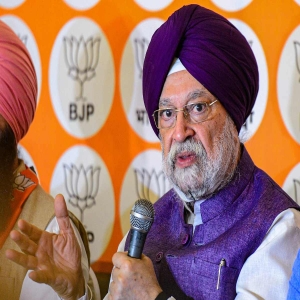
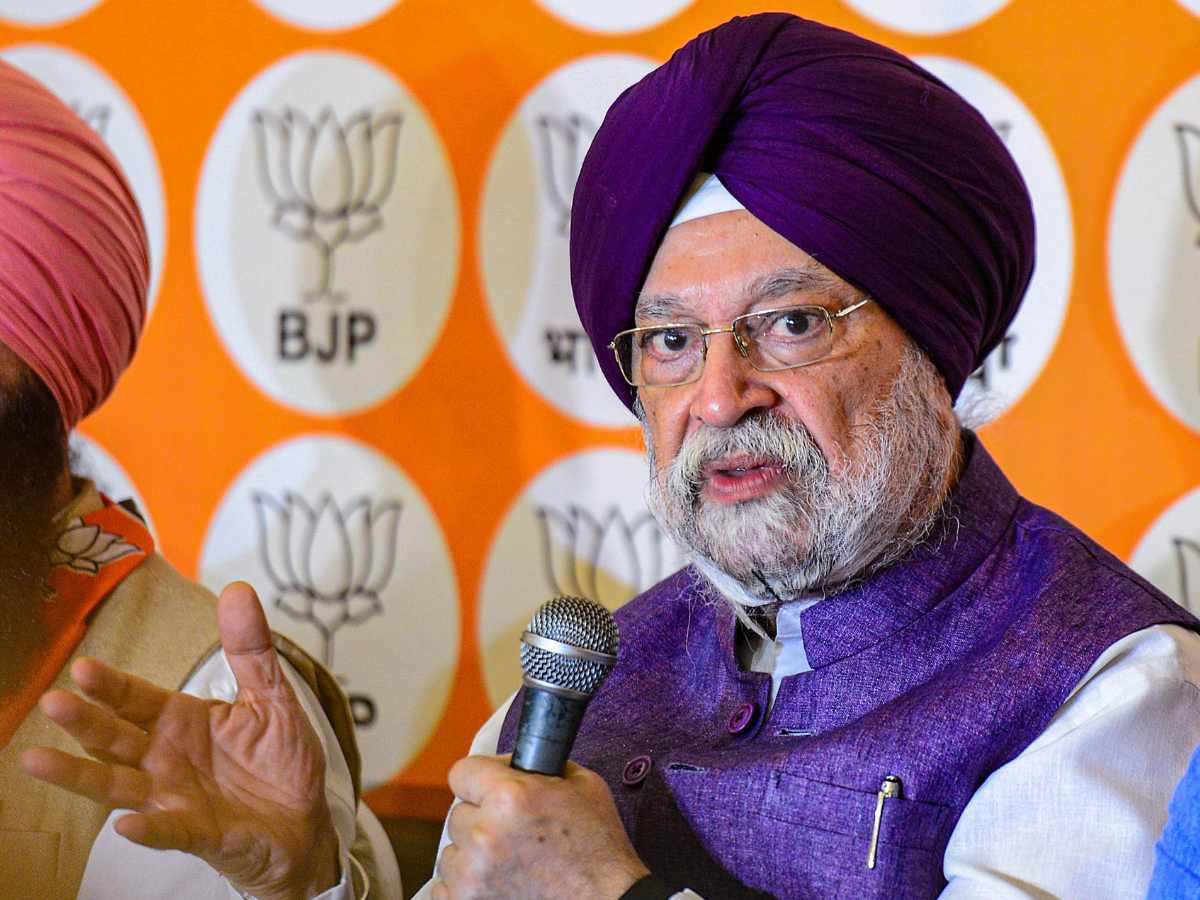
But I never imagined that your name would ever be linked with his. Before that shock, I had already felt a sense of disbelief when, soon after retiring as a career diplomat—having held the prestigious post of Permanent Representative of India to the United Nations—you joined the BJP. You entered active politics with remarkable speed. Many of us who had admired your diplomatic career wondered why a man who had reached such heights would choose the rough-and-tumble of partisan life.
Of late, I have been following the social media posts of Nirupama Menon, who served as Foreign Secretary and Ambassador to the United States. She does not pontificate on what went wrong with the world. Instead, she writes poems about rain, flora, and fauna, and shares moments with friends and relatives who admire her new sarees. In other words, she leads an enviable retired life, far removed from the humdrum of politics, parties, and petty quarrels.
There are not many career diplomats who have made it big in politics. Of course, KR Narayanan was a notable exception. He did not enter politics through a back door. He joined the Congress, contested and won a Lok Sabha seat from Kerala, became a Union minister, then Vice-President, and ultimately President of India. His journey followed a democratic path that inspired respect.
In your case, you lost the 2019 Lok Sabha election from Amritsar but were later elected to the Rajya Sabha from Uttar Pradesh on a BJP ticket. That in itself demonstrates the importance you wield in the current dispensation.
Your connection with Epstein is no longer in the realm of speculation. I still do not know why you befriended such a man. If you say you were unaware of his background, I can only describe such a claim as unbelievable. Living thousands of miles away, I knew of his exploits, though not in exhaustive detail. It is impossible to imagine that you did not know about him before you came into contact with him.
To recall, in 2005, the parents of a fourteen-year-old girl told police in Florida, USA, that Epstein had molested their daughter at his home. A police search of the property found photographs of girls throughout the house. The police chief later said it was not a "he said, she said" situation, but dozens of young girls telling the same story.
Columnist Michael Wolff wrote in 2007 that Epstein had never been secretive about his interest in young girls. When his troubles began, he reportedly told Wolff, "What can I say, I like young girls." Wolff replied that, perhaps, he should say he liked "young women."
Despite these disturbing facts, prosecutors struck a deal with him in 2008. Epstein avoided federal charges that could have resulted in life imprisonment. Instead, he received an 18-month sentence, during which he was allowed "work release" to his office for 12 hours a day, six days a week. He was released on probation after serving just 13 months.
What is important to note is that he pleaded guilty to molesting a fourteen-year-old girl. He was convicted. He served a prison term—however short. How, then, could you not have known about this paedophile when you met him? And what compelled you to know him at all?
Yes, he was known for his immense wealth and worldly possessions—a palatial house, a ranch, and other real estate. But he was also notorious as a pimp who procured girls, employing a woman who herself went to jail for her role.
You served as India's Permanent Representative to the United Nations from May 2009 to February 2013. When I first began reading The Hindu, I followed the dispatches of its Washington correspondent Easwar Sagar. In those days, the "K-word"—Kashmir—frequently figured in UN discussions. It was the duty of India's Permanent Representatives, such as G. Parthasarathy and Samar Sen, to defend India's position.
This important post was held by distinguished individuals like Hamid Ansari, Brajesh Mishra, and your immediate predecessor, Nirupam Sen. Did any of them rely on paedophiles or convicted sex offenders to promote India's diplomatic interests?
It would be a great learning experience for aspiring diplomats if you could explain why you found it necessary to remain in touch with Epstein. India had its Ambassador in Washington at the time, supported by a full embassy. What was that work which the Ambassador could not do, but which you could accomplish with Epstein's help?
What was Epstein's core competence? He was rich—but was that enough? Was not Dawood Ibrahim also rich? What was his connection with India? Was there any at all? I did read in one report that among the underage women Epstein procured was an Indian.
Did I read you correctly when you claimed that it was to promote Digital India that you befriended Jeffrey Epstein? The explanation raises more questions than it answers. Digital India was officially launched on July 1, 2015, by Prime Minister Narendra Modi with the stated goal of transforming India into a digitally empowered society and knowledge economy. Its focus was on strengthening online infrastructure, expanding Internet connectivity, and improving digital governance. By then, you had retired from the Indian Foreign Service and begun drawing a pension. Your formal role in shaping policy had ended.
More importantly, Epstein's domain was not digital assets but human assets—a euphemism that now chills the conscience. How, then, could he have promoted India? At best, he might have reduced our civilisation to crude stereotypes: the land that produced the Kama Sutra and the sculptural exuberance of Khajuraho, where human intimacy is carved in stone. India's civilisational depth cannot be mediated through such distortions, and certainly not through a man whose notoriety lay elsewhere.
You admitted that you met Epstein two or three times and exchanged correspondence with him. At that time, you could not have imagined that the so-called Epstein files would one day be released. Indeed, who could have foreseen the scale and horror of what those files contained? Under public and congressional pressure, the US Department of Justice released more than three million pages of documents on January 30. The volume alone ensured that no single reader could grasp their full contents. Volunteer software engineers later converted the trove into searchable formats, enabling analysis.
According to The Economist, Epstein appeared careful to separate his prolific sexual abuse from his vast influence-peddling network. Of 1.4 million emails scored for relevance to his crimes, around 1,500 threads fell into the most severe category—including exchanges in which correspondents made light of abusing his "littlest girl." The moral abyss revealed in these communications is difficult to fathom.
It is perhaps on the basis of these papers that the Congress party accused you of "lying" about the controversy surrounding the Epstein files and asked you to explain the "62 email exchanges" with the convicted American sex offender between 2014 and 2017. Even today, I do not accuse you of any crime. My plea is simpler: explain the circumstances in which you remained in touch with a man whose activities are now synonymous with depravity.
I have read a few email snippets attributed to Epstein. They range from banal architectural instructions to bizarre musings about British incest and crude remarks about physical appearance. One message reads like casual chatter about friends and relationships. None of these messages has anything to do with you. Yet the lesson of these disclosures is sobering: one never knows when private correspondence will be dragged into the harsh light of public scrutiny.
As I write this, British police have announced that "a man in his sixties from Norfolk" has been arrested—an exercise in understatement characteristic of British officialdom. They did not name Prince Andrew, nor could they style him "Prince," for he had already been stripped of royal honours after allegations that he had sex with an underage woman. The House of Windsor, long a symbol of continuity, now finds itself diminished by scandal.
Last year, Virginia Giuffre's posthumous memoir, Nobody's Girl: A Memoir of Surviving Abuse and Fighting for Justice, was released. It is perhaps the most detailed account of the allegations against Prince Andrew, recounting her experiences of being trafficked by Epstein and alleging sexual abuse by the Prince on three occasions when she was 17. When I read a review, I wished to buy the book, but its price put me off. Even so, the narrative it represents has already reshaped public understanding of power, privilege, and exploitation.
King Charles has said the law will take its course. It is an embarrassment for him that his younger brother has fallen into the pits. Andrew is the first to be arrested. No one has yet been arrested in the United States, where most of the crimes occurred. Already, nine non-American foreign leaders, six business heads, six academics, two law-firm chiefs, and one US politician have quit their positions. The tremors are global.
This week, Bill Gates—who had acknowledged meetings with Epstein, though he sent no emails—was prevented from addressing the AI Summit in Delhi. The message is unmistakable: reputations are fragile, and associations, however tangential, can become liabilities in a world that demands accountability.
The question before you, therefore, is stark: Is it proper for you to continue in office if your presence risks damaging the reputation of your leader and the government you serve? Yes, you have the option of brazening it out and remaining a minister until your term ends in November. Politics offers many examples of survival through defiance. But survival is not the same as honour.
Remember how MJ Akbar had to leave the government. Resignation does not amount to an admission of guilt. On the contrary, it can be an act of responsibility—a recognition that public office demands standards higher than personal vindication. Defending the indefensible, or appearing to do so, carries greater dangers: it erodes trust, distracts governance, and burdens the very leadership one claims to support.
The ball is now in your court. Either explain, with clarity and candour, what compelled you to remain in touch with Jeffrey Epstein, or step aside and allow the Prime Minister to choose a successor unencumbered by controversy. Public life is not merely about legality; it is about perception, credibility, and moral authority.
History is replete with men who mistook endurance for integrity. Do not join their ranks. The office you hold is larger than any individual, and the nation's reputation is more precious than any career.
Yours etc.,
.jpg)
.png) Cedric Prakash
Cedric Prakash
 ICPA
ICPA
 ICPA
ICPA
 ICPA
ICPA
 ICPA
ICPA
 ICPA
ICPA
 ICPA
ICPA
.jpg) A. J. Philip
A. J. Philip
.jpg)
.png) Jacob Peenikaparambil
Jacob Peenikaparambil
.jpg)
.png) John Dayal
John Dayal