

.png) Frank Krishner
Frank Krishner
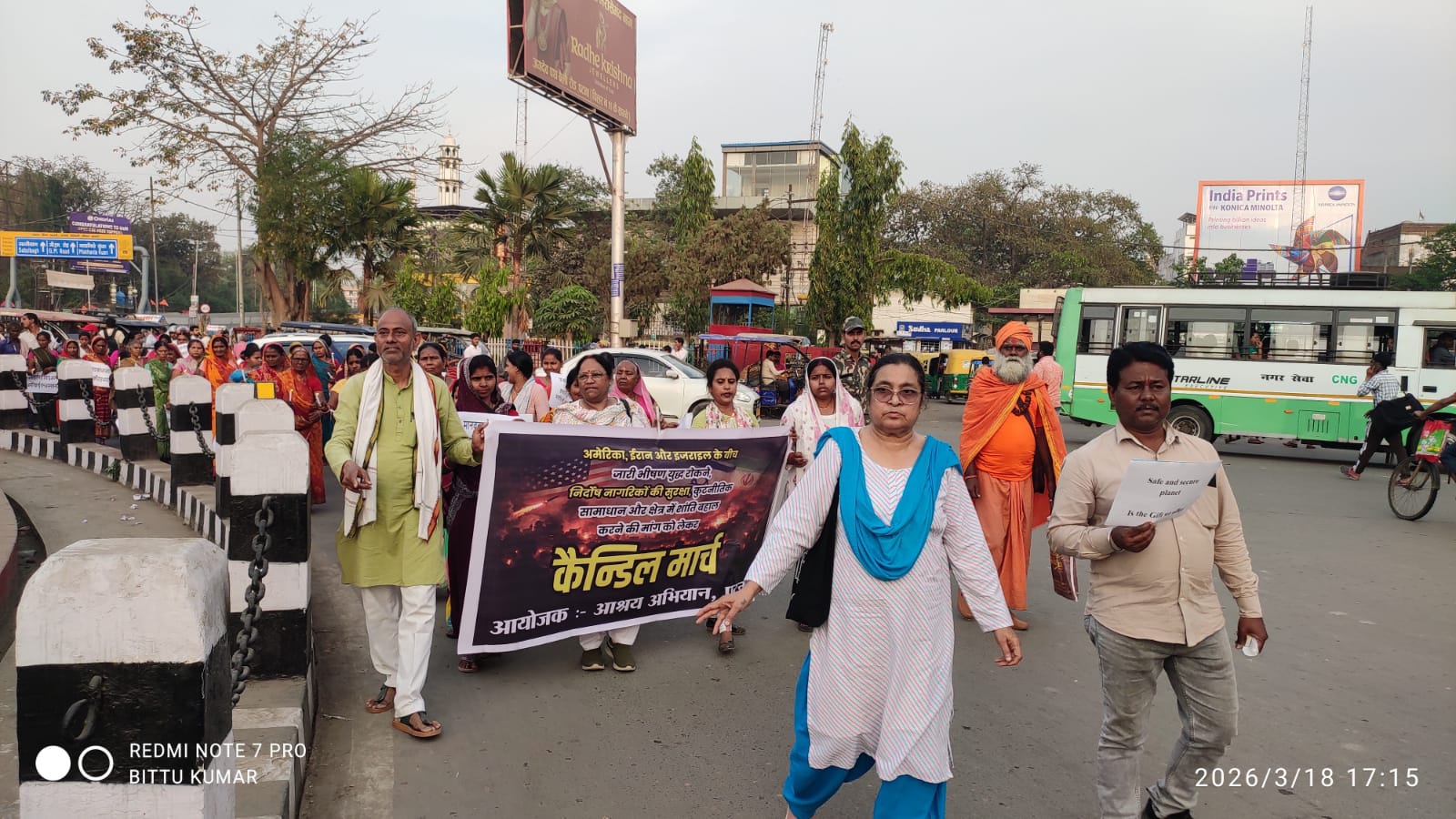
Wednesday March 18: A motley crowd of some 37 people braved the rising heat, impossible traffic, a suddenly shut-down destination venue, and the general pandemonium of a tense day around Patna's historic Gandhi Maidan to register their protest against the USA-Israel-Iran war, and appeal for peace and sanity.
The bulk of the protestors were hardworking women of varying ages, drawn from the slums and shanties under threat in the Bihar Capital, with a singular objective: the rising prices and shortage of cooking fuel that directly impacted their careworn existence, the unwanted and unnecessary fallout of an avoidable war started by Donald Trump and his belligerent ally, Netanyahu.
The women were led by that doughty Presentation nun who has been bustling about the highways and the byways of Patna for the past two decades and more, Sister Dorothy Fernandes.
The little old religioius is a busy bee that buzzes all over the place: questioning the apathy towards construction workers in the durbar hall of the now 'retired' Chief minister; flitting up and down the corridors where the Municipality officers saunter, reminding them of the letter of the Street Vendors' law ignored, and the spirit of the urban rehabilitation rules broken; or inspecting the facilities at the pop-up night shelters that the state government puts up for the destitute during the winter cold.
"Look! You have got to strike the iron when it is hot. This war is a terrible one that has bad consequences for everyone, especially the poorest of the poor, and so they have a right to have their voices heard. It is an unjust war and we are upset. We want that our government remains neutral, condemns the violence, and ensures that our own citizens, innocent people who have nothing to do with world politics, do not lose their livelihoods or starve to death. We wanted to have a candle march and place the candles at the feet of the big Gandhi statue in Gandhi Maidan, but we just about came to know that the venue has been shut down because of administrative reasons. But we're not cancelling the march!"
The people from Aashray Abhiyan, the organisation that Sister Dorothy runs, gathered in the narrow space outside the Gandhi Maidan police outpost and squatted in the shade of a banyan tree. All around were swarms of people and vehicles, and cops waving batons, trying to bring some order to the seething sea of chaos that is a typical Patna traffic jam.
The policemen were harried and hot, and the officer in charge was on the phone. Traffic was stuck and honking all around, and patiently seated before him were some two dozen or so women, with placards in their hands, determined to work their way through to the Gandhi statue!
I watched the proceedings with interest. Sister Anu, another social worker nun, had also walked over and joined the waiting women. Now, Sister Dorothy took hold of a microphone and began speaking over the small portable public address system. She asked the women to join in a song. In the meantime, I hear the officer in plain clothes speak into his phone, "No sir, they appear to be quite harmless, some 20 people mainly women, they are holding some sort of rally for peace. They want to walk towards the Gandhi statue, but obviously we can't allow that, the traffic situation is terrible. Yes sir, I will try to get rid of them. Maybe I can get them to place their candles at the Kargil Chowk monument."
At this moment, I signal to Dilip, one of the men in Sister Dorothy's team, and tell him to go and talk to the police officer. Dilip insists that the nun wants to walk through the jammed roads towards the Gandhi Museum.
The police officer tells him that she won't be allowed to do so. "I tell you what. Across us is the Kargil War monument. It has a nice circular track. We will help your people across the road, and provide protection while you go around the monument, then you can place your candles there and go home," the officer said.
"But Gandhiji is the symbol of peace, and we should march there, that is what Madam wants to do," argued Dilip.
"Now if you people insist on disturbing the peace then I will have no option but to use force," said the officer. That's when a wise man stepped in. "Look here," he said. "This officer is offering you a solution to the problem. He isn't stopping your protest. He has also offered you protection from unruly elements. Take the offer!"
And so the candles were lit, and a few passersby asked what was going on. A sadhu also joined the march, and a couple of young men, students or office-goers. Sister Cynthia, a lawyer, also made it in time to join the march. Three nuns walking in step, in solidarity with the poor, making their stand known on a difficult and factious issue. There were smirks from a bunch of guys, catcalling actually, saying something like 'These stupid beggars think they can stop Trump.' But the cops waved them away before they could come too close to start something nasty.
And so the women and a few men went around the war memorial, holding candles that symbolised the futility of war, flames flickering alongside prayers for the slain, their widows and orphans, and a song of hope that the powerful leaders of the world would get together and stop the war, before it devours everything in its path, including the futures of the children of Patna, Bihar.
.jpg)
.png) Cedric Prakash
Cedric Prakash
 ICPA
ICPA
 ICPA
ICPA
 ICPA
ICPA
 ICPA
ICPA
 ICPA
ICPA
 ICPA
ICPA
.jpg)
 A. J. Philip
.jpg)
.png) Jacob Peenikaparambil
Jacob Peenikaparambil
.jpg)
.png) John Dayal
John Dayal